Bengal CM Mamta Banerjee needs to revise her anti-demonetization slogan, Modi hatao, desh bachao (remove Modi and save the country) to Mor hatao, desh bachao
(remove Mor and save the country).
Behind professional patriot NaMo (Narendra Modi), we find career globalist NaMo (Nachiket Mor), Bill Gates’ emissary in India.
A RTI (Right to information) request uncovers that the demonetization decision was hurried through hours before the announcement by Modi by a small cabal on the RBI board, which normally should have 21 members.
In response to a right to information request, which Hindustan Times has sought, the RBI said the bank’s central board of directors made the recommendation at its meeting in New Delhi on November 8. Only eight of the 10 board members attended the crucial meet.
Apart from RBI chief Urjit Patel and economic affairs secretary Das, the meeting had RBI deputy governors R Gandhi and SS Mundra, Nachiket M Mor (Na Mo, by a bizarre coincidence) the country director for the Bill and Melinda Gates Foundation, Bharat Narotam Doshi, former chairman of Mahindra and Mahindra Financial Services Limited, former Gujarat chief secretary Sudhir Mankad, and financial services secretary Anjuly Chib Duggal.
The law provides for a 21-member board, including 14 independent members, but the central bank has been operating with less than half.
Between the RBI board meeting and Modi’s demonetisation announcement, the government just had a couple of hours to process the bank’s formal recommendation.
Prime Minister Modi had convened a meeting of his cabinet later in the day when they were told about the decision. The ministers — who had to leave their mobile phones outside — were told to stay back till his address was telecast.
It isn’t that the RBI or the government hadn’t been making preparations for the mammoth notes recall exercise. The bank had already printed Rs 4.94 lakh crore in Rs 2,000 notes by November 8.
But former RBI officials said this implies that the board’s approval was a formality.
The way the demonetisation decision was taken was “highly irregular”, said a former top RBI official, who didn’t wish to be named. He said he did not believe the government and RBI had taken “adequate steps” to minimise harassment of people.
Another said he was concerned at the large number of vacancies in the central board. Of the 14 independent directors, the board has just four.
“According to the RTI reply, only three of them were present (at the meeting). That is the quorum,” he said.”
So, a board that is supposed to have 21 members, operates with 10. Of the 21, 14 are supposed to be independent, but only 4 of the 10 are. Of the ten, only 8 attended the crucial meeting. Of the 4 independents, only 3 attended.
Why so many Gujarati hands?
And who knew that the Bill and Melissa Gates Foundation, represented by Nachiket Mor, and Mahindra and Mahindra (constantly promoted by Rush Limbaugh, by the way) have a say in RBI policy?
A little googling shows that the Gates Foundation is a big supporter of bringing all Indians into the banking system:
September 07, 2015India’s banking sector is on the cusp of change. With the RBI’s recent licensing of 11 Payments Banks, the sector is poised for much-needed disruption that will bring millions of Indian households into the formal financial system for the first time.
The World Bank (2014) estimates that 47% of Indian adults are cut off from the formal financial system. This forces poor households to live their financial lives in the physical cash economy, which is both precarious and expensive. Imagine being able to save only in cash, jewelry, or livestock. Imagine having no option but to turn to a local moneylender in an emergency, or having to rely on informal couriers to send money to your family. Imagine having to go through a local official every time you want to access your social welfare transfer or pension payment. The cost and stress of conducting even simple financial transactions would be stifling.
The Prime Minister’s Jan Dhan Yojana financial inclusion program is closing this gap by encouraging banks to open accounts in poor and rural communities. Since August 2014, banks have opened 177 million accounts under PMJDY, making it the largest account opening drive in history. However, as with India’s previous mass account opening drives, banks are more focused on opening accounts than building a strong network of last-mile banking agents to service those accounts. A recent MicroSave (2015) survey of 2,682 banking agents found that India’s agents were the least trained and least profitable among the six countries surveyed. This is where Payments Banks are a game changer.”
Nichiket Mor is a Yale Greenberg World Fellow and a prominent voice for financial inclusion, which, on its face, sounds like a good thing.
Financial inclusion projects purport to save poor Indians from the grasp of local money-lenders and put to use idle stores of cash and gold.
As usual, empowering the poor is the cover:
Nachiket Mor is a renowned financial expert committed to financial inclusion and health care sector reform. In 2016, he was named director of the India office of the Bill and Melinda Gates Foundation. Previously, he was chairman of the board for CARE India, a nonprofit working toward the empowerment of women and girls from poor and marginalized communities, as well as member of the Boards of Reserve Bank of India (RBI), National Bank for Agriculture and Rural Development (NABARD), CRISIL, Institute for Financial Management and Research, CIPLA, and IKP Trust. He is chair of RBI’s Advisory Committee for the Licensing of Payment Banks; and a member of the government of India’s Task Force on Primary Health Rollout, the Health Commission for the State of Himachal Pradesh, and the Task Force on Global Health at the Institute of Medicine in Washington, D.C. From 1987 to 2007, he worked with ICICI Bank, India’s largest private lender, and was a member of its board of directors from 2001 to 2007. He left his position within ICICI to serve as the founding president of the ICICI Foundation for Inclusive Growth, the bank’s corporate social responsibility wing. “
Mor’s 6 point vision for India:
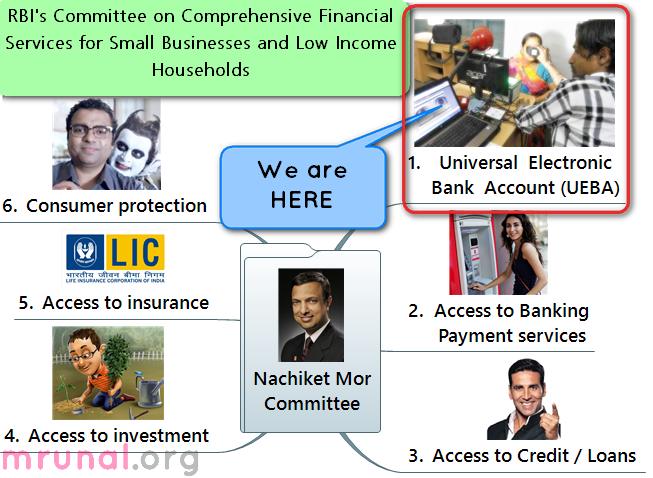
So, Mor seems to be a proponent of linking bank accounts to the Aadhar card (India’s biometric id, the largest of its kind in the world).
The Modi govt is forcing Aadhar through, although the Supreme Court claims it is voluntary, through schemes such as the Jio free sim for Aadhar-linked cards (in Tamil Nadu). Jio is a product of billionaire Mukesh Ambani’s Reliance company.
Using the pretext of helping poor people out of the fire of debt to the money-lender in the village, the Mor 6-point vision moves the poor, middle-class and rich into the frying-pan of debt to the global banking system and casino capitalism. The global markets, as I’ve shown repeatedly on this blog, are heavily rigged in favor of the big banks and the global cabal.
The Mor/Gates Foundation vision is also fully involved in extending “health-care” to Indians – via vaccines, big pharma experimental drugs, and the rest of the toxic brew that has poisoned even highly-educated and politically-aware Western populations.