Racial Discrimination in Malaysia…

March 29, 2006 To the Editor:

There is a list of statistical data detailing racial discrimination in Malaysia, practiced by the government and its agencies. This list is an open secret. Its existence is best verified by government itself since it keeps the statistics.

This list is not in the order of importance; that means the first one on the list is not the most important and the last one on the list does not mean it’s the least important.

This list is a common knowledge to a lot of Malaysians, especially those non-Malays (Chinese, Ibans, Kadazans, Orang Asli, Tamils, etc.) who have been racially discriminated against.

Figures in this list are merely estimates, so please take it as a guide only. The government of Malaysia has the most correct figures. Is government of Malaysia too ashamed to publish their racist acts by publishing racial statistics?

This list covers a period of about 48 years since independence (1957).

List of racial discriminations (Malaysia):

(1) Of the five major banks, only one is multi-racial, the rest are controlled by Malays.

(2) 99% of Petronas directors are Malays.

(3) 3% of Petronas employees are Chinese.

(4) 99% of 2000 Petronas gasoline stations are owned by Malays.

(5) 100% all contractors working under Petronas projects must be of Bumis status.

(6) 0% of non-Malay staff are legally required in Malay companies. But there must be 30% Malay staffs in Chinese companies.

(7) 5% of all new intake for government police, nurses, army, are non-Malays.

(8) 2% is the present Chinese staff in Royal Malaysian Air Force (RMAF), a drop from 40% in 1960.

(9) 2% is the percentage of non-Malay government servants in Putrajaya, but Malays make up 98%.

More here

Kuala Lumpur in color….

Continuing my impressions of Kuala Lumpur. It’s rained on and off nearly every day, so my chakkars have been limited to the Bukit Bintang area and Chinatown (below). But that’s a lot just there, this being the heart of the city.
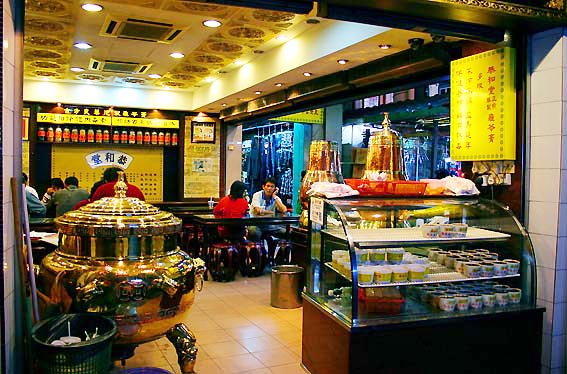
chinese-tea-house-and-restaurant-at-kuala-lumpurs-china-towns.jpg

Food. There are restaurants everywhere you turn – Indonesian, Indian, Thai, Italian, Chinese. And so far, they’ve been very good.

The architecture is fascinating, a mixture of tiled Malay buildings and Chinese shop fronts, terraced housing (this is the most common residential style since land is limited in the city), glass and chromium high-rises, with every so often the domes and minarets of the city’s spectacular mosques.

The Indian restaurant below is where a group of us, some backpackers, others professionals traveling on business, meet to compare notes every night.
K, a Muslim cook from London, of mixed Berber and Libyan heritage looks like Bob Marley and identifies with Africa. He divides his time between anti-Arab and anti-European invective that sounds good-natured to me but seems to rub the Swedish student the wrong way. The Swede is quiet mostly, but throws in a question now and again. The questions become quite pointed after K arrives chattily at his conclusion — which is that the quotas against non-Malays in Malaysia make sense. The Malays (the Bhumiputra) ought to be protected in their own home.

The Malay girl, who runs a guest house on the side and deals with travelers from around the world, agrees. Fortunately, the Saudis are too dumb to take advantage of the Malays, she says. But the Chinese? Why do they need help? After all, they’re from some place else….and the Indians too. Malaysia should belong to the Malaysians.

The Swede’s head turns evenly between the two, who are unaware that their views won’t fly in Europe, at least not under current European law. K’s anger against the Arabs for effacing Berber culture is deep-seated. It’s why he insists on calling himself African. They wiped out our culture, he says. They want to pretend we don’t have thousands of years behind us. How dare they call us barbarians?

What he said reminded me almost comically of the complaints of an Arab friend in DC, who often says – just as bitterly – that the Iraq war was a war waged by a modern culture envious of the ancient history of Iraq that was bent on wiping it out and replacing it with McDonalds and Starbucks.

(Actually, I believe Ann Coulter, the right-wing’s human daisy-cutter, did say something like that about ancient Mesopotamian culture:  AC: “Now the biggest mishap liberals can seize on is that some figurines from an Iraqi museum were broken ? a relief to college students everywhere who have ever been forced to gaze upon Mesopotamian pottery.” )

If I had a daughter, says K, I would never let her marry one of those Arabs. If they spoke to me I would ignore them. I wouldn’t let them get away with their injustice. I wouldn’t let them forget it.

So, says the Swede, do you think because you were oppressed by them it would be fine for you to oppress them now? Are you waiting for that?

The Swede asks it levelly but there’s an edge to his voice. K feels it and squirms. But he decides to stand his ground, anyway. Yes, why not? If they did it first?

But don’t you see, the Swede persists, then you become like them.

K looks at me helplessly. I accept the challenge.

Well, yes….and no. Of course, you have bitterness over the injustice. The bitterness is an appropriate feeling. It’s deserved. There’s nothing wrong with the anger at all. But practically, where does it get you? If you stew in it and let it poison you then you’ve added your own self-injury – a laceration – to the original harm.

In Europe, we believe there should be no discrimination under the law, says the Swede firmly. All races should be the same. He pets his chubby Malay girl friend who’s paying no attention at all but chatting over wifi about why the US won’t let her into the country as a tourist because of her religion. Most Malays are Muslim.

But there’s plenty of discrimination in Europe, insists K excitedly. Plenty. They hate immigrants there.

Still, the law says they should be treated equally, says the Swede.

K is upset now.

So what? Why does the law matter? It’s all hypocrisy.

It was interesting to hear arguments about race and quotas on the other side of the world no longer defined in terms of European and African, or European and Hispanic, First World and Third World.

My Malay acquaintances openly call the Tamils and Bangladeshis here “stupid” and “retarded.” So does the Swede, though much more gently and without the visceral feeling. Some of the Tamil workers I’ve seen here (and my experience is extremely limited) do indeed act and sound unfocused, even disoriented. But having worked with retarded and disturbed children, slow learners (as well as with the gifted) and seen a somewhat similar deportment among children who don’t make the cut in the regular classroom but aren’t really intellectually inferior in any serious way, I wonder if the problem isn’t mainly cultural. The Tamil workers, being dark-skinned and culturally quite different from the westernized Chinese and Malays, could be retreating into a kind of passive indifference. It doesn’t look like stupidity so much as the aftermath of cultural shock and anxiety. Many workers here are the descendants of indentured labor sent to Malaysia by the British from India. They have the disoriented air of people who aren’t conscious of having their own will… who wait for something to be done to them…or for them. And yes, there may also be a genetic component to differentials in intellectual performance.

But the harsh rhetoric from the Malays, themselves brown-skinned, was unsettling. Especially since foreigners in this country have always had to pay for their own education, whereas even under the British, the Malays had it for free……and were still out performed (as libertarian economist, Thomas Sowell has noted).

This is not the First or Second or Third World. And the whites (here they are the Chinese) and the browns (the Malays) and the blacks (the Indians, the darkest- skinned) may be all Asian – but they come from different races.

Europeans and most Middle Easterners (and a large number of Indians), on the other hand, are not racially different, but different in color only. They are Caucasians, only of different colors.

Back to Blogging

Back to the blog after quite a hiatus.

What have I learned from it, dear reader, that would be of any use to me and you this new year?

Two for you, first:

1. Resting from work that you love is stressful and boring. Working at what you love is restful.

2. Talking to like-minded strangers (readers on the web) is usually more civilized and productive than talking to flesh- and- blood colleagues who are out of step with you.

Two for me:

1. My old posts still get hits even when I don’t update the blog. I get as many hits now from not blogging as I got from blogging when I first began. That’s a big improvement. It means what I write has some value beyond the moment.
2. I am now a confirmed bloggerette (a female married to her website). Living without blogging seems pale. The life unblogged doesn’t seem quite worth it. What’s an experience unless you can get a post out of it?

Bottom Line:

Those four points add up to one. The virtual world is as “true” and human as the real world. Maybe more.

Actionable Item:

The Internet is a mental and emotional world first, a physical one only second. On the other hand, the real world out there works in reverse of that. On the net, ideas move people. In the physical world, people move ideas.

Just a thought.

Taking down MacDonalds in Asia….

“Commenting on the vision of Jose Bove the famous French activist who dismantled a MacDonald’s restaurant in his hometown of Millau, France and other Via leaders, one progressive journal has described the aim of the organization as the creation of a Farmers’ Internationale in much the same way that Communist and Social Democratic groups sought to establish the Communist International and Socialist International to unite workers in the 20th century. The main battle cry of Via Campesina, whose coordinating center is located in Indonesia, is “WTO Out of Agriculture” and its alternative program is food sovereignty. Food sovereignty means first and foremost the immediate adoption of policies that favor small producers. This would include, according to Indonesian farmer Henry Saragih, Via’s coordinator, and Ahmad Ya’kub, Deputy for Policy Studies of the Indonesian Peasant Union Federation (FSPI), “the protection of the domestic market from low-priced imports, remunerative prices for all farmers and fishers, abolition of all direct and indirect export subsidies, and the phasing out of domestic subsidies that promote unsustainable agriculture.”

Via’s program, however, goes beyond the adoption of pro-smallholder trade policies. It also calls for an end to the Trade-Related Intellectual Property Rights regime, which allows corporations to patent plant seeds, thus appropriating for private profit what has evolved through the creative interaction of the natural world with human communities over eons. Seeds and all other plant genetic resources should be considered part of the common heritage of humanity, the group believes, and not be subject to privatization.

Agrarian reform, long avoided by landed elites in countries like the Philippines, is a central element in Via’s platform, as is sustainable, ecologically sensitive organic or biodynamic farming by small peasant producers. The organization has set itself apart from both the First Green Revolution based on chemical-intensive agriculture and the Second Green Revolution driven by genetic engineering (GE). The disastrous environmental side effects of the first are well known, says Via, which means all the more that the precautionary principle must be rigorously applied to the second, to avoid negative health and environmental outcomes.

The opposition to GE-based agriculture has created a powerful link between farmers and consumers who are angry at corporations for marketing genetically modified commodities without proper labeling, thus denying consumers a choice. In the European Union, a solid alliance of farmers, consumers, and environmentalists prevented the import of GE-modified products from the United States for several years. Although the EU has cautiously allowed in a few GE imports since 2004, 54% of European consumers continue to think GE food is ”dangerous.” Opposition to other harmful processes such as food irradiation has also contributed to the tightening of ties between farmers and consumers, large numbers of whom now think that public health and environmental impact should be more important determinants of consumer behavior than price.

More and more people are beginning to realize that local production and culinary traditions are intimately related, and that this relationship is threatened by corporate control of food production, processing, marketing, and consumption. This is why Jose Bove’s justification for dismantling a MacDonald’s resonated widely in Asia: “When we said we would protest by dismantling the half-built McDonald’s in our town, everybody understood why — the symbolism was so strong. It was for proper food against malbouffe [awful standardized food], agricultural workers against multinationals. The extreme right and other nationalists tried to make out it was anti-Americanism, but the vast majority knew it was no such thing. It was a protest against a form of production that wants to dominate the world.”

More by Walden Bello at Countercurrents.

Kuala Lumpur impressions…

Here in Kuala Lumpur my thoughts about liberty are turning in a different direction….

But first, my impressions of the city so far:

KL airport is huge — but you don’t feel it. Everthing feels leisurely and spacious, no where as full as it really is. But that’s only because it’s laid out intelligently. KLIA is said to be rapidly overtaking Singapore as the best airport round here and a major hub for Asia.

The girls at the desk…sorry, young women…are dressed in a charming Muslim way – heads covered, long skirts and blouses — not in depressing black, but in pastel colors and soft textures. I can see potential for a Islamic high style — fitted, with graceful lines, not bulky and shapeless ..more definition. With droves of rich Saudis moving here, I imagine there will be a market. A Malay shop girl laughed scornfully and told me they were dumb and easy to fleece, and then returned to pouring contempt on the Chinese for taking advantage of the Bumiputra.

The train into town is first class (I wanted to say first world, but I don’t like the term. It says more than I want to say – turning economic development into a high school report, complete with A, B and C students). The landscape is green with palms, lots of thick green foliage, well-paved roads wetted down with a faint drizzle. The roads are narrower than I remember in Buenos Aires, but there’s a faint resemblance to the Argentine city because of the vegetation and the tiled roofs of the houses. In both cities even the modern houses have a charm entirely missing from one of those prefab McHouses that blight the suburbs in the US.

A light drizzle on and off, but the air is muggy and hot. It’s December and it feels like a late summer day in Baltimore. According to the papers, we didn’t go above 30 C, but to me it feels much higher. We’re near the equator after all. Maybe the number and size of the buildings contributes. The Petronas Towers, which is close to where I am staying in Bukit Bintang, are the world’s tallest twin towers.

I’m living above an Indian restaurant and round the corner from restaurants from every Asian country. There’s also that ubiquitous sign of expats – Starbucks (who would want Starbucks in Asia, home to the most interesting concoctions of tea and coffee around?) and a McDonalds. But what really got me was the hotel that I used as a landmark to find my way round to my place — Agora. Quite odd to see a Greek name that’s also the name of the company of my co-author Bill Bonner, who by the way, is in India right now, working on opening an office there. He’s very India positive, unlike investors like Jim Rogers. More on that at another time.

A blogging break…

I’m off the blog for a couple of days. Be back at the end of the week, from Kuala Lumpur, Malaysia.

I’m looking at houses with an eye to buy for myself but also to take the pulse of the ASEAN market and see if it might survive a possible global recession. I’m betting yes.

And just as a tip — do you think that costs a fortune? No. My RT fare came to 1150….

Not chump change but no more than many middle class families spend on a weekend trip to some banal beach resort.

Ron Paul Rivals: Mike Huckabee wants a planet in every pot…

Jesus was too smart to run for politics– that was Mike Huckabee’s great line during the Wednesday night debate.

Too bad politicians aren’t smart enough to quit playing Jesus…

I’m listening to Chris Matthews and Huckabee this evening around 5, on MSNBC, mangling theology.

Matthews at least has an excuse. What’s Huckabee’s? He used to be an evangelical pastor.

Was Jesus all-sweetness and light and forgiveness?

Huckabee kept quoting the line “In as much as you do this unto the least of my brethren, you do it unto me.”

No quarrel with that. But is a government program the proper definition of”doing unto the least”?

Who is the least? Is poverty the definition of being least?

Remember, this is the Jesus who also said this:

“For verily I say unto you, Till heaven and earth pass, one jot or one tittle shall in no wise pass from the law, till all be fulfilled.”

The law Jesus refers to here is the law of the old testament, which is based on justice and the concept of “deserving.”

This is in no way different from similar notions in the major religions, like the Hindu ideal of alms-giving, which is required to be directed toward the deserving if it is to be called dharmic (i.e., lawful, dutiful).

Now, in monetary terms, it’s true that what welfare expends is a mere drop next to the oceans that go to subsidize defense contractors, the space program, and Wall Street.

But the smallness of an error in physical terms doesn’t change its magnitude in terms of meaning.

We see the gospel through the eyes of socialism and then wonder at the results we get. Oddly, the same people who are dismayed by references to Biblical teaching when the subject is gender or reproductive rights are just fine with references to Jesus when the subject is taxes and welfare.

In other words, the gospel is used as nothing more than an imprimatur on whatever it is any constituency wishes for itself.

This was transparently clear from the quality of questions asked last night. Personally, I wouldn’t have entertained that level of argument in an undergraduate seminar, let alone a presidential debate.

But, none of the questioners themselves (or the moderators who allowed them) seemed to care that their questioning betrayed an attitude toward citizenship that was grasping, venal and self-centered in the extreme.

What’s in it for me was the sum of their inquiries. And with a couple of honorable exceptions, to a man, the Republicans were only too willing to be — or seem to be — all things to all people.

A chicken in every pot, and if we’re to believe Huckabee, a man on every planet. Fortunately, Duncan Hunter brought him back into orbit.

Ron Paul, like Hunter, seemed to be the only one aware that the only space we should be thinking about now is the big hollow space at the center of the US economy.

A lot of puffed up goo on the outside and nothing inside.

Like a dough-nut. Or more accurately, a no-more- dough-nut.

Charles Krauthammer on FOX News at 6 was clearly displaying an anti-Southern animus when he found nothing appealing about Huckabee. He would have been right on target if he’d found nothing conservative about the witty governor.

Ron Paul or the Banks?

“A piece of legislation passed by Congress in 2006, the Pension Protection Act, became a bonanza for the mutual fund industry. The Investment Company Institute (ICI) and mutual fund giant Fidelity successfully lobbied for automatic enrollment with defined contribution retirement plans such as 401 (k) and 403 (b) plans. The act virtually guaranteed the mutual fund business additional trillions of dollars in assets and billions in fees….”

Not only do the bankers and the financial industry have their greedy paws deep in your pension, they’re working day and night to make themselves even more unaccountable than they already are:

“With the stench of Enron fading away, Wall Street and corporate America are looking for less regulation once again and looking to regulate Sarbanes-Oxley. Some committee members read like an “in crowd” of Wall Street and its suppliers – Kenneth Griffn, CEO of Citadel Investment Group, one of the larger hedge funds in America, made over $210 million in 2005. Samuel Piazza, Global CEO of Price Waterhouse Coopers; Robert Glauber, Harvard Law Sschool porfoessor and former chairman and CEO of the NASD; Cathy Kinney, President and COO of the NYSE; William Tarrett, CEO of Deloitte; Robert Pozen of Massachussetts Financial Services; James Rothenberg, Chairman Capital Research and Management; and Thomas Russo, Chief Legal Office of Lehman Brothers…”

Barry Dyke in “The Pirates of Manhattan,” PP. 26 and 61.

Who among the candidates is talking about the disease itself and not the symptoms? Only Ron Paul.

Here he calls for the government to “Bring back honest money”at Lew Rockwell.

“The advantages given banks and other financial institutions by our fiat monetary system, which is built on a foundation of legal tender laws, allow them to realize revenues that would not be available to these institutions in a free market. This represents legalized plunder of ordinary people. Legal tender laws thus enable the redistribution of wealth from those who produce it, mostly ordinary working people, to those who create and move around our irredeemable paper.”
Unending capacity to create money allied to lack of unaccountability to anyone – is that a definition of absolute power? And we know what comes of that:

“The issue which has swept down through the centuries and which will have to be fought sooner or later is the people versus the banks….all power corrupts, absolute power corrupts absolutely.”

Lord Acton, 1887.

Looking up to crack-pot realists

the crackpot realists are frauds. We ordinary people, the great multitude on the bottom rungs of the power ladder, need to understand more clearly that when we look up at the self-anointed “deciders” who have the cosmic effrontery to presume themselves fit to rule us, we are looking up at fools.~ Robert Higgs.