Coke, Reliance Enter Indian Dairy Drink Market

“Jallikattu” or bull-taming, is an agricultural tradition intended to conserve and improve native cattle species, now under an existential threat from imported breeds and big corporations.

From the New Indian Express:

Natives that are not grown for pride are sent for slaughter causing drastic decline in sex ratio. Jallikattu enthusiasts claim the sport help to sustain bulls for longer.

“The bulls that don’t win the game are not used for pure-breed next generation natives. Each of the strong, pure natives are used for inseminating 10-15 cows. Let’s say half the bulls win human beings. Each of these will give rise to 15 more pure natives,” says a professor of Dairy Technology at TANUVAS. Going by Rajasekaran’s number, more than a lakh-and-a-half pure natives are produced by every batch of Jallikattu bulls.

Native species do not produce as much milk as some imported species and without impregnation by the best studs, partly conserved through Jallikattu, their existence would be in doubt.

India’s largest milk producer, Amul, in Gujarat, uses Jersey cows, imported from Holland.

Meanwhile,  beverage giant, Coca-Cola, is teaming up with India’s Reliance to enter the dairy drinks market in India, this year.

With demand rising powerfully, milk will soon have to be imported along with exotic semen and other inputs needed to continue cross-breeding the native and the foreign species. More imports means higher prices making milk unaffordable to the poor; it means higher costs, making farming impossible to the marginal farmer; it means reliance on European and hybrid breeds that demand more water and are less hardy; it means foreign species’ milk that causes schizophrenia, autism and type-1 diabetes.

That’s the context needed to understand the anger at the PETA-inspired ban of Jallikattu, already heavily regulated under India’s animal protection laws.


Government Widens Financial Reporting Requirements

The government is widening the number of transactions that will be directly reported by financial institutions to the income tax division:

Reiterating its November 2016 instruction, the Central Board of Direct Taxes (CBDT) in a notification dated January 17, has also asked banks to report all cash deposits of Rs 2.5 lakh or more made in one or more accounts of a person during November 9 to December 30, 2016, the 50-day window for deposits that was provided by the government following its decision to scrap high-denomination currency notes of Rs 500 and Rs 1,000.

“Cash deposits during the period November 9, 2016, to December 30, 2016, aggregating to Rs 12.50 lakh or more in one or more current account of a person (and) Rs 2.5 lakh or more in one or more account (other than a current account) of a person will have to be reported to tax authorities,” it said. Also, cash deposits during April 1, 2016, to November 9, 2016, in any account that are reportable should also be intimated to the tax authorities by January 31, 2017, the notification said.

It made it mandatory for a banking company or a cooperative bank to report cash deposits aggregating to Rs 10 lakh or more in a financial year, in one or more accounts (other than a current account and time deposit) of a person.

The tax department has also made it mandatory for a company or institution issuing bonds or debentures to report receipts from any person an amount aggregating to Rs 10 lakh or more in a financial year for acquiring bonds or debentures. A similar limit has been set for reporting purchase of shares and mutual funds.

“Buy back of shares from any person (other than the shares bought in the open market) for an amount or value aggregating to Rs 10 lakh or more in a financial year will need to be reported by a listed company,” the notification said. Purchase of foreign exchange including travellers cheque and a forex card aggregating to Rs 10 lakh would have to be reported to tax authorities.

Property registrar will have to report to tax authorities purchase or sale by any person of immovable property for an amount of Rs 30 lakh or more. Also, cash payment exceeding Rs 2 lakh for sale of goods or services of any nature will have to be reported, the CBDT’s notification said.

Banks will also have to report one or more time deposits, other than a time deposit made through renewal of another time deposit, of a person aggregating to Rs 10 lakh or more in a financial year, the CBDT said.

Payment made in cash for purchase of bank drafts or pay orders or banker’s cheque of an amount aggregating Rs 10 lakh or more in a financial year as well as payments made in cash aggregating Rs 10 lakh or more during a year for purchase of prepaid instruments issued by RBI need to be reported.

A banking company or a cooperative bank would also have to report cash deposits or cash withdrawals (including via bearer’s cheque) aggregating Rs 50 lakh or more in a financial year, in or from one or more current account of a person.”


NASA Admits Global Warming Fraud

H/T to Lew Rockwell on this gem:

NASA has actually admitted that there may be a link between the solar climate and the earth climate. “[In] recent years, researchers have considered the possibility that the sun plays a role in global warming. After all, the sun is the main source of heat for our planet,” Nasa confirmed. Despite the constant stories of how recent years have been the hottest, historically, NASA has estimated that four of the 10 hottest years in the U.S. were actually during the 1930s, with 1934 the hottest of all. This was the Dust Bowl; the combination of vast dust storms created by drought and hot weather.

CDIAC

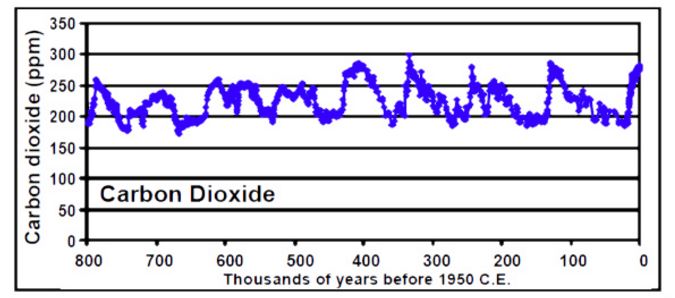
The branch of research looking at the ice core samples to document climate for thousands of years has established the major solar cycle of about 300 years. Carbon Dioxide Information Analysis Center (CDIAC), which has the ice core data back 800,000 years, is being shut down as of September 2017 (800,000-year Ice-Core Records of Atmospheric Carbon Dioxide (CO2)).

800000 carbon

The data clearly establishes that there has always been a cycle to CO2 long before man’s industrial age. This is data government wants to hide. As along as they can pretend CO2 has never risen in the past before 1950, then they can tax the air and pretend it’s to prevent climate change. Moreover, while we can clean the air with regulation as we have done, under global warming, they allow “credits” to pollute as long as you pay the government. It is the ultimate scam where they get to tax pollution and people cheer rather than clean up anything.”

Corporate-Govt Scams Untouched By DeMo

At what looks like one of the many globalist “change agent” sites that offer controlled opposition to the corporate-globalist wing, a young writer deconstructs DeMo correctly as blind to corporate-govt corruption at the highest levels, but then concludes that the enormous inequality that RESULTS from this nexus is really its CAUSE.

That of course is an infamous globalist meme in its own right that inevitably leads to further  government intervention, in the form of subsidies and grants to the victims of the earlier round of pro-corporate subsidies….and so it goes.

And how do I know the site is controlled opposition?

The slickness of the design, the crowd-funding, the themes (opposition to the menstruation taboo and reiteration of the “99 percent and 1 percent” thesis).

In separate CBI raids in 2013 and 2014, on the two companies mentioned above, large quantities of hard cash and accounting documents were seized from the respective offices. The documents which were seized contained a detailed account of payments allegedly made to high-ranking political figures. Amongst these figures are politicians from both BJP and Congress – Shivraj Singh Chauhan (CM-Madhya Pradesh); Raman Singh (CM–Chhattisgarh); Shaina NC (treasurer of BJP in Maharashtra); Sheila Dikshit (former CM of Delhi).

The documents related to the Birla matter also contain the signature of the deputy director of the Income Tax (Investigation). Despite this seemingly incriminating information, the Income Tax Department did not push for a further enquiry with the CBI. According to Mr Prashant Bhushan’s allegations, KV Chowdary did not look into the matter when he was the head of the income tax department.

According to Mr Prashant Bhushan, in an interview with The Wire, Mr Chowdary has been associated with controversial issues in the past – Ponty Chaddha’s income tax assessment and the stock guru scam. Despite this, he was appointed as the chief of the Central Vigilance Commission, against which the citizen collective Common Cause filed a writ petition in 2015.

Supreme Court has asked for more evidence on the matter. Meanwhile, many representatives from the BJP have rubbished the allegations, while representatives from the Congress and other parties seek an investigation into the issue. Little can be said as to what these documents will amount to in the court of law, as the next hearing is set to happen in January.

However, these allegations form another link in a series of alleged big-business scams involving the government. It makes the writer wonder, that if big corporate scams are indeed the biggest culprits of money laundering and corruption, shouldn’t we be targeting them instead of ?500 and ?1000 notes? Do meagre bribes by the majority of the people in the country even compare to the amounts cited in big corporate scams? Let’s find out.

Black Money In Corporate Scams, Political Campaigns And Demonetisation

Scams, as big as the Coalgate scam, raise many important questions about how best to identify, as well as, deal with the central issues surrounding black money.

Recently, other alleged major scams by corporates as revealed in the Essar tapes – wherein investigation is under way concerning the alleged systematic bribing of senior political officials, and the Directorate of Revenue Intelligence’s (DRI) probe into over 40 of India’s biggest energy companies (including Adani and Reliance) for artificially inflating prices of imported coal.

The amounts in these scams are believed to be massive. Thousands of crores of rupees. It is no secret that large amounts are laundered offshore to tax haven countries like Switzerland, Mauritius, etc.

There are many estimates of India’s foreign black money. According to economists Pellegrini, Sanelli and Tosti in an interview with Times of India, the amount invested in shares, debt securities and bank deposits in tax havens alone may add up to $181 Billion or ?10.5 Lakh Crore. One of the higher figures was perhaps given by Prof. R Vaidyanathan of IIM, who estimated that there was more than ?70 Lakh Crore in 2007-08, stashed away in more than 70 tax havens in the world!

Whether it is  ?10 lakh crore or ?70 lakh crore, the amount of money laundered offshore is a significant proportion of the GDP.

To add to this, let us consider probable circulation of black money through political parties, which get special exemptions and are not even subject to RTI. It is alleged in India that illegal funds are used by political parties for campaigns, which often come as unaccounted cash from unknown donors.

The 2014 elections were the second most expensive elections in world history, estimated to be $4.9 Billion (More than ?3 lakh Crore) having been spent on campaigning for seats. Fourteen of India’s biggest industrial houses set up electoral trusts to give money to their favoured parties.

The amount of money involved in the slew of corporate scams and party politics goes into thousands and lakhs of crores. To put it in perspective, India’s GDP for FY16 was ?135.7 lakh crores. In 2007, the World Bank had estimated the size of the black economy to be 23.2% of the GDP in 2007.  According to India Ratings, the withdrawal of high denomination notes is likely to destroy  ?4 lakh crore – about 12% of the total black economy. To do this, about 86% of all the cash in circulation was withdrawn in the form of ?500 and ?1000 denomination notes.

These figures should make everyone ask one question. Has demonetisation of high-value notes really struck at the heart of the black money economy? The writer is no economist. However, it doesn’t take an economist to see that the amounts of money involved in corporate scams and party politics constitute of a major chunk of the black economy. Moreover, the mechanisms of money laundering in these two cases rarely rely on the liquid cash economy and are even safeguarded by colloquial electoral and political practices.”

House Panel Castrates Itself For Modi

From India Today, comes news that the Public Accounts Committee (PAC) Panel has contradicted the statement of its chairman that Modi can be called before it to explain demonetization.

The contradiction comes following a strong protest lodged by a BJP member of the PAC with the Lok Sabha (Lower House) speaker:
“The PAC statement says that under the rules, “officials may be called to give evidence in connection with the examination of the estimates and accounts in a particular Ministry, Ministers shall not be called before the Committee either to give evidence or consultation:

QUOTE

  1. The PAC statement, however, further reads that the chairperson of the committee “may have an informal interaction with the Minister”.
  2. The PAC statement in interesting in the view of chairman K V Thomas’s stand that PM Modi Modi could be summoned if the panel is not satisfied with the responses of RBI governor Urjit Patel and finance ministry officials on demonetisation.
  3. Earlier, a BJP member of the PAC registered protest with the Lok Sabha speaker against the statement made by Thomas.
  4. On his part, Thomas cited precedents of PAC summoning union ministers during the chairmanship of senior BJP leader Murli Manohar Joshi, who wanted the then PM Manmohan Singh to appear before the parliamentary panel in connection with 2G and coal scams.
  5. Thomas also cited a 1996-example when the then agriculture minister C Subramaniam appeared before the committee over a CAG report.
  6. In 1992, the then finance minister Manmohan Singh faced PAC over Harshad Mehta stock exchange scandal.
  7. RBI Governor Urjit Patel is slated to appear before the PAC over demonetisation on January 20.

    END QUOTE

RBI: DeMo Disclosure Endangers Life, National Security

From Gulf-News:

India’s central bank refused to share specific details of Prime Minister Narendra Modi’s ban on high-value banknotes citing danger to life and national security, as the mystery deepens over who took the unprecedented decision.
The Reserve Bank of India recommended the move, which was accepted by the cabinet and announced by Modi on November 8, Power Minister Piyush Goyal told parliament in November. The RBI board approved the ban three hours before Modi’s speech and hadn’t discussed the matter before, a slew of responses to Bloomberg News’s Right to Information requests show.
However, the RBI told a lawmakers’ panel this week that the government had “advised” the monetary authority to “consider” the ban a day before the RBI board made its recommendation. The government then “considered the recommendations” and decided to withdraw the notes, culminating in Modi’s address that blindsided the nation.
The cloak of secrecy that has shrouded the currency ban decision is likely to bolster the view that authorities, both on Mint Street and in New Delhi, were not prepared for such a decision and the way it was announced. It risks undermining perceptions of the central bank’s independence and raises questions about Modi’s decision-making style and his communication with the RBI.
More clarity may emerge when RBI governor Urjit Patel deposes before a parliamentary committee on January 20. Details are essential to help assess the success of the shock move as well as gauge the impact of the decision on Asia’s No 3 economy.
“It is very perplexing that the RBI doesn’t answer questions about how the decision was arrived at,” said Shilan Shah, Singapore-based India Economist at Capital Economics. “There are concerns that in the whole process the RBI has been sidelined by the government and that raises questions about its independence,” he said, adding that authorities have not been transparent. Bloomberg News asked the RBI 14 questions between December 8 and January 2. The central bank as of January 11 had answered five, disclosing the date and time of the RBI’s board meeting and the fact that the board had never discussed demonetisation before November 8. It said it doesn’t have information to answer one question, on how many of the worthless notes have been deposited at commercial banks. It transferred two questions on printing of new notes to organisations that manage the presses. The RBI said that a question asking “what prompted the board to discuss and approve the withdrawal of notes” doesn’t come under the definition of “information” under the RTI Act. It provided different answers to a question asked three times, seeking details on board members who opposed the move. In two replies the RBI said “it is a matter of fact that the decision was unanimous.” In a separate response, it said “this information is not available on record.” To a question seeking details on the number of demonetised notes already at banks on the evening of Modi’s speech, the RBI claimed an exemption, citing danger to the life or physical safety of anyone who disclosed this information to the public. The RBI also claimed exemptions on two questions seeking detail on its preparations for the demonetisation and studies it used to forecast the impact of the move. Sharing these “sensitive matters” would endanger India’s sovereignty, integrity and security, according to the RBI.
The use of those specific exemptions are “perplexing,” Capital Economics’s Shah said. Shailesh Gandhi, a former bureaucrat with the Central Information Commission, told the FirstPost website on December 31 that the RBI’s attitude of stonewalling smacked of “sheer arrogance.”
“What the RBI is doing by refusing to answer queries under RTI is denying citizens their fundamental rights,” Gandhi said. Lawmakers are also seeking answers. Parliament was gridlocked as the opposition demanded discussions and voting on the measures, the Supreme Court is hearing petitions against the legality of the steps, and two lawmaker panels have sought explanations from the RBI.
The decision to demonetise was taken only when the stock of new currency notes was reaching a “critical minimum,” enough to meet a significant part of demand, the RBI told a panel in a note accessed by Bloomberg News. However, the currency swap was riddled with rule changes and data that analysts have questioned. Patel will depose before another lawmaker panel on January 20, which is expected to seek his view on the impact of the demonetisation on India’s economy.”

Crazy Like A Fox: RBI Figures Suggest Fraud Not Ineptitude

At newsclick.in someone crunches the numbers on the conflicting reports put out by the Reserve Bank of India’s on the number of new notes issued:

RBI’s figures on the number and value of new notes it has put in circulation do not add up. The discrepancy is of more than half a trillion rupees. Is RBI trying to deceive people by claiming to print more notes than it actually did? Or is the RBI, under the new governor, too inept to get its figures right?

[Lila: As I’ve blogged over and over, nothing about the chaos around DeMo indicates it was a blunder.  And if it is crazy, it is only the craziness of the fox. DeMo is planned chaos intended to conceal the insertion of fake currency, the funding of terror outfits, and the creation of fresh money-laundering opportunities – in short,  the objective of DeMo, as a black op, was THE DIRECT OPPOSITE OF MODI’S STATED GOALS.

It is a foreign-corporate attack on the country coming from the highest level, dressed up to look like a nationalist pro-poor policy. It enables gigantic corruption and terrorist-funding, while pretending to defend against corruption and terror.]

After demonetising the old Rs. 500 and Rs. 1000 notes, the RBI claims to have issued new notes worth 5.93 lakh crore. If we calculate the net value of the notes printed and issued by RBI, – as per their various press notes – we can account only for Rs. 5.27 lakh crore. More than half a lakh crore rupees – Rs. 63,000 thousand crore to be exact – are missing from the 5.93 lakh crore amount.  Simply put, RBI’s numbers just do not add up.

In December, RBI began releasing data on return of the old demonetised notes to the banking system, and also publishing data on the number and value of fresh notes issued to replace the old notes.

In a press note released on December 7th, (Interestingly, RBI’s 7th December’s press release has now been taken down) the RBI gives a break-up of the currency notes made available to the public between November 10th and December 5th. According to this, currency worth a total of Rs. 3.8 lakh crore has been issued out in this period. Rs.1.06 lakh crore was in notes of smaller denominations – the total number of these notes is 19.1 billion. The remaining amount comprised of Rs. 2000 and Rs. 500.

Again, on December 22nd, RBI released a press note , with a new set of figures.  According to the December 22nd note, between November 10th and December 19th, the central bank – the RBI — released currency worth total of Rs. 5.93 lakh crore to the public. The new press note also said that this amount was made up of 20.2 billion currency notes of smaller denominations, and 2.2 billion notes of higher denominations.

This means that, after December 7th, RBI gave out an additional 1.1 billion currency notes of smaller denomination (20.2 billion minus 19.1 billion). Even if, we were to assume that all these additional notes are in denomination of Rs.100, this would mean and addition of Rs. 0.11 lakh crore. This works out to a total worth of all smaller denomination notes issued as on December 22nd as Rs. 1.17 lakh crore: Rs. 1.06 lakh crore as per December 7th press note plus Rs. 0.11 lakh crore.

Out of the Rs. 5.9 lakh crore that RBI claims to have issued till December 19th, if Rs. 1.17 lakh crore is of smaller denominations, then Rs. 4.73 lakh crore would need to be in notes of higher denominations (Rs. 5.9 lakh crore minus Rs.1.17 crore).

RBI’s December 22nd press note states that it released 2.2 billion currency notes in high denominations. Even if all these notes were released in only Rs. 2,000 denomination, it totals up to only Rs. 4.4 lakh crore;  Rs. 33,000 crore remains unaccounted (Rs.4.73 lakh crore minus Rs. 4.4 lakh crore)

In fact, the missing money is likely to be much higher. We know that RBI has been releasing Rs. 500 notes along with Rs. 2,000 notes – even if in smaller amounts. In response to an unstarred question raised in Rajya Sabha on the composition of newly printed notes, the Minister of State for Finance, Arjun Ram Meghwal, on 6th December in a written answer provided figures that indicate that about 9% (in numbers, not values) of the newly printed notes supplied up to 29th November were in 500s, the rest in 2000s.

If we consider that 10% of the new notes of high denomination are now Rs. 500, and 90% are Rs. 2,000,  this works out to 0.2 billion as the number of Rs. 500 notes and 2 billion as the number of Rs.2,000 notes. This makes for a total of value of these notes to be Rs. 4.1 lakh crore: Rs. 4 lakh crore in 2000s and Rs. 0.1 crore in 500s.

The big question is, what happened to the remaining Rs. 63 thousand crore (Rs 4.73 lakh crore minus Rs. 4.1 lakh crore), which RBI claims to have issued to the public?

Is RBI trying to deceive people by claiming to print more notes than it did? ”

97% Banned Indian Notes Were White, Not Black

More proof that eradication of corruption could not possibly have been the motivation for the cash ban in this piece at Livemint.com:

All but 0.7 trillion  of the notes banned have been deposited, against the 5 trillion short-fall anticipated by the Modi govt, proving that almost all (97%) the banned notes were part of the legitimate cash-based economy now crippled by the ban:

Indians have deposited nearly all the currency bills outlawed at the end of the deadline last year, according to people with knowledge of the matter, dealing a blow to Prime Minister Narendra Modi’s drive to unearth unaccounted wealth and fight corruption.

Banks have received Rs14.97 trillion ($220 billion) as of 30 December, the deadline for handing in the old bank notes, the people said, asking not to be identified citing rules for speaking with the media. The government had initially estimated about Rs5 trillion of the Rs15.4 trillion rendered worthless by the sudden move on 9 November to remain undeclared as it may have escaped the tax net illegally, known locally as black money.”

The livemint.com piece, naturally, suggests that this was all a huge Modi blunder.

That doesn’t wash at all.

“Monumental blunder” is a kind of fall-back, limited hang-out position, and it’s being pushed by all the usual suspects (major media, globalist outfits, former globalist stooges, like Manmohan Singh).

Any kind of clear-sighted look at the facts shows that there was no blunder involved. Urjit Patel, the RBI governor, has himself said as much.

The repeated use of globalist memes, the date of 9/11 (which is how Indians write 11/9), the election of Trump on the same day the notes went into effect, the Gates connection, the McKinsey report, the involvement of De La Rue, the Sahara-Birla link, the Mallya Rothschild account, all these and multiple other factors show DeMo to have been a fully intended, carefully crafted “shock-awe” attack…

62 and counting RBI directives over 50 days cannot be error. They are intended to produce maximum chaos and trauma in the population.

2000 rupees notes printed with major defects (missing the head of Gandhi on some, running pink in water in some others), fake counterfeit-detection machinery,  all these facilitate counterfeiting, not security.

IT raids destroy political opponents in Tamil Nadu and Bengal; they are not directed against corruption at the very top.

This is economic war. Make no mistake.

New Indian Depositor Bill: Grandma Takes The Punch For Globalists

The New Financial Resolution and Deposit Insurance Bill of 2016  outs itself  with its use of the phrase “creative destructionto endorse the need for a quick resolution of bank and firm failure.

“Creative Destruction” in this usage is a  Marxist term, popularized by the economist Schumpeter and subsequently appropriated by neo-liberal economists, as well as  perpetual-war- theorists of the new world order, that describes the need for “capitalism” to “ceaselessly devalue existing wealth (whether through war, dereliction, or regular and periodic economic crises) in order to clear the ground for the creation of new wealth.”

That’s wikipedia.

“Isms,” however, do nothing. So I would replace the word “capitalism” there with “capitalists.”

And, being of a skeptical turn of mind, would replace even “capitalist” with “globalist cabal manipulating capital.”

As I blogged before, the reassuring sound of “deposit insurance” should not blind us to the fact that the bill actually demotes protection of depositors – the original mandate of the RBI act of 194 – to second place. The RBI’s new mandate is the ubiquitous one of “financial stability.”

On behalf of financial stability – which, in effect, means some institutions are “too big to fail, too big to jail,”  the new bill and the proposed new bankruptcy procedures – get around the standard Indian legal procedure and have complete authority to resolve any issue of bad debt, by winding up the firm/bank and/or restructuring the debt. In essence, that means, a small, overarching and centralized outfit can decide whom to bail out, whom not to, and who gets to foot the bill.

Bank depositors over 1 lakh (Rs 100000 or about $1800-2000) are unsecured creditors of the bank who will be stiffed in the face of senior debt holders.

In short, grandma takes the punch for the globalists.

Edmond De Rothschild: Modi Will Recapitalize Banks By March 2017

More proof that it was the Rothschild cabal, at the highest level of the globalist enterprise, that was behind Modi’s cash ban.

Not Modi, nor Obama, nor Delhi, nor the RBI, nor Washington, as the previous article I posted here suggested.

The cash ban came from the very pinnacle of the global financial markets.

The piece below is also proof that the ban had nothing to do with black money.

It was not even primarily about going to a cashless economy.

It is unlikely that even the Modi government is so out of touch with things as to believe that India is ready for such a transformation.

The ban was always an economic attack, intended to take money from the productive cash-based economy and give it to banks and big corporates (unproductive debtors).

It was intended to solve the problem of non-performing assets (i.e. bad debt).

The Rothschild memo adds to this. It explicitly urges the circumvention of the lengthy Indian legal process through bankruptcy courts, presumably after the model of the US.

Presumably, also, the new courts are to have much more leeway in deciding whose loans are to be written off and whose not, if the following is anything to go by:

Loans that were written off (Diageo-Mallya deal, February 2016, settlement funds going to Edmond de Rothschild account in Switzerland)   

Loans that will NOT be written off (SBI chief on farmers’ loans on Dec, 20, 2016)

Memo from the website of private banker and asset manager, Edmond De Rothschild Group (May 30, 2016):

The Indian economy has generated average real GDP growth of 6.5% in recent years. Yet the government is struggling to make significant headway in the area of structural reforms and this is preventing the country from realising its huge potential. Infrastructures by and large continue to creak, the labour market lacks flexibility and the financial markets need to be developed and opened further to international investors. When Narendra Modi became prime minister in mid-2014, it was hoped he would be able to make deep inroads with reforms, since he had gone on record as wanting to see India among the 50 business-friendliest countries in the world. Investors cheered this goal by bidding up the Bombay stockmarket, sending its valuation multiples soaring.

Subsequent events have reminded observers that Modi’s party does not wield a majority in the upper house of Parliament, where its bills often run into opposition. For example, the government’s flagship reform, a national goods and services tax that could boost GDP growth by 2%, has yet to be adopted.

However, the recently adopted Insolvency and Bankruptcy Code should breathe new life into India’s reform movement. It is meant to speed up the settlement of insolvency cases involving both companies and individuals. India has a sad history when it comes to settling and recovering on non-performing loans, an area where it still stands 130th in the country ranking compiled by the World Bank (see right-hand chart above). Insolvency proceedings drag on for an average of 4.3 years, with a recovery rate of just 25.7%. This is well shy of international standards. As a comparison, in China the process takes an average of 1.7 years, with a 36.2% recovery rate. The cumbersome nature and snail’s pace of debt collection in India has so far been due to archaic legislation, some provisions of which had not been revised since colonial times. This has actually encouraged debtors to drag their feet.

The new code, due to be signed into law in the coming weeks, will make it possible to settle insolvency cases in 180 days. During this period a committee of creditors will decide how to act on a payment default, i.e. by restructuring the debtor company’s liabilities or by winding it up. Creditors will moreover be classified, with senior debt taking precedence over subordinated claims. Moreover, insolvency cases will henceforth be overseen by bankruptcy courts, replacing the slower regular courts that have handled these matters up to now.

All this should have positive repercussions on India’s business climate by evening the balance of power between lenders and borrowers and by strengthening confidence on both sides. The Insolvency and Bankruptcy Code broadens the range of alternatives available to distressed companies, which will now be able to change their capital structure or reschedule their debt. This new-found flexibility should stimulate free enterprise at the local level.

From a more practical standpoint, dealing with bad loans quickly and effectively will not only reduce the portion of non-performing assets in banks’ balance sheets but also increase the supply of credit. At present nearly $150 billion of Indian banks’ assets are at risk (representing 10% of their combined loan books, including restructured assets). This weighs on their profitability and, worse, blocks resources that could be used to finance productive projects. The end result is a tepid investment cycle where money needed for infrastructure spending is in short supply.

The new code is also meant to help diversify the sources of credit available to borrowers, who are now 60% dependent on bank loans. The authorities’ objective is to encourage greater financing in the bond market and provide easier access to credit for smaller firms, which are often turned down by banks because of the higher credit risk involved.

Now the fanfare over the new legislation is fading, we should bear in mind that a whole ecosystem needs to be created. Setting up bankruptcy courts, training specialists and setting up databases to catalogue delinquent borrowers will all take time, meaning that the impact of the reform will only come in the medium/long term. Moreover, the recapitalisation of state-owned banks will be subject to the government’s budget restrictions.

Unlike China, however, India is developing a coherent process to address non-performing loans, a problem that is taxing its banking system. The Reserve Bank of India has set its sights high with the objective of weeding out and fully provisioning bad loans by March 2017. This clearly marks a major step towards expanding the country’s capital market, a vital effort in its economic development.