A little Housing Bubblicious….

The housing bubble – believe it or not – bubbles on, along with die-hard aficionados who are willing to gamble on another surge in prices following the recent rate cut.

Last night, I was talking to an acquaintance, a one-time computer consultant at the World Bank,  just back from the Carolinas to the suburbs of our great capital.

“Expensive?” I asked sympathetically, thinking he was planning on renting a condo. “Yes,” he replied. And then added he was buying….a single family house.

How did that work, I asked. Wasn’t McLean (VA) property some of the most expensive in the country?

“Maybe,” he said. “But McLean’s rolling in money. You buy a shed here and it goes up 25% in a few months.”

I remember someone telling me that. But that was a long time ago….in 2002. This is 6 years later.

McLean is still going up?

Oh yes, he said confidently ( he is as smart as they come).

“I’m going to get myself a loan from a Pennsylvania bank – the rates are better there. Then I’m going to buy a house here. For $700,000. Putting down between 0 and 10%. And sell by the end of the year…before my visa runs out…”

It was like listening to the exploits of Jesse Livermore, or some other titan of speculation.

But fortunately, there was this to bring me down to earth:

“I have been covering the housing bubble in McLean, VA through covering one house located on Great Falls Street. It has been over a year and the house remains unsold. (The last post on that house can be found here.) The house has not been listed in the MLS for months, but remains unsold.

There is a similar-sized house two doors down also for sale, but about $100,000 cheaper since they reduced the price in February. Also, on the corner of the same block is a house that has been for sale for a month or so. The price was reduced once already after the first weekend’s open house and now, it is scheduled to be auctioned this Sunday.

Don’t be fooled by the sign. The owners never lived in this ‘home’. They bought it a couple of months ago and after doing a quick renovation, are now trying to flip it. I am sure that it does not help having the house next to it up for sale, for less. In fact, the neighbor appears to have reduced their price in response to the auction being held next door. Those familiar with the area will agree that an auction in this area has been until now unheard of.

To their credit, it seems that for good or bad, they are very motivated to exit this property. Lets see if they accept an offer, if anyone bothers to give one.”

From Fred Fry.

Capitalist brotherhood – Kiva.org

“John Christopher, 44, a self-employed information technology consultant from Newton, learned about Kiva through an article in The Economist magazine. He has made loans to 14 businesses in six countries since joining Kiva in July 2006.

“I just like the idea that we’re all equal, no matter where you’re at,” he said. “This is a way to give them the benefits of the capitalistic system we have. And this will mean a long-term improvement to their lifestyle, because it improves their ability to earn a living.”

Though he declined to say how much he and his family have loaned, Christopher said it is much more than the average Kiva lender, which is about $86.

“I just feel that we’re more connected if we’re giving a large chunk of a person’s loan, and we’re more vested in their success as well,” he said. “But we’re not doing anything too crazy. We’ve said, this is how much we’re going to (loan), and when they repay it, we just turn it around and loan it to someone else.”

Christopher said he tries to get his family involved in choosing the businesses to support.

“I started looking at South and Central America because they’re close to us, and Africa, because I think it seems to have the biggest need,” he said. “I just try to find a variety of things, things that just look like a good business idea. The last loan I made, some guy in Africa was going to do a delivery business with a motorcycle. That made sense; it seemed like something a guy could make money at.”

Students from at least one Iowa school have become micro-lenders through Kiva as well. Catherine Mein, a social studies teacher at Ballard Junior-Senior High School in Huxley, learned about Kiva through an article in Smithsonian magazine.

“I actually just gave the magazine to the leader of (the student council service committee), and she got really excited about it,” Mein said. Made up of about 16 students, the student council decided to lend $25 each to three borrowers.

At first, the students printed out profiles of the potential borrowers to discuss them, Mein said. However, “they found that borrowers were being funded so quickly that they just went online and (viewed it using a projector) and everybody took a look at different people and decided that way.”

It’s likely the project will expand to the rest of the school as it’s offered to other teachers, she said. “It’s great; I like the idea of micro-lending, and it’s also introducing them to people in other countries and offering them some assistance.”

Each time a Kiva borrower makes a payment, the lenders with a stake in the business receive an e-mailed update with the percentage repaid. The lenders receive their principal back after the loan is fully repaid.

The interest charged by the participating “field partner” banks that actually extend the loans, which can be 15 to 20 percent or more, accrues to Kiva to keep the organization operating. The transfers are made through PayPal, which waives its fees on the transactions as its contribution to the organization.

Presently, the supply of loans is actually outpacing the demand from potential borrowers, said Fiona Ramsey, a Kiva spokeswoman. For that reason, Kiva has temporarily capped the amount any one lender can extend at one time to $25.

“People have wanted to do something like this for so long,” she said. “There’s such an excitement from the lenders, and (they really like) the idea that you can loan the money again and again. They get so excited about it that they tell people about it. It’s a real credit to the lenders; they’re the ones who are putting this forward.”

Last month, Kiva picked up 49,000 new lenders, including about 4,000 who signed up on Christmas Day, Ramsey said. Lending in January should get a bump from gift-certificate sales. “On Christmas Eve, we sold $259,000 in gift certificates; that must have been a lot of last-minute shoppers,” she said.

Messina, who said he has bought gift certificates for friends, also makes the optional 10 percent donation to Kiva each time he makes a loan. ”

Read more at KIVA.ORG – rated one of the best ideas of 2006.

What’s interesting is the way in which an organization like this refutes the idea of money as something which solidifies privilege. In fact, historically, you could argue that the free market has usually acted more as an equalizer.

(This will seem shocking to anyone who has been brought up on the socialist belief that the free market inevitably tends toward privilege. What they are confusing is a true free market and one in which monopolistic conditions and coercion prevail — usually because of an incestuous relationship between the state and business. Minus the state, I wonder whether that would still be the case)

It was the market which undermined social position, family, tradition and gender as determining factors of success in favor of whatever an individual could bring to the market – whether intelligence or aptitude or drive or talent or looks or emotional intelligence or charm or people skill.

Money converted these individual attributes into economic leverage in society…

Am-Bushing the Economy: The Republican Budget ’08

WASHINGTON – President Bush unveiled a $3.1 trillion budget proposal on Monday that supports a sizable increase in military spending to fight the war on terrorism and protects his signature tax cuts.

Bush called the document “a good, solid budget,” but Democrats, and even a top Republican, attacked the plan for using budgetary gimmicks to project a budget surplus in four years.

Comment:

Ah yes….fiscal responsibility, wasn’t it? The hall-mark of the conservative?

But in Bush-speak, more spending equals savings and a budget surplus down the road.

The day when Democrats sound fiscally saner than an incumbent Republican president is the day we know it’s not just the dollar that is on its death-bed.

Ron Paul Revolution: Ron versus Group-think on the Jack Stockwell show

Mobs Messiah’s and Markets
By Jack Stockwell Show
Listen to Darrell interview Lila Rajiva co-author of Mobs Messiah’s and Markets where you’ll learn what gives the media so much power in determining who the candidates will be in any election. Plus! Enjoy a look into “Group-think” as …
THE JACK STOCKWELL SHOW – http://jackthis.com

Ron Paul Revolution hits #1 on Amazon

Ron Paul’s Manifesto (out on April 30, 2008) – The Revolution – is now Number 1 on Amazon for biographies, and in the top 10 overall. Amazing.

But on FOX on Sunday, as the talking heads debated the front runners for the Republican nomination, was there a word about Paul?

Did anyone point out that if conservatives are unhappy with John McCain’s commanding lead and don’t think Romney is really a conservative, they only have to look at the INVISIBLE MAN of the campaigns (invisible, that is, on mainstream shows) – Ron Paul.

Ron Paul is a real conservative. If non-intervention and anti-imperialism sound un-conservative to you, you might want to double-check your own understanding of conservatism…..

Notice that the candidates that have fallen behind the front runners in the last few days are BOTH closely identified with their party’s establishment: Clinton is the Democrat establishment and Romney is the Republican establishment.

Note that Barack Obama – an African-American with a Muslim name, born in Asia – represents the effort of mainstream Democrats to show their disaffection for politics as usual and to affirm traditional Democrat values – in this case, racial reconciliation and domestic economic issues. Note that John McCain – a former Vietnam vet who was tortured as a POW – does the same for mainstream Republicans, in so far as he represents national security and homeland defense.

What that says is there really is a public hunger for anti-establishment figures. Too bad, it’s being fed by Obama and McCain, neither of them anti-establishment, except in a cosmetic sense. On the burning issues of debt and war I expect neither of them to do anything very radical at all.

The media should allow the public to have an in-depth look at a real anti-establishment candidate. The only one who is heading a real, if stealth, revolution against the vested interests that govern us.

Suhayl Saadi: Martin Amis embraces the sirens of destruction

The Second Plane – Martin Amis

Losing a war against cliché

David Sandison

Martin Amis


Reviewed by Suhayl Saadi

Friday, 1 February 2008

This collection of essays, articles, book reviews and fiction delineates its author’s political trajectory since the destruction of the World Trade Centre in 2001. The opening piece sensitively evokes the horrific aftermath in the Big Apple, while in “The Wrong War”, Martin Amis presciently identifies the disastrous centrifugality and “natural ramification of pure power” that was the invasion of Iraq.

His comments on creative writing in “The Voice of the Lonely Crowd” and “Terror and Boredom” suggest an exciting and fruitful professorial sojourn at Manchester University. Amis explores the writer’s position with regard to religion and deftly exposes the inner space common to imagistic terrorism and reality TV: “the canonisation of the nobody”.

The short stories are masterful and transcendent. “In the Palace of the End”, a hallucinatory satire set in a totalitarian state, is transfigured by its insistent humanity. The protagonist in “The Last Days of Muhammad Atta” descends from Camus; Islamism is as much pornographic spectacle as nativist puritanism. In general, the earlier pieces work best, although a review of Ed Husain’s The Islamist provides one of the very few beneficent portrayals of Muslim people.

However, the author’s comprehension of Islam and Islamism remains inadequate. He tends to discount violence inflicted on the economic periphery, and displays wilful ignorance of history, economics and global politics. From the title onwards, Amis buys into the febrile irrationalism that “9/11 changed the world” and that “our current reality is unforeseeable, so altogether unknowable”. These dominant sophistries seem to have displaced the earlier flatus about the “end of history”. His worthy identification of “the moral crash” supposedly consequent upon September 2001 conveniently ignores the train-wreck of history, and the systemic amorality of empires and nation states.

Amis rightly criticises the cultish reductiveness of Islamism. In its “intellectual vacuity”, this malevolent pantomime is a paradigm of patriarchy, neo-colonial humiliation and big bucks. But for Amis and Islamists, alike, the world has become simple. He follows psy-operators like the historian Bernard Lewis into disinformation, medieval tropes and the High Victorian fixation with sex and camels. Amis correctly accuses Islamists of lacking a sense of temporality, yet he himself displays the identical deficiency: “The West had no views whatever about Islam per se before September 11, 2001”. Tell that to Bacon, Burton, Burckhardt, Bin Laden’s CIA handlers or, indeed, Bernard Lewis.

Christianity, Islam and Judaism form a syncretic civilisation, yet Amis tiresomely essentialises, as in, “the Muslim male”, and seems content to subjugate intellect to atavism: “All religions, unsurprisingly, have their terrorists… We are hearing from Islam.” One presumes that this is the tribal, rather than the royal, “we”. He iterates a link between Nazism and Islam, yet the Pope was in bed with Hitler and the Holocaust was a millennial culmination of dehumanisation in European Christendom. Bizarrely, Amis seems to think that Israel-in-Bavaria would have faced only lederhosen.

The Axis of Greed has systematically subverted secularism, rationality and economic independence throughout the Oil Belt. The result is militarism and theocratic psychosis. Ignoring this history, in “Iran and the Lords of Time”, Amis instead seems energised by pessimism and strategies of tension. Like his irony, his compassion is largely unipolar. Rather than offering a reasoned analysis of war as economic driver, as the book goes on, criticism of US-UK policy is restricted to the uncontentious, the tabloid and the tactical.

Amis implicitly concurs with Mark Steyn’s hysterical thesis in America Alone, which boils down to this: “Be very afraid: soon, you will be swamped”. Population growth is determined by poverty and female literacy levels. If, in Afghanistan, “the population has increased by 25 per cent” since 2001, it is because of returning refugees, not because of “‘genogenesis'”. Ultimately, Amis’s prose degenerates into propaganda: “the forces of darkness are arrayed against the forces of light”.

With occasional exceptions (“his smile… is a rictus, and his eyes are as hard as jewels”), “On the Move with Tony Blair” is fatuous and indulgent. Anti-war protest is depicted as “an incensed but microscopic goblin” while, up close, Bush becomes “generous and affectionate”. Embedded with the former PM, our fearless, flak-helmeted author descends on Iraq, just another chorister for the powerful.

In distortions of history, we are informed that the Nazis were “pagans”, that the First World War was “made in Berlin” and, in a Borgesian contradiction of his earlier self, that the intention of the Bush administration in invading Iraq was “a dramatic (and largely benign) expansion of American power”. The “dame on the Clapham bus” in Cairo, Lahore or Tehran, to whom Amis denies any expression in this book, has greater awareness of the architectures of power and history than soulful literati granted licence to intellectualise visceral bigotries, wrestle with mannequins and indulge in onanistic battle-talk. These writers display so much of what Amis calls “moral unity and will” that their prose tends towards the indistinguishable. “In politics it is surprisingly easy to move from side to side while staying in the same place.” Indeed: for the likes of William Shawcross, Christopher Hitchens, David Aaronovitch, Melanie Phillips and now Martin Amis, time’s arrow points always towards war.

Global and domestic realities demand a sustained and lucid critique of the intertwined pathologies of Islamism and capitalist war doctrine, and a resolute exploration of alternatives. Far from being morally relativistic, this represents a rational resistance against these ferocious and mutually reinforcing dogmas of guns, butter and God. Unlike novels and drama, life is neither reducible nor dualistic, and Amis does a great disservice by pretending otherwise. It is sad but revealing that such a talented man has abrogated reason and embraced the sirens of destruction. This book is a document of surrender.

Suhayl Saadi’s novel ‘Psychoraag’ is published by Black & White; his ‘The Queens of Govan’ will be premiered this month by Scottish Opera
Jonathan Cape £12.99 (214pp) £11.69 (free p&p) from 0870 079 8897

Who’s the most bigoted of them all?

“It’s been said that industrialized nations are becoming more intolerant of foreigners, and a provocative new paper in the August issue of Kyklos tries to quantify just how bigoted Western nations are.

The paper’s authors used responses from a question in the Human Beliefs and Values Survey — a twice-a-decade survey of social and political attitudes around the world — which asked respondents how they would feel about living next to: People of different ethnicities, Muslims, Jews, immigrants or foreign workers, and homosexuals.

The researchers used these answers as a proxy for bigotry in each country.(The survey took place in 1999-2000).

And the most prejudiced country? Drumroll please…

Northern Ireland with an estimated 44 percent of its population saying they wouldn’t want to live next to one of the above five groups took the top “prize.” Breathing down it’s neck was Greece with 43.2 percent and at 37.6 percent Italy rounded out the top three.

The least bigoted nations were dominated by Scandinavian countries: Sweden (13.4%), the Netherlands (17.2%), Iceland (18.4%), Canada (21.5%), Denmark (21.9%).

(Germany joins the ranks of the most bigoted nations using an alternative measure based on how strong bigoted feelings were among those who had them, the researchers found.)

The United States was estimated to have a 30.4 percent level of bigotry.

On average, about one out of every three people in the 19 countries used in the study were bigoted.

By far the most hated group were homosexuals with an overall average of 19.6 percent of people saying they wouldn’t want them as neighbors. Next up were Muslims with 14.5 percent, but since the survey was taken before September 11th, those results might be much different today.”

More here in a report produced by researchers from the Universities of Ulster and Queensland.

Racial Discrimination in Malaysia…

March 29, 2006 To the Editor:

There is a list of statistical data detailing racial discrimination in Malaysia, practiced by the government and its agencies. This list is an open secret. Its existence is best verified by government itself since it keeps the statistics.

This list is not in the order of importance; that means the first one on the list is not the most important and the last one on the list does not mean it’s the least important.

This list is a common knowledge to a lot of Malaysians, especially those non-Malays (Chinese, Ibans, Kadazans, Orang Asli, Tamils, etc.) who have been racially discriminated against.

Figures in this list are merely estimates, so please take it as a guide only. The government of Malaysia has the most correct figures. Is government of Malaysia too ashamed to publish their racist acts by publishing racial statistics?

This list covers a period of about 48 years since independence (1957).

List of racial discriminations (Malaysia):

(1) Of the five major banks, only one is multi-racial, the rest are controlled by Malays.

(2) 99% of Petronas directors are Malays.

(3) 3% of Petronas employees are Chinese.

(4) 99% of 2000 Petronas gasoline stations are owned by Malays.

(5) 100% all contractors working under Petronas projects must be of Bumis status.

(6) 0% of non-Malay staff are legally required in Malay companies. But there must be 30% Malay staffs in Chinese companies.

(7) 5% of all new intake for government police, nurses, army, are non-Malays.

(8) 2% is the present Chinese staff in Royal Malaysian Air Force (RMAF), a drop from 40% in 1960.

(9) 2% is the percentage of non-Malay government servants in Putrajaya, but Malays make up 98%.

More here

Kuala Lumpur in color….

Continuing my impressions of Kuala Lumpur. It’s rained on and off nearly every day, so my chakkars have been limited to the Bukit Bintang area and Chinatown (below). But that’s a lot just there, this being the heart of the city.
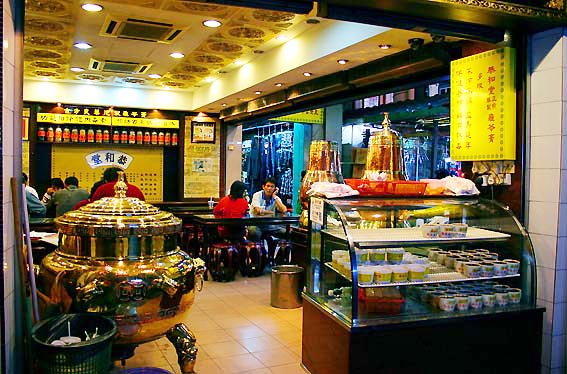
chinese-tea-house-and-restaurant-at-kuala-lumpurs-china-towns.jpg

Food. There are restaurants everywhere you turn – Indonesian, Indian, Thai, Italian, Chinese. And so far, they’ve been very good.

The architecture is fascinating, a mixture of tiled Malay buildings and Chinese shop fronts, terraced housing (this is the most common residential style since land is limited in the city), glass and chromium high-rises, with every so often the domes and minarets of the city’s spectacular mosques.

The Indian restaurant below is where a group of us, some backpackers, others professionals traveling on business, meet to compare notes every night.
K, a Muslim cook from London, of mixed Berber and Libyan heritage looks like Bob Marley and identifies with Africa. He divides his time between anti-Arab and anti-European invective that sounds good-natured to me but seems to rub the Swedish student the wrong way. The Swede is quiet mostly, but throws in a question now and again. The questions become quite pointed after K arrives chattily at his conclusion — which is that the quotas against non-Malays in Malaysia make sense. The Malays (the Bhumiputra) ought to be protected in their own home.

The Malay girl, who runs a guest house on the side and deals with travelers from around the world, agrees. Fortunately, the Saudis are too dumb to take advantage of the Malays, she says. But the Chinese? Why do they need help? After all, they’re from some place else….and the Indians too. Malaysia should belong to the Malaysians.

The Swede’s head turns evenly between the two, who are unaware that their views won’t fly in Europe, at least not under current European law. K’s anger against the Arabs for effacing Berber culture is deep-seated. It’s why he insists on calling himself African. They wiped out our culture, he says. They want to pretend we don’t have thousands of years behind us. How dare they call us barbarians?

What he said reminded me almost comically of the complaints of an Arab friend in DC, who often says – just as bitterly – that the Iraq war was a war waged by a modern culture envious of the ancient history of Iraq that was bent on wiping it out and replacing it with McDonalds and Starbucks.

(Actually, I believe Ann Coulter, the right-wing’s human daisy-cutter, did say something like that about ancient Mesopotamian culture:  AC: “Now the biggest mishap liberals can seize on is that some figurines from an Iraqi museum were broken ? a relief to college students everywhere who have ever been forced to gaze upon Mesopotamian pottery.” )

If I had a daughter, says K, I would never let her marry one of those Arabs. If they spoke to me I would ignore them. I wouldn’t let them get away with their injustice. I wouldn’t let them forget it.

So, says the Swede, do you think because you were oppressed by them it would be fine for you to oppress them now? Are you waiting for that?

The Swede asks it levelly but there’s an edge to his voice. K feels it and squirms. But he decides to stand his ground, anyway. Yes, why not? If they did it first?

But don’t you see, the Swede persists, then you become like them.

K looks at me helplessly. I accept the challenge.

Well, yes….and no. Of course, you have bitterness over the injustice. The bitterness is an appropriate feeling. It’s deserved. There’s nothing wrong with the anger at all. But practically, where does it get you? If you stew in it and let it poison you then you’ve added your own self-injury – a laceration – to the original harm.

In Europe, we believe there should be no discrimination under the law, says the Swede firmly. All races should be the same. He pets his chubby Malay girl friend who’s paying no attention at all but chatting over wifi about why the US won’t let her into the country as a tourist because of her religion. Most Malays are Muslim.

But there’s plenty of discrimination in Europe, insists K excitedly. Plenty. They hate immigrants there.

Still, the law says they should be treated equally, says the Swede.

K is upset now.

So what? Why does the law matter? It’s all hypocrisy.

It was interesting to hear arguments about race and quotas on the other side of the world no longer defined in terms of European and African, or European and Hispanic, First World and Third World.

My Malay acquaintances openly call the Tamils and Bangladeshis here “stupid” and “retarded.” So does the Swede, though much more gently and without the visceral feeling. Some of the Tamil workers I’ve seen here (and my experience is extremely limited) do indeed act and sound unfocused, even disoriented. But having worked with retarded and disturbed children, slow learners (as well as with the gifted) and seen a somewhat similar deportment among children who don’t make the cut in the regular classroom but aren’t really intellectually inferior in any serious way, I wonder if the problem isn’t mainly cultural. The Tamil workers, being dark-skinned and culturally quite different from the westernized Chinese and Malays, could be retreating into a kind of passive indifference. It doesn’t look like stupidity so much as the aftermath of cultural shock and anxiety. Many workers here are the descendants of indentured labor sent to Malaysia by the British from India. They have the disoriented air of people who aren’t conscious of having their own will… who wait for something to be done to them…or for them. And yes, there may also be a genetic component to differentials in intellectual performance.

But the harsh rhetoric from the Malays, themselves brown-skinned, was unsettling. Especially since foreigners in this country have always had to pay for their own education, whereas even under the British, the Malays had it for free……and were still out performed (as libertarian economist, Thomas Sowell has noted).

This is not the First or Second or Third World. And the whites (here they are the Chinese) and the browns (the Malays) and the blacks (the Indians, the darkest- skinned) may be all Asian – but they come from different races.

Europeans and most Middle Easterners (and a large number of Indians), on the other hand, are not racially different, but different in color only. They are Caucasians, only of different colors.