Natural AC: Five plants that can dehumidify for free


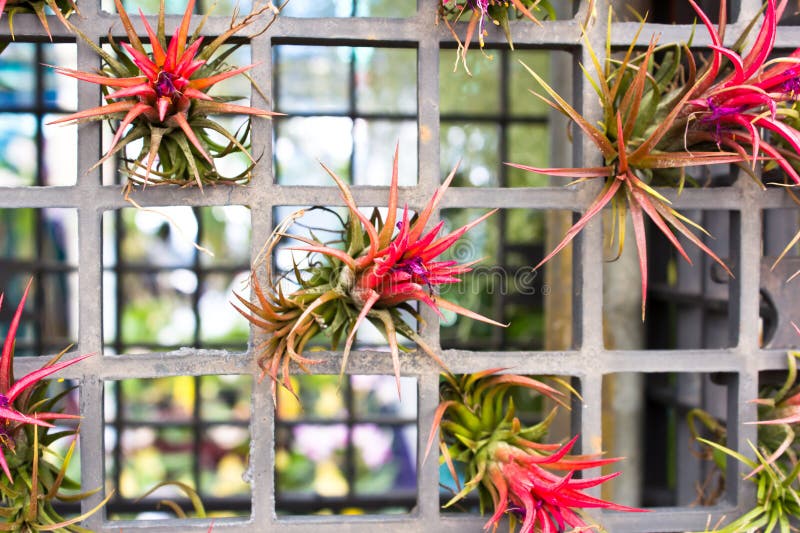
Tillandsia Royalty Free Stock Images

I’ve been looking around for natural methods to combat humidity for those days when the air-conditioner fails….or in places where it isn’t used.

For instance, AC isn’t as popular in Europe as it is in the United States.

That’s for a variety of reasons – including greater environmental awareness, better built homes, and popular fear of illness from constant exposure to cold air. Many Europeans think  air-conditioning makes you sick.

[Read this American tourist’s AC-induced cultural-shock in France.]

AC is also a lot of maintenance and expense.

So, finding a way to get humidity down without becoming dependent on a complicated mechanical device has got to be attractive to anyone with a survivalist bent.

There are several well-known natural methods to reduce humidity, but they still take quite a bit of effort and not all the ingredients are easy to come by in developing countries.

One of them requires hanging cheese-cloth (or gunny, burlap, or jute) bags of rock-salt from the ceiling, with buckets beneath to catch the water as it drips down.

Rock-salt is a desiccant, which means it extracts the moisture from the air until it is water-logged itself.

If you’ve ever had a salt-shaker that got clogged on humid days, you know how that works.

By the way, the solution to moisture in salt-shakers is simple – throw in a few grains of raw rice. They’ll absorb moisture in the shaker and keep your salt dry.

If rock-salt (salt with large crystals) is unavailable where you live, you can also spread table-salt in pans and leave them on counters or shelves. Table salt will absorb some atmospheric moisture until it’s too wet do absorb any more.  After the salt becomes water-logged, it can still be heated, dried, and reused.

Other dehumidifiers include baking soda , silica, and charcoal briquets. They do well as desiccators, but they’re not cheap in many places and they need to be replenished…or, in the case of silica, heated for reuse.

I’ve never tried salt or silica this way, so I don’t know if it actually has an appreciable effect on the humidity inside a house that’s worth the effort and clutter of pans and bags all over the place.

A simpler and more aesthetic method would be to grow indoor plants that absorb humidity.

At first, this seems counter-intuitive, because most plants add to the moisture content of the air.

If you live in an arid area, humidifying plants can be very useful.

That’s besides all the other proven benefits of house plants – purifying the air, improving mental focus and general health, speeding up healing, and making it easier for you to breathe.

Still,  there are a few plants that reduce humidity or at least balance it.

DoItYourself.com has a list of five “plant dehumidifiers” that are easily grown indoors:

1. The Peace Lily, which needs watering just once a week and sucks in moisture from the air the rest of the time.

2. The Reed Palm, which also purifies the air.

3. English Ivy, which you can hang from the ceiling out of your way, where it will reduce humidity and take care of airborne mold.

4. Boston Fern, which balances the humidity in the air, in addition to reducing it.

5. Tillandsia (also known as air-plant), which doesn’t even need a root system to absorb water an nutrients from the atmosphere.

The catch to this list is that when I researched the names of plants that add to humidity indoors, three names on this list –  the peace lily, the English Ivy, and the Boston fern – showed up on the list of humidifiers as well.

So, if humidity is a severe problem where you live, it might be better to just stick with the Reed plant  (one of the most useful plants in permaculture) and Tillandsia.

Tillandsia, a type of bromeliad, needs no soil and very little watering and can be mounted on cork, wood, wire, twigs, on a shelf or wall cabinet.

Rain-water harvesting: Green living on a Bangalore roof

From Rainwaterharvesting blog, run by a Bangalore couple who are active in the water-conservation and rain-harvesting movement in India:

“Almost all the rain on the building site falls on the roof. In Bangalore it can rain 970 mm in an average year. This meant that our house roof with an area of 100 square metres had 97,000 litres of pure rainwater falling on it. With the idea why allow it to go waste, we started to harvest it? This harvesting was done at many levels.

From the staircase rooftop which had an area of 10 square metres, we placed a Rain barrel and collected the water on the roof itself. A small platform was designed and the 500 litre Rain Barrel placed on it. On the staircase roof we placed a gutter to collect the rain. This came down into a vertical pipe with an end cap called the first rain separator. During the first rain and subsequently when we want to clean the roof or the rain gutter we open the cap and the dusty water flows out through the first rain separator. Then after a ‘Y trap’ rainwater flows in through a ‘dhoti filter’ into our rain barrel. We checked the rainwater quality using a H2S strip test and found the water potable. Sometimes when there is slight contamination we use a method called SODIS (Solar Disinfection) to treat the collected rainwater for drinking purpose. Here you fill a PET bottle with the rainwater and leave it in the sun for 5 hours. The water is now sterilized and can be brought into the house cooled and is ready for drinking. This is not a low cost solution for water treatment but a no-cost solution.  Our annual requirement of drinking cooking water comes from this rain barrel alone.

Rain Barrel

We also have an Ecosan toilet on the terrace. This pan in the toilet separates solids and liquids at source. We collect the urine in a barrel, dilute it and use it as a fertilizer for our terrace garden. The solids are covered with ash every time we use it. This is then transferred to some Blue drums we have kept on the terrace and again covered with earth or straw. We then plant trees in these drums. Trees such as Papaya, lemon, curry leaves, sapota are planted and they grow well. No waste from our toilet on the terrace leaves the roof.

The rainwater falling on the Ecosan toilet too is collected in a 200 litre rain barrel and used for ablution purpose.

We have a box type solar cooker to cook our lunch on the terrace. A solar water heater heats water for bath and for the kitchen. During cloudy days we use a ‘Gujarat boiler’ which uses bio-mass for the water heating. The Gujarat Boiler also generates ash for us to use in the Eco-san toilet. We have planted many trees in front of the house and the twigs and branches from the trees are used for the Gujarat Boiler.

Next we have placed a bathroom on the terrace itself. This also has a front loading washing machine which is one of the most water efficient ones in the market. We collect the water from the bath we have on the terrace bathroom as well as from the washing machine in a small ferro-cement tank placed just below the roof slab. We then pump it up to a planted reed filter to clean up the grey-water using a small pump. The reed filter is Cattails – reeds found in lakes- placed in 4 blue drums. In a fifth drum we have sand and gravel filter to clean up the grey-water further. This treated grey-water is then used for the terrace garden where we sometimes grow rice paddy.  Some extra grey-water is also used for flushing the toilet in the ground floor. No greywater is allowed to go waste.

The rice on the rooftop grows well on even a small area. We place 2 sheets of a pond lining material called Silpaulin with a brick edging. The sheet is then filled with a mix of compost, vermi-compost and red earth up-to a depth of 2 to 3 inches. Rice paddy is then planted in it. The water required for the paddy comes from grey-water alone. For the fertilizer the urine from the Eco-san toilet is used. Kitchen waste which is composted is also added to the soil. We have had productions of paddy to the tune of 1 kg per square meter. We have also found that we can grow 4 crops of rice in a year. Millets can also be grown instead of rice. Vegetables such as tomatoes, brinjals, lady-fingers, chilies all grow on the terrace though the monkeys who frequent this place can also be a nuisance at times.

A small wetland has also been created in a ferro-cement tank where different plants and fishes occupy and clean water.

Solar photo-voltaic panels on the roof provide enough power for us to store in batteries and use to light 11 bulbs in the house. The house incidentally has no fans let alone AC’s thanks to the cool terrace as well as thanks to the trees planted on the sides which enfold it in shade.

A well designed rooftop can provide all the water required for a house-hold, provide energy for cooking , lighting and water heating, provide food-grains and vegetables , enhance bio-diversity as well as absorb all the waste-stream from the house from the kitchen and bathroom / toilets and convert it to reuse .