Natural AC: Five plants that can dehumidify for free


Tillandsia Royalty Free Stock Images

I’ve been looking around for natural methods to combat humidity for those days when the air-conditioner fails….or in places where it isn’t used.

For instance, AC isn’t as popular in Europe as it is in the United States.

That’s for a variety of reasons – including greater environmental awareness, better built homes, and popular fear of illness from constant exposure to cold air. Many Europeans think  air-conditioning makes you sick.

[Read this American tourist’s AC-induced cultural-shock in France.]

AC is also a lot of maintenance and expense.

So, finding a way to get humidity down without becoming dependent on a complicated mechanical device has got to be attractive to anyone with a survivalist bent.

There are several well-known natural methods to reduce humidity, but they still take quite a bit of effort and not all the ingredients are easy to come by in developing countries.

One of them requires hanging cheese-cloth (or gunny, burlap, or jute) bags of rock-salt from the ceiling, with buckets beneath to catch the water as it drips down.

Rock-salt is a desiccant, which means it extracts the moisture from the air until it is water-logged itself.

If you’ve ever had a salt-shaker that got clogged on humid days, you know how that works.

By the way, the solution to moisture in salt-shakers is simple – throw in a few grains of raw rice. They’ll absorb moisture in the shaker and keep your salt dry.

If rock-salt (salt with large crystals) is unavailable where you live, you can also spread table-salt in pans and leave them on counters or shelves. Table salt will absorb some atmospheric moisture until it’s too wet do absorb any more.  After the salt becomes water-logged, it can still be heated, dried, and reused.

Other dehumidifiers include baking soda , silica, and charcoal briquets. They do well as desiccators, but they’re not cheap in many places and they need to be replenished…or, in the case of silica, heated for reuse.

I’ve never tried salt or silica this way, so I don’t know if it actually has an appreciable effect on the humidity inside a house that’s worth the effort and clutter of pans and bags all over the place.

A simpler and more aesthetic method would be to grow indoor plants that absorb humidity.

At first, this seems counter-intuitive, because most plants add to the moisture content of the air.

If you live in an arid area, humidifying plants can be very useful.

That’s besides all the other proven benefits of house plants – purifying the air, improving mental focus and general health, speeding up healing, and making it easier for you to breathe.

Still,  there are a few plants that reduce humidity or at least balance it.

DoItYourself.com has a list of five “plant dehumidifiers” that are easily grown indoors:

1. The Peace Lily, which needs watering just once a week and sucks in moisture from the air the rest of the time.

2. The Reed Palm, which also purifies the air.

3. English Ivy, which you can hang from the ceiling out of your way, where it will reduce humidity and take care of airborne mold.

4. Boston Fern, which balances the humidity in the air, in addition to reducing it.

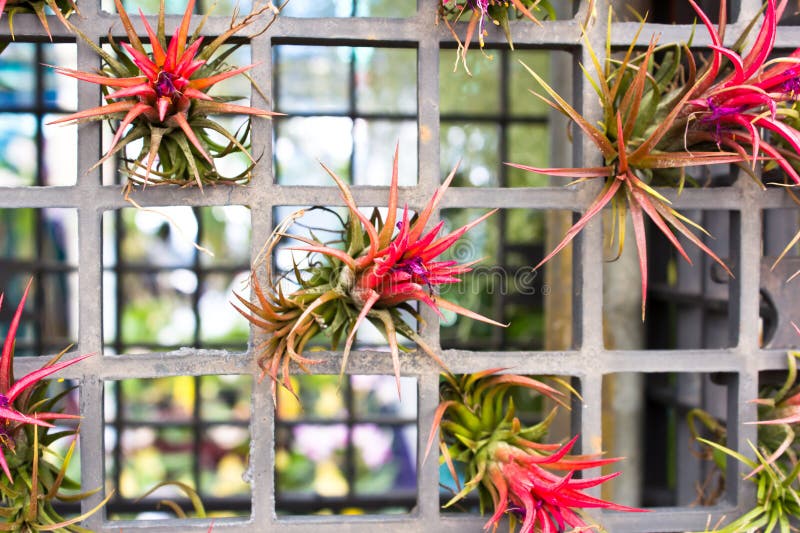
5. Tillandsia (also known as air-plant), which doesn’t even need a root system to absorb water an nutrients from the atmosphere.

The catch to this list is that when I researched the names of plants that add to humidity indoors, three names on this list –  the peace lily, the English Ivy, and the Boston fern – showed up on the list of humidifiers as well.

So, if humidity is a severe problem where you live, it might be better to just stick with the Reed plant  (one of the most useful plants in permaculture) and Tillandsia.

Tillandsia, a type of bromeliad, needs no soil and very little watering and can be mounted on cork, wood, wire, twigs, on a shelf or wall cabinet.

Ruby Ridge: Remembering The Lessons

A 2002 article at the National Review Online revisits Ruby Ridge, which for over 15 years has been a rallying point for libertarians fighting the federal leviathan.

Remember Ruby Ridge: Ten years later, there are still important lessons.
By Timothy Lynch, August 21, 2002

Ruby Ridge” used to refer to a geographical location in the state of Idaho, but after an incident that took place there ten years ago today, the phrase has come to refer to a scandalous series of events that opened the eyes of many people to the inner workings of the federal government, including the vaunted Federal Bureau of Investigation. Now that ten years have passed, the feds will accelerate their ongoing effort to “move forward” and have the scandal declared “ancient history.” But the Ruby Ridge episode should not be soon forgotten. Continue reading

A Question for Off-Gridders

A reader asks a question about off-grid living:

“I read with abiding interest your article, “Getting off the Grid.” It
was a very nice piece. Presently, I am living in Madison, WI with my kids but I would like to lead my retired life in or near Abbottabad, Pakistan. In fact there is a nice village about 8 kilometers from there which at the end of the mountain (where it is located) it has water, electricity, and
gas. So can I rely on the city for providing me with these utilities on a continued basis or should I dig my own well and use UPS for power supplemental power supply, or maybe a gas generator or both? By the way, how much does a wind turbine cost?”
Khalid.

My Comment:

I’ll post any answers I come across, but meanwhile, feel free to chip in with any advice for reader Khalid..

Libertarian Living: A Country Boy Can Survive

A Country Boy Can Survive
– Hank Williams Jr.

The preacher man says it’s the end of time
And the Mississippi River she’s a goin’ dry
The interest is up and the Stock Market’s down
And you only get mugged
If you go down town

I live back in the woods, you see
A woman and the kids, and the dogs and me
I got a shotgun rifle and a 4-wheel drive
And a country boy can survive
Country folks can survive

I can plow a field all day long
I can catch catfish from dusk till dawn

We make our own whiskey and our own smoke too
Ain’t too many things these ole boys can’t do
We grow good ole tomatoes and homemade wine

And a country boy can survive

Country girl know how to fry..etc.

Getting Off the Grid

My latest piece, on living off the grid:

“Hundreds of thousands of people in this country live “off the grid.” If the power fails, food runs short or drought hits, their families won’t be hurt. Their houses have solar panels and electric generators; their shelves are stocked with canned food and seeds. They have wells in their back yard so they’ll never go thirsty. Some are retreating into farms. Others are bringing the countryside into their homes…..”

Some excerpts:

Predicting and panicking won’t help you now.

You have to prepare.

Fortunately, it’s easier and there are fewer people doing it.

Your preparation consists essentially of one thing – becoming more independent……..

Another excerpt:

Reducing water usage is not only thrifty it’s good ecological practice and has a direct impact on energy consumption. A large chunk of energy is spent pumping and heating water.

Start storing things. Use solar panels to store natural energy from the sun. Store water in tanks so you don’t run short in a drought. Store organic seeds. Store computer parts and electronic goods. Store anything you think you need which might go up drastically in price.

A quick recap now:

* Store

* Live healthily
* Grow your own food
* Drive less
* Make your job portable
* Barter
* Exchange services
* Recycle/reuse “

Read the rest at Lew Rockwell.
And here’s some advice on something I mention in the piece – square-foot gardening