Libertarian Republic On Steve Bannon’s Art Of The “New Deal”

Libertarian Republic gets it right:

Taking Bannon at his own word, and in the context of 1930s, it sounds a lot like the rhetoric coming from Germany pre-World War II. His rhetoric matches the anger, scapegoating, and emotional ploys spoken in the early days of Adolf Hitler‘s rise.

While this may seem pejorative, or hyperbolic, let us look at how the Mises Institute, an Austrian Economic think tank, explains 1930 Germany’s economic situation.

In the 1930s, Hitler was widely viewed as just another protectionist central planner who recognized the supposed failure of the free market and the need for nationally guided economic development. Proto-Keynesian socialist economist Joan Robinson wrote that “Hitler found a cure against unemployment before Keynes was finished explaining it.”

What were those economic policies? He suspended the gold standard, embarked on huge public-works programs like autobahns, protected industry from foreign competition, expanded credit, instituted jobs programs, bullied the private sector on prices and production decisions, vastly expanded the military, enforced capital controls, instituted family planning, penalized smoking, brought about national healthcare and unemployment insurance, imposed education standards, and eventually ran huge deficits. The Nazi interventionist program was essential to the regime’s rejection of the market economy and its embrace of socialism in one country.

Now compare that to how Bannon and Trump have described their plans and vision for having won the White House.

  1. 1 Trillion Dollar Infrastructure matches the huge public works programs
  2. “The globalists gutted the American working class and created a middle class in Asia,”  along with Trumps promises to coerce business back into the US, matches protection of industry from foreign competition,
  3. “With negative interest rates throughout the world, it’s the greatest opportunity to rebuild everything,” added to Trumps call to continue borrowing, matches expanding credit and the continuance of large deficits
  4. “Rebuild everything. Shipyards, iron works, get them all jacked up,” matches the instituted jobs programs
  5. Trumps possible control of capital through protectionist trade.
  6. The comment by Bannon about being in power for the next “50 years” sounds awfully similar to the how Nazi’s described the Third Reich. “It is our will that this state shall endure for a thousand years. We are happy to know that the future is ours entirely!” – Triumph of Will (1935)

This not to say that Bannon or Trump should be compared to Nazis or that they have come close to committing the acts against humanity that occurred in that period of history. Rather it is a simple question which compares the rhetoric being used by the two administrations in their rise to power. After all, this perspective is a simple look back at history, so as to learn from it and utilize it to spot potential issues in the future. If we willfully ignore details, even if just as a safety measure, then we leave ourselves at risk of missing what could’ve been right under our nose. Famed philosopher George Santayana once said, “Those that fail to learn from history, are doomed to repeat it.”

PETA’s “Animal Ethics” Is Mass Slaughter Of Pets

Excerpted from “PETA’s Death Cult Part III” 

“Ingrid Newkirk has unapologetically described herself as a tyrant: “‘This is not a democratic organization,’ she said. ‘I never pretended that it was. I don’t know where exactly it would go if it were a democracy. And I am not willing to give it a try.’”

One place it might go: towards ending PETA’s mass slaughter of dogs and cats. It’s hard to imagine that every one of her employees feels all warm and fuzzy about working for an outfit that has — in one blood-soaked location — killed 27,561 pets.

Newkirk just hates it when you describe her pet organization as a cult: “I can’t stand to hear that word,” she told Michael Specter of the New Yorker. “If you put that cult stuff in, nobody will take what we do seriously.”

So I’ll let you come up with a word of your own, keeping the following information in mind.

If you intern at PETA’s headquarters in Norfolk, you are expected to condone the killing of shelter animals. On the official application (which you can download here), the only question that requires a response longer than a couple of factual words is:

Have a look at our Web site, review our stance on euthanasia, and let me know if you agree or disagree with it and why.

Now perhaps that means they hope to take in clever interns who disagree with them, so that they might have fruitful and interesting conversations while they tend to the cheerful business of killing animals.

The chances of this are small. They are even smaller than the chances of a healthy kitten surviving PETA’s headquarters. Three percent smaller, to be precise. (Do the math: 97 percent of animals delivered into PETA’s care are summarily slaughtered; hence a kitten does in fact have a 3 percent chance of dodging Ingrid’s hypodermic.)”

NASA Admits Global Warming Fraud

H/T to Lew Rockwell on this gem:

NASA has actually admitted that there may be a link between the solar climate and the earth climate. “[In] recent years, researchers have considered the possibility that the sun plays a role in global warming. After all, the sun is the main source of heat for our planet,” Nasa confirmed. Despite the constant stories of how recent years have been the hottest, historically, NASA has estimated that four of the 10 hottest years in the U.S. were actually during the 1930s, with 1934 the hottest of all. This was the Dust Bowl; the combination of vast dust storms created by drought and hot weather.

CDIAC

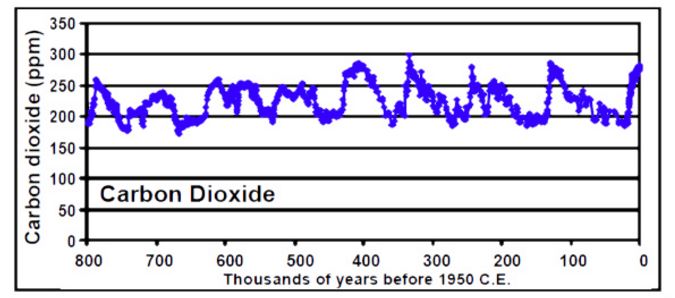
The branch of research looking at the ice core samples to document climate for thousands of years has established the major solar cycle of about 300 years. Carbon Dioxide Information Analysis Center (CDIAC), which has the ice core data back 800,000 years, is being shut down as of September 2017 (800,000-year Ice-Core Records of Atmospheric Carbon Dioxide (CO2)).

800000 carbon

The data clearly establishes that there has always been a cycle to CO2 long before man’s industrial age. This is data government wants to hide. As along as they can pretend CO2 has never risen in the past before 1950, then they can tax the air and pretend it’s to prevent climate change. Moreover, while we can clean the air with regulation as we have done, under global warming, they allow “credits” to pollute as long as you pay the government. It is the ultimate scam where they get to tax pollution and people cheer rather than clean up anything.”

List of NGO’s banned in India

From Karmayog.org:

Blacklisted NGOs

The 600 non-governmental organizations banned by the government up to March this year were funded by the Council for Advancement of People’s Action and Rural Technology, which works as a liaison between the government and NGOs. The council formulates projects and selects NGOs that can implement them. It also funds projects proposed by NGOs in different states, to take care of various development-related tasks. The blacklisted NGOs will not be allowed to start functioning again.

Andhra Pradesh (175), Bihar (123), Tamil Nadu(71), Uttar Pradesh (69) and Rajasthan (31) are the top five states where the blacklisted NGOs are based. Karnataka (22), West Bengal (21), Delhi(21), Haryana (20), Orissa (19) and Maharashtra (19) are in the top 10 states.

The full list of Blacklisted NGOs is at Map & State wise List of Blacklisted NGOs .”

I have a mixed to positive reaction to this. On one hand, a lot of NGO’s are certainly subversive agents of the globalist cabal.  I also question why they should direct government policies and projects.

On the other hand, a blanket banning of NGO’s seems to thrown the baby out with the bath-water.

Again, there is need for looking at things on a case-by-case basis, instead of going in for broad, sweeping policies that damage the good actors along with the bad.

In addition, top-down NGO’s seem to be a kind of contradiction in terms. The whole point of being non-governmental is missed when the NGOs act WITH the central government, rather than independently of them, or at least, only with local governments.


Millets Preferable To Quinoa In India

There is a craze in India for adopting the organic alternative grains that are fashionable among American consumers.

The problem is that those grains, like quinoa, are mostly imported from central and southern America, regions that are well within the economic reach of well-to-do America, but are a ridiculous form of ostentatious consumption for India.

Living on the other side of the globe, with far less purchasing power, and with many more constraints of  soil, land, technology, and climate, Indians have to be smarter than this.

India already has a whole range of traditional cereals that are far more nutritious and far easier to produce than polished rice:

Alternative.in:

When seeing nicely packaged ragi biscuits in the health section of supermarkets, one could almost get the impression that millets are indeed becoming fashionable again. However, the statistics speak a different language: Changes in consumption trends over the past decades, coupled with state policies that favour rice and wheat, have led to a sharp decline in millet production and consumption.

In the 1950s, the area under millet cultivation in India exceeded the area cultivated under either rice or wheat, and millets made up 40% of all cultivated grains. However, in the early 1970s, rice overtook millets, and in the early 1990s so did wheat. Since the Green Revolution, the production of rice and wheat was boosted by 125% and 285% respectively, and the production of millets declined by -2.4%.

Although India is still the top millet producing country in the world, by 2006, the millet growing area was only half that of rice, and one fifth less than wheat. The share of millets in total grain production had dropped from 40% to 20%. This has dire agricultural, environmental and nutritional consequences.

Not just urban food preferences, state policies also play a major role in the shift of consumption habits. For instance, the Public Distribution System has promoted rice and wheat uniformly across India, completely disregarding local climatic conditions, agricultural traditions and food cultures. Polished rice became the cheapest and most readily available foodgrain, and as a consequence the most popular one. The change in preferences was aggravated by notions of cleanliness, purity and sophistication of refined grains versus the more down-to-earth “coarse” grains.

Millets contain a high amount of fibre, which earned them the derogatory name “coarse grains” and often degrades them to animal feed. However, in a time where urban consumers tend to go overboard on refined products, the extra fibre in millets might just be a great boon. Fibre is essential not just for good digestion and a healthy bowel; it also has a positive impact on blood pressure and blood sugar levels.

Furthermore, millets are richer in several nutrients than rice, wheat or corn. For instance, they are rich in B-vitamins such as niacin, B6 and folic acid, as well as calcium, iron, potassium, magnesium, zinc and beta carotene. Each millet variety has a different nutritional profile. The table below compares several millets, wheat and rice with regard to selected essential nutrients. Millets are also ideal for people suffering from gluten-intolerance.

Millets are truly miraculous grains in terms of their nutritional value, and even more so in terms of their humble requirements as agricultural crops. They are ideal for rainfed farming systems – the majority of India’s small and marginal farms. The rainfall requirement of millets is only 30% of that of rice. While it takes an average 4,000 litres of water to grow 1 kg of rice, millets grow without any irrigation. Millets can withstand droughts, and they grow well in poor soils, some of them even in acidic, saline or sandy soils. Traditional millet farming systems are inherently biodiverse and include other important staples such as pulses and oilseeds. They are usually grown organically, as millets do not require chemical pesticides and fertilizer.

Organizations that promote millet cultivation and consumption for security of food, nutrition, fodder, fibre, health, livelihoods and ecology across India are joined in the Millet Network of India (MINI), an alliance of over farmer organizations, scientists, civil society groups and individuals.

Millets are richer in several nutrients than rice, wheat or corn. Pic: Flickr, Creative Commons

Millets are available in organic stores, from organic online retailers, in supermarkets and various other shops. They can easily be integrated into any kind of diet.

Here’s how you can use millets at home:

•Mix millets with other grains or use by themselves like rice
Make soft and tasty idlis from whole jowar
•Add some millets to your dosa batter
•Enjoy puffed jowar as a snack, breakfast cereal or sprinkled on salads for a nice crunch
Use foxtail millet rava for a more nutririous upma
•Add millet flours to rotis; for cakes and raised breads, mix them with wheat flour, as millets do not contain gluten.”

Real Estate Mafia And Chennai Flood Damage

From Scroll.in:

With every invitation to Make in Chennai, the city is unmaking itself and eroding its resilience to perfectly normal monsoon weather events. The infrastructure of big commerce has replaced the infrastructure to withstand natural shocks.

The 2015 disaster was not just avoidable; it was a direct consequence of decisions pushed for by vested interests and conceded by town planners, bureaucrats and politicians in the face of wiser counsel.

The case of the Pallikaranai marshlands, which drains water from a 250-square-kilometre catchment, is telling. Not long ago, it was a 50-square-kilometre water sprawl in the southern suburbs of Chennai. Now, it is 4.3 square kilometres – less than a tenth of its original. The growing finger of a garbage dump sticks out like a cancerous tumour in the northern part of the marshland.  Two major roads cut through the waterbody with few pitifully small culverts that are not up to the job of transferring the rain water flows from such a large catchment. The edges have been eaten into by institutes like the National Institute of Ocean Technology. Ironically, NIOT is an accredited consultant to prepare Environmental Impact Assessments on various subjects, including on the implications of constructing on waterbodies.

Other portions of this wetland have been sacrificed to accommodate the IT corridor. But water offers no exemption to elite industry. Unmindful of the lofty intellectuals at work in the glass and steel buildings of the software parks, rainwater goes by habit to occupy its old haunts, bringing the back-office work of American banks to a grinding halt.

The vast network of waterbodies that characterised Chennai can only be seen on revenue maps now. Of the 16 tanks belonging to the Vyasarpadi chain downstream of Retteri, none remain, according to Prof. M. Karmegam of Anna University.

Virtually every one of the flood-hit areas can be linked to ill-planned construction. The Chennai Bypass connecting NH45 to NH4 blocks the east flowing drainage causing flooding in Anna Nagar, Porur, Vanagaram, Maduravoyal, Mugappair and Ambattur. The Maduravoyal lake has shrunk from 120 acres to 25. Ditto with Ambattur, Kodungaiyur and Adambakkam tanks. The Koyambedu drain and the surplus channels from Korattur and Ambattur tanks are missing. Sections of the Veerangal Odai connecting Adambakkam tank to Pallikaranai are missing. The South Buckingham Canal from Adyar creek to Kovalam creek has been squeezed from its original width of 25 metres to 10 metres in many places due to the Mass Rapid Transit System railway stations. Important flood retention structures such as Virugambakkam, Padi and Villivakkam tanks are officially abandoned.

Capacity reduction

Before political rivalry between the two Dravidian parties brought it to a midway halt, an ill-advised Elevated Express freight corridor from Chennai harbour to Maduravoyal had already reclaimed a substantial portion of the Cooum’s southern bank drastically reducing the flood-carrying capacity of the river.

Remarkably, all these causes were listed out by the government’s own officials at a seminar on waterways organised by the Chennai Metropolitan Development Authority in 2010. But there seems to be many a slip between enlightened understanding and enlightened action.

The Second Masterplan prepared by the Chennai Metropolitan Development Authority glibly authorises built-up spaces with no regard to hydrology. In the Ennore region, the authority has reclassified waterbodies, intertidal zones and mangrove swamps as “Special and Hazardous Industries” and handed it over to the Kamarajar Port Ltd.

In Ponneri, a town in a rural part of Chennai Metropolitan Area, developers are executing  Chennai Metropolitan Development Authority-approved plans with no regard to drainage. Last weekend, Ponneri received 370 mm of rain – 135 mm more than Chennai did. While it suffered from flooding, damage to property and life was not high. Ponneri is slotted to be developed as a Smart City. But will our dumb engineers be able to build a smart city?”

Note: I don’t believe this has anything to do with “dumb” engineering. It has everything to do with the government-construction mafia that overrides any other input from engineers or architects or civil servants.

Why Do-It-Yourself Is Here To Stay

An excellent piece by  Charles Smith (Of Two Minds) – h/t to LewRockwell.

Labor overhead is all the labor-related expenses paid by employers: the vast majority of pundits, most of whom have never hired a single employee with their own money, tend to overlook the overhead costs paid by employers: workers compensation insurance (soaring), healthcare insurance (soaring), disability insurance, unemployment insurance, 401K or pension contributions, etc.

The “solution” in the Digital Revolution is to eliminate all labor overhead and transfer all these risks and expenses onto the free-lancer. As a free-lancer/self-employed worker, I am well-acquainted with these overhead costs: it costs $15,300 annually to purchase stripped-down healthcare insurance for my self-employed wife and I.

This is $7.66 per hour for a 2,000-hour work year. The total value of the labor overhead paid by employers for someone of my age and experience exceeds the $15/hour being trumpeted as a minimum wage.

In other words, it would cost an employer $30/hour to pay me $15/hour.

The net result of reducing labor to auctioned-off surplus is that the state, and thus ultimately the taxpayer, is paying the overhead costs. The person being paid $5 to shop at Target (or $50/day to deliver whatever the high-earners didn’t order through Amazon) for a top 5% earner can’t possibly afford $15,000 a year for healthcare insurance, much less all the other benefits paid by employers.

So they end up getting social welfare benefits for low-income people such as Medicaid, food stamps, Section 8 housing subsidies, etc. In other words, this form of menial labor is ultimately subsidized by taxpayers.

The person paying someone a menial sum to perform some service may think they’re “hiring” that person, but in reality the taxpayer is footing the majority of the costs–the real “employer” is the taxpayer.

In other words, this informal “work” is a simulacrum of paid employment. All the costs being offloaded onto the informal worker end up in the taxpayer’s lap.

How can this be lauded as a functioning system of employment? It can’t, because it isn’t.

Those who believe the Digital Revolution will create more work also overlook the realities of risk when it comes to employing people. Once again, I wonder how many of these people have ever hired a single person on their own dime, i.e. with their own money, paid the overhead costs of an employer and took the risks of hiring employees.

Here’s one example from real life: you hire a fellow cash-only (informally or through some sort of labor auction exchange) to clean the roof gutters on your house. He falls off your roof and is seriously injured. You may think your insurance will cover you, or the labor auction exchange’s claim of coverage will protect you, but guess again: you could be on the hook for a huge settlement/judgment that will not be paid by your homeowner’s insurance or the labor exchange.

Labor laws don’t disappear just because you’ve hired someone informally. Anyone violating labor laws is also exposed to lawsuits and claims, exploratory “fishing” or otherwise. How about claims of ethnic, religious or gender discrimination? Those don’t disappear just because you’re an informal employer.

Many people seem unaware that a $10,000 claim for violating labor statutes may cost $10,000 or more to defend in court (or in pre-trial legal expenses). You’re out $10,000 either way.

Few pundits seem to put themselves in the shoes of those performing menial tasks for their “betters” for minimal compensation. What are the risks and rewards for managing an injury (real or faked) for those auctioning off their labor for a few dollars?

Those within the insurance industry know that there is an entire class of people who claim injuries in department stores, etc. so they can settle for $5,000 each “incident”– and they get the settlement because it will cost the corporation far more than $5,000 to contest, investigate, go to court, etc.

How good a job will you get when the worker bid so little to get the work? Once again, few pundits seem to put themselves in the shoes of those performing menial tasks for their “betters” for minimal compensation. You want to supervise people who are rushing to finish the task so they can hurry to their next low-paying gig? No thanks; be my guest. From my experience, it will cost me more time/money to re-do the work that was done poorly than it would to have done the work myself and forget hiring someone for the lowest bid.

This is why I will never hire anyone again, no matter how low the wage or cash payment: the risks are way too high and the rewards far too modest. Anyone who’s been a “real” employer like I have knows the realities, risks and costs. Those who’ve never hired a single employee with their own money are ignoring the realities.

When I need some real work done, I hire licensed contractors who pay all the labor overhead costs and pay for liability and disability coverage. These are very costly, so the service is costly. But you get what you pay for.

As for hiring someone myself–I can’t afford the true costs or risks. It literally makes no financial sense to hire someone if you pay the full freight. I will hire formal enterprises that pay the full costs of their employees, but only when I can’t do the work myself.”


US Soldiers Disciplined For Reporting Afghan Boy Rape

Here’s a bizarre story:

The US military is disciplining its own soldiers if they report on the horrendous rape of boys by allied Afghan police chiefs. The soldiers are being told it is none of their business and is an Afghan internal criminal matter.

That might well be true, but in the case of rapes taking place at US military bases, the soldiers are within their rights to report the matter. At the least, they should not be disciplined.

Rep. Vern Buchanan (R., Fla.) is demanding that the decorated Green Beret who blew the whistle on U.S.-allied Afghan forces raping boys be reinstated by the Army immediately.

Buchanan labeled war hero Sgt. 1st Class Charles Martland’s dismissal from the force a “national disgrace.” Martland stood up for an Afghan rape victim in 2011.

“Driving Sgt. Martland out of the Army is a national disgrace,” Buchanan said in a statement. “He stood up for American values and should be commended, not punished.”

This week, reports surfaced that U.S. soldiers and Marines have been instructed to ignore suspicions of Afghan forces raping boys. While Martland appealed his dismissal from the Army, he was rejected this week. He will be discharged at the start of November.

Buchanan called on the Army Board for Correction of Military Records to reverse its decision and reinstate Martland. Otherwise, he demanded that either Chairman of the Joint Chiefs of Staff Gen. Martin Dempsey or President Obama take action.

“The only people who should be punished and discharged from the service are the ones who created and condoned the immoral practice of ignoring child rape on a U.S. military base,” Buchanan said.

Earlier this week, the Republican congressman also demanded the House and Senate Armed Services Committees launch investigations into the alleged policy that discourages troops from reporting sexual abuse of boys at the hand of Afghan forces.

The commander of U.S. forces on Afghanistan has insisted that no such policy exists.”

The Global Supra-National Climate Czar

From Catholicsm.org:

We close with a quote from Schellnhuber from his own study, published in the year 1998, and entitled “Geocybernetics: Controlling a Complex Dynamical System Under Uncertainty”; and which confirms Wippermann’s grave reservations and critical observations: “While the borders of nation states have become almost irrelevant to global economic players (for instance) after the end of the Cold War, human and natural rights are still confined and dominated by thousands of frontiers. This situation can only be overcome by giving up a good deal of national sovereignty and establishing a true regime of global governance. As a prerequisite, the rather symbolic parts and pieces of the UN system must be transformed into powerful supra-national institutions: allons corriger le futur!”