Police Attack Largely Peaceful Crowd In LA

On Tuesday, there was a sample of what law and order can sometimes look like. I know a lot of people are going to dismiss this because they think it’s somehow about “illegals.”

I can understand how people might feel that way, especially with the ongoing threat of terrorism. But I think it would be mistaken in this case. The use of force really does seem to have been completely uncalled for:

Democracy Now has this account of a police attack on what looks to have been a peaceful immigration rally in LA. Apparently, there was also an incident in Detroit. Here are some excerpts:

Wednesday, May 2nd, 2007

Amy Goodman:

In Los Angeles, an afternoon immigrant rights march ended when police fired dozens of rubber bullets and tear gas into the peaceful crowd. Families with young children were forced to flee for their safety. Eyewitnesses said police gave little or no warning before firing the rubber bullets….


For the second year in a row, May Day featured a massive display of solidarity for immigrant rights in the United States. Hundreds of thousands of people took to the streets across the country. Marches were held in cities, including Los Angeles, Chicago, Detroit, Washington, D.C., Denver, Milwaukee, Phoenix and New York……….Although the May Day events went off mostly without incident, one major confrontation took place in Los Angeles.An evening protest was disrupted when police fired rubber bullets and teargas at thousands gathered in MacArthur Park. LAPD officials said protesters had thrown plastic bottles and other projectiles. Protest organizers dispute the account and are demanding an independent investigation…

Jorge Mujica (journalist and union organizer, formerly of Telemundo):

One week ago, the FBI, in combination with Immigration Enforcement, sent over sixty federal agents to a shopping mall at 2:00 p.m., when mothers had just picked up their kids from school and they were doing their shopping. And these federal agents were carrying machine guns and M-16s, and they were looking for what is supposed to be a ring of fake ID dealers, you know, sellers of false IDs. Nevertheless, they handcuffed over 100 people. They made them sit on the floor. But they detained 160 people for a couple hours, and then they just let them go, because they knew exactly what they were looking for. They didn’t need to arrest anybody else or detain anybody else…….

Angelica Salas (executive director of the Coalition for Humane Immigrant Rights, LA):

We voluntarily cut our program at 6:30. We had our permit that would go until 9:00. We cut it. We made sure that people — we told people to start leaving the park slowly, not to run, with their children.I stayed towards the end, and what I saw was, instead of isolating a problem group, they pushed them into the crowd.

They started shooting rubber bullets into a crowd of just innocent people. I was caught in the middle of all of this, as we were trying to send people out, had to cover a mother with some children….

…There were several members of the media who were actually hurt, who were hospitalized, especially, I think, our friends from Telemundo..

****************
My Comment:

The LA event seems to have drawn far fewer people than last year’s, only some 25,000, compared to 650,ooo in 2006. That’s really not a lot.And the police conceded that the crowd behaved peacefully, blaming some minor rock or bottle throwing, that seems to have instigated the police response and has been blamed on a few “anarchist” elements.

(For some reason, anarchists are always depicted as wild-eyed bomb-throwers right out of Dostoevsky).

Leaving that aside for the moment, as well as the whole vexed business of immigration — even though I know it’s one of the most important domestic issues today, notice how uncritical reporting sets up a false equivalence between unarmed civilians throwing plastic bottles or rocks and armed policemen responding with plastic bullets.

Actually, plastic bullets are quite capable of killing or maiming. But because they sound so innocuous, they’re likely to be used a lot more indiscriminately and with less criticism from the press.

This kind of non-lethal (a more accurate term would be semi-lethal) weaponry was developed in the 90’s under the Clinton administration. And the purpose was to shore up the US position in the post Cold War world. That is, non-lethal weapons initiatives came out of military and strategic imperatives. Only, now they’re being redirected at the domestic population.

That’s not a wild-eyed anarchist speculation, either. I’m drawing from memos penned by none other than the Pentagon.

(By the way, I will try to post something on other effective ways of dispersing or controlling a crowd, which would not leave permanent injuries. Obviously, there are many instances when police are within their rights to intervene).

Now, here’s the memo (I found it in the footnotes of my Abu Ghraib book, on p. 202 — and that is a plug (chuckle):

” A memorandum written by no less than Paul Wolfowitz to Dick Cheney states, ” A U.S. lead in nonlethal technologies will increase our options and reinforce our position in the post Cold War world. Our Research and Development efforts must be increased.,” Paul Wolfowitz, Undersecretary of Defense for Policy, memorandum to the Secretary of Defense and the Deputy Secretary of Defense, subject: “Do We Need a Non-lethal Defense Initiative?”

More on the subject from the website of the Federation of American Scientists” Project on Government Secrecy:
“March 30, 1991.

Overcoming Non-lethal Weapons Secrecy

“As the Defense Department program to develop so-called “non- lethal weapons” gathers momentum, Pentagon officials are tightening controls on public information about the program accordingly.

Late last year, Greenpeace submitted a FOIA request for a copy of one of the early policy documents in this field, a 1991 memorandum from Under Secretary of Defense (Policy) Paul Wolfowitz entitled

Do We Need a Nonlethal Defense Initiative?”

The Pentagon denied the request in its entirety on May 3, claiming that the memo was “deliberative in nature” and therefore exempt from the FOIA.

But unauthorized disclosures of government information are growing almost as fast as the secrecy system itself, and Greenpeace was able to obtain a copy of the document through unofficial channels.

Perhaps the most interesting feature of the memo are the comments handwritten in the margin apparently by then-DepSecDef Donald Atwood who noted that “non-lethality may be a misnomer.” And where Wolfowitz had indicated that “Nonlethal weapons disable or destroy without causing significant injury or damage,” Atwood wrote: “This claims too much.”

A copy of the memo is available from S&GB.

Jumping on the rhetorical bandwagon, the Air Force and the Energy Department are advertising a new nuclear weapon concept as “non-lethal.” The proposed High Power Radio Frequency concept is a “non-lethal, ICBM-delivered, and nuclear-driven device intended to damage electronics and/or electrical components.” (Energy and Water Development Appropriations for 1995, Part 6, House Appropriations Comm, page 494).”

*******************************

There’s a lot more stuff on the site worth reading.

My Comment:

Here, I am going to brag a little…you’ll have to excuse me. No sense having a blog if I can’t do that once in a while:

While I was finishing up my book at the end of 2004 (it was published only the next year, by the way — that’s publishing for you), I’d already noticed this memo. I was hunting for direct links between Wolfowitz and Rumsfeld and the torture policy at the time — which I did find, and which showed up on the web after an FOIA request from the ACLU got the government files all out in the open.

But, this DOD memo only really seems to have got real public attention in 2006, two years later. These days, of course, a whole lot more people are alarmed by the police state issues involved and have begun to see what it means to have an official policy of torture while the government is also busy dismantling the constitution.

Ah well… (sigh)…we bloggers content ourselves with doing the dirty work ahead of the crowd and watching, gratefully but somewhat cynically, as people jump on board after the fact.

Crowd behavior — it runs every aspect of our lives. The herd is in us, as Nietzsche recognized.

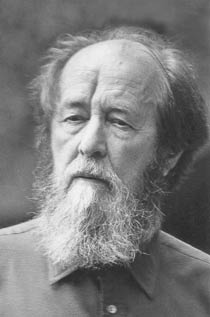
Solzhenitsyn: What Intellectuals Need

“There is not a way left to us to pass from our present contemptible amorphousness into the future except through open, personal and predominantly public (to set an example) sacrifice. We all have to “rediscover our cultural treasures and values” not by erudition, not by scientific accomplishment, but by our form of spiritual conduct.”

Alexander Solzhenitsyn in “The Smatterers,” from Under the Rubble, p. 273 (author’s italics).

Guns forbidden to those deemed dangerous or treated involuntarily for mental illness

AP April 30, 2007

Story Highlights

• Database lists people barred from busing guns
• List would include anyone ordered to undergo mental health treatment
• Virginia Tech gunman was treated as an outpatient
• Court finding that shooter was a danger never made it into database
RICHMOND, Virginia (AP) — Virginia Gov. Timothy M. Kaine said Monday he has closed the loophole that allowed a mentally disturbed Virginia Tech student to acquire the guns he used to kill 32 students and faculty members.

Kaine issued an executive order requiring that a database of people who are prohibited from buying guns include anyone found to be dangerous and ordered to undergo involuntary mental health treatment.

Seung-Hui Cho had been ordered by a court to undergo psychiatric counseling after a judge ruled that he was a danger to himself.

But because Cho was treated as an outpatient and never committed to a mental health hospital, the court finding never made it into the database that gun dealers must check before selling a firearm. The law prohibits selling firearms to people judged to have mental disabilities.

“Whether that treatment is to be provided in an inpatient or outpatient facility is of no moment,” Kaine said.

Cho did not disclose his mental health problems or the court-ordered treatment in a form he completed before buying the guns.

“His lie on the form would have been caught,” had the order been in place before Cho attempted to buy the guns, Kaine said.

But it would not prevent Cho from acquiring guns by several other means that require no background check in Virginia, including buy-and-trade publications, individual transactions among gun collectors or hobbyists, and gun shows — vast firearms bazaars where scores of people sell or swap firearms.

Legislation that would also subject firearms sales at gun shows to instant background checks is introduced annually in Virginia, and just as often it dies without reaching a floor vote in the General Assembly.

Kaine, a Democrat, has said he expects new support for the legislation this year and that he would support it, as he has in the past.

The executive order does not apply to people who seek mental health care of their own will. After the report is added to Virginia’s state police database, it becomes part of a federal database that gun dealers nationwide use.

Cho, a 23-year-old Virginia Tech senior described as a troubled loner, bought his guns legally through gun shops before gunning down 32 people on campus, then killing himself.

No motive has been established for his rampage.

Jefferson On Compromise In Public Debate

“Every man cannot have his way in all things. If his opinion prevails at some times, he should acquiesce on seeing that of others preponderate at other times. Without this mutual disposition we are disjointed individuals, but not a society.” –Thomas Jefferson to John Dickinson, 1801. FE 8:76

A Response to Wolf From Jewcy

Wolf’s piece drew this acerbic response from Joey Kurtzman:

I am including it here on the basis of Kurtzman’s confession to libertarian tendencies, and because I thought it was funny and well-written, although ultimately evasive. Even if Wolf is not right on every point or even particularly insightful from a historical viewpoint, she nevertheless voices that sense of rottenness-in-the-state- of-Denmark that hangs pretty thick in the air right now, no matter whom you blame for it.

American Fascism in Ten Hysterical Steps: Naomi Wolf in the Guardian:

During the six years I was marooned in the British Isles, I became, by necessity, an amateur taxonomist, like those dilettante Victorian naturalists who poked around looking for new types of dung beetles or butterflies. I wasn’t after dung beetles, though; I was cataloguing the diverse forms of obeisance with which American liberals try to elicit the condescending approval of Europeans, that sublime reassurance that “You, you’re not quite like most Americans, are you? You’re rather…European.”

I lovingly collected my specimens, and identified the occasional species—for example, Declinatio pessumus absurdus (Kurtzman, 2003), the warbly faux-British intonation with which the American Europhile triumphantly peppers the end of any sentence in which he’s asking a question. Or the dreaded Fellatio iratus michaelmooricus (Kurtzman, 2003), which sees the disgruntled American lecturing his European hosts on the exquisite sophistication of their own culture, and the hopeless barnyard vulgarity of American culture.

But every so often I would be so mesmerized by some virtuoso performance, some unclassifiable peacock display of American self-loathing, that I’d pine for a systematizing genius, a sociological Linnaeus who would catalogue the entire fauna of overseas American life and just hand me the multi-volume taxonomy necessary to describe the whole writhing ecosystem…

Read more at Jewcy.com.

My Comment:

Yes, Wolf could have been more precise. But sometimes intellectual rigor is not a substitute for moral intuition. I offer this from Orwell, writing here about James Burnham (whose influential work described the inevitable ascendance of a managerial class in both fascist and socialist states that would make the two virtually indistinguishable):

“One cannot always make positive prophecies, but there are times when one ought to be able to make negative ones. No one could have been expected to foresee the exact results of the Treaty of Versailles, but millions of thinking people could and did foresee that those results would be bad. Plenty of people, though not so many in this case, can foresee that the results of the settlement now being forced on Europe will also be bad. And to refrain from admiring Hitler or Stalin – that, too, should not require an enormous intellectual effort. But it is partly a moral effort. That a man of Burnham’s gifts should have been able for a while to think of Nazism as something rather admirable, something that could and probably would build up a workable and durable social order shows, what damage is done to the sense of reality by the cultivation of what is now called ‘realism’. “

Can Fascism Come to America ?

Ten Steps To Close Down an Open Society

By Naomi Wolf, the Guardian, Tuesday April 24, 2007.

Last autumn, there was a military coup in Thailand. The leaders of the coup took a number of steps, rather systematically, as if they had a shopping list. In a sense, they did. Within a matter of days, democracy had been closed down: the coup leaders declared martial law, sent armed soldiers into residential areas, took over radio and TV stations, issued restrictions on the press, tightened some limits on travel, and took certain activists into custody.

They were not figuring these things out as they went along. If you look at history, you can see that there is essentially a blueprint for turning an open society into a dictatorship. That blueprint has been used again and again in more and less bloody, more and less terrifying ways. But it is always effective. It is very difficult and arduous to create and sustain a democracy – but history shows that closing one down is much simpler. You simply have to be willing to take the 10 steps.

As difficult as this is to contemplate, it is clear, if you are willing to look, that each of these 10 steps has already been initiated today in the United States by the Bush administration.

Because Americans like me were born in freedom, we have a hard time even considering that it is possible for us to become as unfree – domestically – as many other nations. Because we no longer learn much about our rights or our system of government – the task of being aware of the constitution has been outsourced from citizens’ ownership to being the domain of professionals such as lawyers and professors – we scarcely recognise the checks and balances that the founders put in place, even as they are being systematically dismantled. Because we don’t learn much about European history, the setting up of a department of “homeland” security – remember who else was keen on the word “homeland” – didn’t raise the alarm bells it might have.

It is my argument that, beneath our very noses, George Bush and his administration are using time-tested tactics to close down an open society. It is time for us to be willing to think the unthinkable – as the author and political journalist Joe Conason, has put it, that it can happen here. And that we are further along than we realise.

Conason eloquently warned of the danger of American authoritarianism. I am arguing that we need also to look at the lessons of European and other kinds of fascism to understand the potential seriousness of the events we see unfolding in the US.

1 Invoke a terrifying internal and external enemy

After we were hit on September 11 2001, we were in a state of national shock. Less than six weeks later, on October 26 2001, the USA Patriot Act was passed by a Congress that had little chance to debate it; many said that they scarcely had time to read it. We were told we were now on a “war footing”; we were in a “global war” against a “global caliphate” intending to “wipe out civilisation”. There have been other times of crisis in which the US accepted limits on civil liberties, such as during the civil war, when Lincoln declared martial law, and the second world war, when thousands of Japanese-American citizens were interned. But this situation, as Bruce Fein of the American Freedom Agenda notes, is unprecedented: all our other wars had an endpoint, so the pendulum was able to swing back toward freedom; this war is defined as open-ended in time and without national boundaries in space – the globe itself is the battlefield. “This time,” Fein says, “there will be no defined end.”

Creating a terrifying threat – hydra-like, secretive, evil – is an old trick. It can, like Hitler’s invocation of a communist threat to the nation’s security, be based on actual events (one Wisconsin academic has faced calls for his dismissal because he noted, among other things, that the alleged communist arson, the Reichstag fire of February 1933, was swiftly followed in Nazi Germany by passage of the Enabling Act, which replaced constitutional law with an open-ended state of emergency). Or the terrifying threat can be based, like the National Socialist evocation of the “global conspiracy of world Jewry”, on myth.

It is not that global Islamist terrorism is not a severe danger; of course it is. I am arguing rather that the language used to convey the nature of the threat is different in a country such as Spain – which has also suffered violent terrorist attacks – than it is in America. Spanish citizens know that they face a grave security threat; what we as American citizens believe is that we are potentially threatened with the end of civilisation as we know it. Of course, this makes us more willing to accept restrictions on our freedoms.

2 Create a gulag

Once you have got everyone scared, the next step is to create a prison system outside the rule of law (as Bush put it, he wanted the American detention centre at Guantánamo Bay to be situated in legal “outer space”) – where torture takes place.

At first, the people who are sent there are seen by citizens as outsiders: troublemakers, spies, “enemies of the people” or “criminals”. Initially, citizens tend to support the secret prison system; it makes them feel safer and they do not identify with the prisoners. But soon enough, civil society leaders – opposition members, labour activists, clergy and journalists – are arrested and sent there as well.

This process took place in fascist shifts or anti-democracy crackdowns ranging from Italy and Germany in the 1920s and 1930s to the Latin American coups of the 1970s and beyond. It is standard practice for closing down an open society or crushing a pro-democracy uprising.

With its jails in Iraq and Afghanistan, and, of course, Guantánamo in Cuba, where detainees are abused, and kept indefinitely without trial and without access to the due process of the law, America certainly has its gulag now. Bush and his allies in Congress recently announced they would issue no information about the secret CIA “black site” prisons throughout the world, which are used to incarcerate people who have been seized off the street.

Gulags in history tend to metastasise, becoming ever larger and more secretive, ever more deadly and formalised. We know from first-hand accounts, photographs, videos and government documents that people, innocent and guilty, have been tortured in the US-run prisons we are aware of and those we can’t investigate adequately.

But Americans still assume this system and detainee abuses involve only scary brown people with whom they don’t generally identify. It was brave of the conservative pundit William Safire to quote the anti-Nazi pastor Martin Niemöller, who had been seized as a political prisoner: “First they came for the Jews.” Most Americans don’t understand yet that the destruction of the rule of law at Guantánamo set a dangerous precedent for them, too.

By the way, the establishment of military tribunals that deny prisoners due process tends to come early on in a fascist shift. Mussolini and Stalin set up such tribunals. On April 24 1934, the Nazis, too, set up the People’s Court, which also bypassed the judicial system: prisoners were held indefinitely, often in isolation, and tortured, without being charged with offences, and were subjected to show trials. Eventually, the Special Courts became a parallel system that put pressure on the regular courts to abandon the rule of law in favour of Nazi ideology when making decisions.

3 Develop a thug caste

When leaders who seek what I call a “fascist shift” want to close down an open society, they send paramilitary groups of scary young men out to terrorise citizens. The Blackshirts roamed the Italian countryside beating up communists; the Brownshirts staged violent rallies throughout Germany. This paramilitary force is especially important in a democracy: you need citizens to fear thug violence and so you need thugs who are free from prosecution.

The years following 9/11 have proved a bonanza for America’s security contractors, with the Bush administration outsourcing areas of work that traditionally fell to the US military. In the process, contracts worth hundreds of millions of dollars have been issued for security work by mercenaries at home and abroad. In Iraq, some of these contract operatives have been accused of involvement in torturing prisoners, harassing journalists and firing on Iraqi civilians. Under Order 17, issued to regulate contractors in Iraq by the one-time US administrator in Baghdad, Paul Bremer, these contractors are immune from prosecution

Yes, but that is in Iraq, you could argue; however, after Hurricane Katrina, the Department of Homeland Security hired and deployed hundreds of armed private security guards in New Orleans. The investigative journalist Jeremy Scahill interviewed one unnamed guard who reported having fired on unarmed civilians in the city. It was a natural disaster that underlay that episode – but the administration’s endless war on terror means ongoing scope for what are in effect privately contracted armies to take on crisis and emergency management at home in US cities.

Thugs in America? Groups of angry young Republican men, dressed in identical shirts and trousers, menaced poll workers counting the votes in Florida in 2000. If you are reading history, you can imagine that there can be a need for “public order” on the next election day. Say there are protests, or a threat, on the day of an election; history would not rule out the presence of a private security firm at a polling station “to restore public order”.

4 Set up an internal surveillance system

In Mussolini’s Italy, in Nazi Germany, in communist East Germany, in communist China – in every closed society – secret police spy on ordinary people and encourage neighbours to spy on neighbours. The Stasi needed to keep only a minority of East Germans under surveillance to convince a majority that they themselves were being watched.

In 2005 and 2006, when James Risen and Eric Lichtblau wrote in the New York Times about a secret state programme to wiretap citizens’ phones, read their emails and follow international financial transactions, it became clear to ordinary Americans that they, too, could be under state scrutiny.

In closed societies, this surveillance is cast as being about “national security”; the true function is to keep citizens docile and inhibit their activism and dissent.

5 Harass citizens’ groups

The fifth thing you do is related to step four – you infiltrate and harass citizens’ groups. It can be trivial: a church in Pasadena, whose minister preached that Jesus was in favour of peace, found itself being investigated by the Internal Revenue Service, while churches that got Republicans out to vote, which is equally illegal under US tax law, have been left alone.

Other harassment is more serious: the American Civil Liberties Union reports that thousands of ordinary American anti-war, environmental and other groups have been infiltrated by agents: a secret Pentagon database includes more than four dozen peaceful anti-war meetings, rallies or marches by American citizens in its category of 1,500 “suspicious incidents”. The equally secret Counterintelligence Field Activity (Cifa) agency of the Department of Defense has been gathering information about domestic organisations engaged in peaceful political activities: Cifa is supposed to track “potential terrorist threats” as it watches ordinary US citizen activists. A little-noticed new law has redefined activism such as animal rights protests as “terrorism”. So the definition of “terrorist” slowly expands to include the opposition.

6 Engage in arbitrary detention and release

This scares people. It is a kind of cat-and-mouse game. Nicholas D Kristof and Sheryl WuDunn, the investigative reporters who wrote China Wakes: the Struggle for the Soul of a Rising Power, describe pro-democracy activists in China, such as Wei Jingsheng, being arrested and released many times. In a closing or closed society there is a “list” of dissidents and opposition leaders: you are targeted in this way once you are on the list, and it is hard to get off the list.

In 2004, America’s Transportation Security Administration confirmed that it had a list of passengers who were targeted for security searches or worse if they tried to fly. People who have found themselves on the list? Two middle-aged women peace activists in San Francisco; liberal Senator Edward Kennedy; a member of Venezuela’s government – after Venezuela’s president had criticised Bush; and thousands of ordinary US citizens.

Professor Walter F Murphy is emeritus of Princeton University; he is one of the foremost constitutional scholars in the nation and author of the classic Constitutional Democracy. Murphy is also a decorated former marine, and he is not even especially politically liberal. But on March 1 this year, he was denied a boarding pass at Newark, “because I was on the Terrorist Watch list”.

“Have you been in any peace marches? We ban a lot of people from flying because of that,” asked the airline employee.

“I explained,” said Murphy, “that I had not so marched but had, in September 2006, given a lecture at Princeton, televised and put on the web, highly critical of George Bush for his many violations of the constitution.”

“That’ll do it,” the man said.

Anti-war marcher? Potential terrorist. Support the constitution? Potential terrorist. History shows that the categories of “enemy of the people” tend to expand ever deeper into civil life.

James Yee, a US citizen, was the Muslim chaplain at Guantánamo who was accused of mishandling classified documents. He was harassed by the US military before the charges against him were dropped. Yee has been detained and released several times. He is still of interest.

Brandon Mayfield, a US citizen and lawyer in Oregon, was mistakenly identified as a possible terrorist. His house was secretly broken into and his computer seized. Though he is innocent of the accusation against him, he is still on the list.

It is a standard practice of fascist societies that once you are on the list, you can’t get off.

7 Target key individuals

Threaten civil servants, artists and academics with job loss if they don’t toe the line. Mussolini went after the rectors of state universities who did not conform to the fascist line; so did Joseph Goebbels, who purged academics who were not pro-Nazi; so did Chile’s Augusto Pinochet; so does the Chinese communist Politburo in punishing pro-democracy students and professors.

Academe is a tinderbox of activism, so those seeking a fascist shift punish academics and students with professional loss if they do not “coordinate”, in Goebbels’ term, ideologically. Since civil servants are the sector of society most vulnerable to being fired by a given regime, they are also a group that fascists typically “coordinate” early on: the Reich Law for the Re-establishment of a Professional Civil Service was passed on April 7 1933.

Bush supporters in state legislatures in several states put pressure on regents at state universities to penalise or fire academics who have been critical of the administration. As for civil servants, the Bush administration has derailed the career of one military lawyer who spoke up for fair trials for detainees, while an administration official publicly intimidated the law firms that represent detainees pro bono by threatening to call for their major corporate clients to boycott them.

Elsewhere, a CIA contract worker who said in a closed blog that “waterboarding is torture” was stripped of the security clearance she needed in order to do her job.

Most recently, the administration purged eight US attorneys for what looks like insufficient political loyalty. When Goebbels purged the civil service in April 1933, attorneys were “coordinated” too, a step that eased the way of the increasingly brutal laws to follow.

8 Control the press

Italy in the 1920s, Germany in the 30s, East Germany in the 50s, Czechoslovakia in the 60s, the Latin American dictatorships in the 70s, China in the 80s and 90s – all dictatorships and would-be dictators target newspapers and journalists. They threaten and harass them in more open societies that they are seeking to close, and they arrest them and worse in societies that have been closed already.

The Committee to Protect Journalists says arrests of US journalists are at an all-time high: Josh Wolf (no relation), a blogger in San Francisco, has been put in jail for a year for refusing to turn over video of an anti-war demonstration; Homeland Security brought a criminal complaint against reporter Greg Palast, claiming he threatened “critical infrastructure” when he and a TV producer were filming victims of Hurricane Katrina in Louisiana. Palast had written a bestseller critical of the Bush administration.

Other reporters and writers have been punished in other ways. Joseph C Wilson accused Bush, in a New York Times op-ed, of leading the country to war on the basis of a false charge that Saddam Hussein had acquired yellowcake uranium in Niger. His wife, Valerie Plame, was outed as a CIA spy – a form of retaliation that ended her career.

Prosecution and job loss are nothing, though, compared with how the US is treating journalists seeking to cover the conflict in Iraq in an unbiased way. The Committee to Protect Journalists has documented multiple accounts of the US military in Iraq firing upon or threatening to fire upon unembedded (meaning independent) reporters and camera operators from organisations ranging from al-Jazeera to the BBC. While westerners may question the accounts by al-Jazeera, they should pay attention to the accounts of reporters such as the BBC’s Kate Adie. In some cases reporters have been wounded or killed, including ITN’s Terry Lloyd in 2003. Both CBS and the Associated Press in Iraq had staff members seized by the US military and taken to violent prisons; the news organisations were unable to see the evidence against their staffers.

Over time in closing societies, real news is supplanted by fake news and false documents. Pinochet showed Chilean citizens falsified documents to back up his claim that terrorists had been about to attack the nation. The yellowcake charge, too, was based on forged papers.

You won’t have a shutdown of news in modern America – it is not possible. But you can have, as Frank Rich and Sidney Blumenthal have pointed out, a steady stream of lies polluting the news well. What you already have is a White House directing a stream of false information that is so relentless that it is increasingly hard to sort out truth from untruth. In a fascist system, it’s not the lies that count but the muddying. When citizens can’t tell real news from fake, they give up their demands for accountability bit by bit.

9 Dissent equals treason

Cast dissent as “treason” and criticism as “espionage’. Every closing society does this, just as it elaborates laws that increasingly criminalise certain kinds of speech and expand the definition of “spy” and “traitor”. When Bill Keller, the publisher of the New York Times, ran the Lichtblau/Risen stories, Bush called the Times’ leaking of classified information “disgraceful”, while Republicans in Congress called for Keller to be charged with treason, and rightwing commentators and news outlets kept up the “treason” drumbeat. Some commentators, as Conason noted, reminded readers smugly that one penalty for violating the Espionage Act is execution.

Conason is right to note how serious a threat that attack represented. It is also important to recall that the 1938 Moscow show trial accused the editor of Izvestia, Nikolai Bukharin, of treason; Bukharin was, in fact, executed. And it is important to remind Americans that when the 1917 Espionage Act was last widely invoked, during the infamous 1919 Palmer Raids, leftist activists were arrested without warrants in sweeping roundups, kept in jail for up to five months, and “beaten, starved, suffocated, tortured and threatened with death”, according to the historian Myra MacPherson. After that, dissent was muted in America for a decade.

In Stalin’s Soviet Union, dissidents were “enemies of the people”. National Socialists called those who supported Weimar democracy “November traitors”.

And here is where the circle closes: most Americans do not realise that since September of last year – when Congress wrongly, foolishly, passed the Military Commissions Act of 2006 – the president has the power to call any US citizen an “enemy combatant”. He has the power to define what “enemy combatant” means. The president can also delegate to anyone he chooses in the executive branch the right to define “enemy combatant” any way he or she wants and then seize Americans accordingly.

Even if you or I are American citizens, even if we turn out to be completely innocent of what he has accused us of doing, he has the power to have us seized as we are changing planes at Newark tomorrow, or have us taken with a knock on the door; ship you or me to a navy brig; and keep you or me in isolation, possibly for months, while awaiting trial. (Prolonged isolation, as psychiatrists know, triggers psychosis in otherwise mentally healthy prisoners. That is why Stalin’s gulag had an isolation cell, like Guantánamo’s, in every satellite prison. Camp 6, the newest, most brutal facility at Guantánamo, is all isolation cells.)

We US citizens will get a trial eventually – for now. But legal rights activists at the Center for Constitutional Rights say that the Bush administration is trying increasingly aggressively to find ways to get around giving even US citizens fair trials. “Enemy combatant” is a status offence – it is not even something you have to have done. “We have absolutely moved over into a preventive detention model – you look like you could do something bad, you might do something bad, so we’re going to hold you,” says a spokeswoman of the CCR.

Most Americans surely do not get this yet. No wonder: it is hard to believe, even though it is true. In every closing society, at a certain point there are some high-profile arrests – usually of opposition leaders, clergy and journalists. Then everything goes quiet. After those arrests, there are still newspapers, courts, TV and radio, and the facades of a civil society. There just isn’t real dissent. There just isn’t freedom. If you look at history, just before those arrests is where we are now.

10 Suspend the rule of law

The John Warner Defense Authorization Act of 2007 gave the president new powers over the national guard. This means that in a national emergency – which the president now has enhanced powers to declare – he can send Michigan’s militia to enforce a state of emergency that he has declared in Oregon, over the objections of the state’s governor and its citizens.

Even as Americans were focused on Britney Spears’s meltdown and the question of who fathered Anna Nicole’s baby, the New York Times editorialised about this shift: “A disturbing recent phenomenon in Washington is that laws that strike to the heart of American democracy have been passed in the dead of night … Beyond actual insurrection, the president may now use military troops as a domestic police force in response to a natural disaster, a disease outbreak, terrorist attack or any ‘other condition’.”

Critics see this as a clear violation of the Posse Comitatus Act – which was meant to restrain the federal government from using the military for domestic law enforcement. The Democratic senator Patrick Leahy says the bill encourages a president to declare federal martial law. It also violates the very reason the founders set up our system of government as they did: having seen citizens bullied by a monarch’s soldiers, the founders were terrified of exactly this kind of concentration of militias’ power over American people in the hands of an oppressive executive or faction.

Of course, the United States is not vulnerable to the violent, total closing-down of the system that followed Mussolini’s march on Rome or Hitler’s roundup of political prisoners. Our democratic habits are too resilient, and our military and judiciary too independent, for any kind of scenario like that.

Rather, as other critics are noting, our experiment in democracy could be closed down by a process of erosion.

It is a mistake to think that early in a fascist shift you see the profile of barbed wire against the sky. In the early days, things look normal on the surface; peasants were celebrating harvest festivals in Calabria in 1922; people were shopping and going to the movies in Berlin in 1931. Early on, as WH Auden put it, the horror is always elsewhere – while someone is being tortured, children are skating, ships are sailing: “dogs go on with their doggy life … How everything turns away/ Quite leisurely from the disaster.”

As Americans turn away quite leisurely, keeping tuned to internet shopping and American Idol, the foundations of democracy are being fatally corroded. Something has changed profoundly that weakens us unprecedentedly: our democratic traditions, independent judiciary and free press do their work today in a context in which we are “at war” in a “long war” – a war without end, on a battlefield described as the globe, in a context that gives the president – without US citizens realising it yet – the power over US citizens of freedom or long solitary incarceration, on his say-so alone.

That means a hollowness has been expanding under the foundation of all these still- free-looking institutions – and this foundation can give way under certain kinds of pressure. To prevent such an outcome, we have to think about the “what ifs”.

What if, in a year and a half, there is another attack – say, God forbid, a dirty bomb? The executive can declare a state of emergency. History shows that any leader, of any party, will be tempted to maintain emergency powers after the crisis has passed. With the gutting of traditional checks and balances, we are no less endangered by a President Hillary than by a President Giuliani – because any executive will be tempted to enforce his or her will through edict rather than the arduous, uncertain process of democratic negotiation and compromise.

What if the publisher of a major US newspaper were charged with treason or espionage, as a rightwing effort seemed to threaten Keller with last year? What if he or she got 10 years in jail? What would the newspapers look like the next day? Judging from history, they would not cease publishing; but they would suddenly be very polite.

Right now, only a handful of patriots are trying to hold back the tide of tyranny for the rest of us – staff at the Center for Constitutional Rights, who faced death threats for representing the detainees yet persisted all the way to the Supreme Court; activists at the American Civil Liberties Union; and prominent conservatives trying to roll back the corrosive new laws, under the banner of a new group called the American Freedom Agenda. This small, disparate collection of people needs everybody’s help, including that of Europeans and others internationally who are willing to put pressure on the administration because they can see what a US unrestrained by real democracy at home can mean for the rest of the world.

We need to look at history and face the “what ifs”. For if we keep going down this road, the “end of America” could come for each of us in a different way, at a different moment; each of us might have a different moment when we feel forced to look back and think: that is how it was before – and this is the way it is now.

“The accumulation of all powers, legislative, executive, and judiciary, in the same hands … is the definition of tyranny,” wrote James Madison. We still have the choice to stop going down this road; we can stand our ground and fight for our nation, and take up the banner the founders asked us to carry.

My Comment:

I sympathize with the general direction of Naomi Wolf’s argument but the comparison with Germany is simply too facile…..and ultimately empty.

Is fascism always about Hitler and is what we have..or might have..fascism? I am not sure.There are similarities of style. There are similarities in tactics. But the US in 2007 is not Germany in 1933. If and when the US becomes fully fascist it will look different from Germany. Of that I am certain.

Germany was a deeply traumatized country that had been at war and then had suffered the chaos of economic collapse. It was a late comer to the position of a major power; as a state, it had developed out of militaristic Prussian Junker culture. It was not a multi-ethnic society of the type we have here. It had neither those strengths nor those weaknesses. These are not the only differences, of course. I can’t address them all now, but I’d like to get to them. I don’t think broad categorizations actually help the debate. They are too one-sided and tend to turn people off more than they do anything else. Historical equivalencies are rare and never very sustained.

V-Tech timeline/other contradictions, media framing, families contact law firm, 5/3

Update: Explanation of why he chose the 2nd floor of Norris – the only classrooms were there…

The rest of the building consisted of labs and offices.

It still doesn’t explain why he chose the engineering building rather where he had no classes and presumably didn’t know his way around as well. Maybe the entrances were easier to chain. See this comment:

Erin Sheehan, a survivor of the shootings in the German class, said “[Cho] peeked in twice, earlier in the lesson, like he was looking for someone, somebody, before he started shooting.” It seems likely that his peeking resulted in spotting the person he was looking for (since he then burst in and started shooting). This means, probably, that another part of the story lies with one of the students in this class. Most likely this student is dead, but there’s a chance he/she is among the wounded/unharmed.

And this (not so certain about its origin):

nytimes failed to report that the mother of Cho Seung-Hui took overdose drug and his father cut his wrists, as reported on chinese tv stations last nite
Update: this report expresses initial doubts about how he was shot….and how many died in the dorm (is that because both victims, Ryan and Emily, were not at the time dead or because initially police thought only person had been shot?)
Update: This account describes how police entered through a side door, since they couldn’t shoot through the chains to the maindoor. The side door had a deadbolt, and someone had to rush and find bolt cutters (the five minute delay?).

OK, my question – how come they didn’t know about the auditorium entrance that some employees used to escape? Or about the basement entrance through which the police escorted others? Also, the construction area was left open by the gunman, it seems. The report also suggests that the police had already decided that the first shooting was an intentional distraction by Cho, who was waiting outside the dorm for Emily and didn’t follow her upstairs (?? – what does that mean?), but apparently shot her inside (on the fourth floor?)….this part is not clear to me. (more here: Jesse Paul, 20, of Warrenton said a friend who lives in the dorm told him she heard an argument, then shots, then saw a man run past along a hallway.That means, he DID go up.

Update: What happened to the second gun in this account? Cho is reported to have been holding one gun with both hands, dressed all in black (no tan vest here). The account also indicates that the auditorium was one way that people could escape. It places the gun fire in the German classroom as roughly 20 minutess after the first email at 9: 26 and close to the 911 call at 9:45 (and, of course, before the second email at 9:50). That means, the gunfire in the German classroom could not have started at 9:46 (as the 911 was called in before that) but must have started a bit earlier at 9:40 – confirmed here (the student counts about 15 shots, which is what the Glock would fire).

The gunfire probably started even earlier, as the chances are that the student was just estimating the 20 minute time frame. That means the shooting likely went on from 9:40-9:55 at least which is 15 minutes, not 9.

Update: More on the timeline. This states that firing in the German class began around 9:50, and that the doors were chained AND padlocked, but that a construction area was open. SWAT teams came in by other means than the door..

Update: use of stun grenades, more confirmation of hesitation by police, and the audibility of the gun fire.This report also shows that students in Torgerson Hall nearby could hear the gun shots. Why didnt the police and administration at Burrus (next to Norris) hear them too?

Update: Further report that the police hesitated outside and used tear gas or something similar to clear the area..

Update: This account says that Cho came back to the classroom where he was found, came right to the survivor, and then walked to the front of the room. Two shots were hears by the survivor and then silence, then the sound of the cops bursting in and saying the shooter was down. Very suggestive.

Update: This report suggests the cops came out of nowhere.. which supports the video evidence that they were hiding around the building and did not immediately rush to break in, as they now argue. There is a description of a man with a machine gun and someone being tackled by the police as well in this account.

Update: The Queen’s visit to V Tech – early May. Also the UK Home Minister visited V Tech recently. He used to be a student.

Update: OK – this new report says that police have cleared Thornhill of connection to the murder.

Highly relevant to the issue of V Tech’s responsibility is that the college defeated a recent state attempt to end its gun free zone school policy. V Tech thus has even greater responsibility and needs to show much more proof that it actually did what it took to protect its students.

V Tech had a 55 man (corrected from 28) police team – no lack of officers. Yet there does not appear to have been an armed security guard near the dorm room. And how did the police verify that the campus was gun free – were there periodic checks or metal detectors around campus?

How did Cho leave the campus and return that morning, while carrying weapons – or did he leave the weapons elsewhere?

The Official Time Line:

This NY Times article is very interesting to me on several counts. It reports the official timeline of what happened on 4/16:

Cho gets to Ambler Johnston Hall a bit before 7 am; he kills his first 2 victims with the Glock 9 mm with two rounds; his second bout of killing (30 people) at Norris Hall takes 9 minutes. Police take 3 minutes to get to the building and 5 minutes to get inside.

Student Recollections:

Now, here is an earlier NY Times article from April 22. It’s not exhaustive, but it quotes what student reported happened at Norris Hall. I am not suggesting that what they descibe happen could not have taken in place in 9 minutes, but it is certainly a tight fit. This article also suggests a longer time period and indicates that the shots were more methodical, with pauses in between and that only one gun was used to fire.

Bear in mind that witness accounts are often contradictory and mistaken and an intense situation can, in recollection, seem to have taken much longer than it actually did.

Notice that Cho is described in the student accounts as walking up and down the halls (2, 3 minutes, at least), poking his head into a few classrooms and leaving without doing anything, firing with pauses in between, methodically breaking through doors that have been barricaded (should take a minute each), shooting, leaving and returning at least two classrooms (another minute or so each), standing over shot students and firing individually at each (at least a minute?) in at least two classrooms.. Although the students are trapped inside, they are running away or jumping through windows, so they are moving targets requiring him to aim and move too.

If he fired 170 (or 255, some say) rounds in Norris Hall, as we have learned, we can infer that he fired almost 18 rounds per minute or .3 per second or a round roughly every 3 seconds (I made a mistake earlier and transposed seconds and rounds). I am not a marksman, so I don’t know if that is likely or very difficult. If you also take into account that he was also reloading (as he is described doing) and sometimes not firing, he must have been firing an even higher number of rounds per minute than that most of the time. In any case, would that kind of continuous firing be described as hammering?

I am not sure, and again I don’t doubt the descriptions, I am simply evaluating what is being said.

Here is a report describing the shooter as masked, by the way.

Media Framing:

Now going back to the first article, reporting the official time line . It contains some criticism by other police officers of the 5 minute delay and the significance of this in increasing the number of those killed.

There is also discussion in the report (for the first time in the media) of the ‘active shooter’ paradigm I talked about in my earlier posts on this blog (the post on police response). However, notice that ‘active shooter’ is referenced only in terms of the five minute delay – as though that delay were the dispositive element in the whole tragedy, instead of the previous two hour delay.

What the focus on the time of entry does, of course, is to introduce into the public debate the Immediate Action Rapid Deployment paradigm (which is a new, more aggressive style of tackling such crises that was developed in the nineties and came into prominence after Columbine) but to do that without blaming either the administration or the police for the delay.

IARD is very much a part of the increasing erasure of the boundaries between wartime military actions and domestic policing. Increasingly, domestic crises will be described and tackled in military terms, and conversely, foreign military actions will be described as policing.

Here is how the alleged 5 minute delay is referenced in the article: ”This is a seminal moment for law enforcement as far as I’m concerned because it proves that minutes are critical,” runs a quote in the article.

Now, the 2 hour delay (between the shootings) is subtly being framed too. The V-Tech review panel appointed by Governor Kaine today introduced this meme: that shutting down the campus would not have helped, because the shooter could have gone back into his dorm and shot the 900 or so people who lived there.

“On Thursday, Gov. Timothy M. Kaine said that the massacre may not have been averted if the Virginia Tech campus had been locked down after the two shooting deaths at the dorm.

”Well, if the campus had been locked down — because the shooter lived on campus — I mean he could have gone into his dorm with 900 people instead of going into a classroom (and) he could have shot people there,” Kaine said in his monthly listener-question program on WRVA-AM and the Virginia News Network.”

My comment here is – surely this is a strawman? Locking down the campus was not the only option. They could also have made a PA announcement for students to lock themselves into their rooms or not enter campus. A siren could have gone off to alert people, not emails. There is also the matter of why, on a campus where the student population was disarmed by policy, there were no monitoring cameras or armed security guards near the dorms to stop the shooter in the first place. Or how Cho entered a dorm without a security card and why students were entering and leaving Ambler Johnston until 10 am (according to reports) after the shooting at 7:15. That sounds remarkably lax.

To add to this media framing of the timeline, notice this report on 4/27 in the NY Times about students standing behind the V-Tech President and administration on this matter. It contrasts strikingly with earlier reports about students vocally questioning the administration. It appears that this show of student confidence has emerged in reponse to strong alumni response.

“Johnson plans to present the university Board of Visitors on Thursday with an online petition with thousands of signatures of support for Steger and Flinchum.

Steger also received an endorsement from the governor.

”Charlie has been acting as a very, very good president,” Gov. Tim Kaine said this week. ”This kind of event could happen anywhere on any campus, and there has been an innocence taken away from the students. But the positive values, and academic tradition of this university will help the community stay strong, and keep this university attracting students.” (my emphasis).

I have addressed this kind of media framing at length in my writing. First, the media sensationalizes. This is what I call the pulp drama. They report excessively on human interest stories, personal accounts and so on.

Then, when administrative failures are being descibed, the focus shifts to broad questions of law and policy and everything is blamed on lack of proper policy or poor communication. Human error or neglience is minimized or overlooked. That tactic lets upper level officials escape scrutiny or blame.
Political Implications:

That’s exactly the MO that was followed in the media coverage of the torture debate. Questions about what actually happened were quickly framed out. The public debate became a debate about changing or adding to existing laws, and not looking at what top officials did.

In the case of V-Tech, notice how quickly the public debate moved toward advocating more federal laws, more regulation (gun control), and more militarization in the state’s response to any emergency. Of course, this fits in perfectly with the overall direction of the government’s policies.

(See James Bovard’s article on how new legislation has made the imposition of martial law much easier, from The American Conservative Magazine, posted earlier on this blog).

Difficulties with a Potential Lawsuit:

Letting the wider political debate take over also creates a problem for the victims.

Here is an article in the Chronicle of Higher Education about the possibility of a lawsuit being filed, in which lawyers suggest that the university may have shown gross negligence in this case. That report got little play from the major media, which gave much more coverage to the official response and has spent so much time on intrusive coverage of the human interest angle. And the lack of coverage actually creates a serious problem for the victim. Here’s how:

Victims have a limited time to press claims

Please note that under the doctrine of sovereign immunity which holds good in Virginia, it is quite hard to sue the state. Any plaintiff would have to establish a case of gross negligence – a higher standard than usual – and would have only 6 months to press claims. That means any stalling by the university (or its reported withholding of documents) materially helps it to avert a lawsuit by reducing the amount of time victims have to collect information and prepare a case.

It’s very likely that victims are also unaware of this fact.

From the point of view of the dead and injured, a prolonged official investigation, which the media covers uncritically is not only not helpful, but a potential difficulty as is distracts or complicates independent inquiry.

Uncritical acceptance of the administrations’ explanations end up doing further injustice to the victims of the shooting.

Wiki Time line:

  • Around 9:05 a.m. to 9:15 a.m.: Cho is seen in Norris Hall, an Engineering building. Using the chains he had purchased at Home Depot, Cho chains the building’s entry doors shut from the inside in order to stop anyone from escaping. [53][39]
  • 9:26 a.m.: E-mails go out to campus staff, faculty, and students informing them of the dormitory shooting.[54]


    A French class takes cover in Holden Hall / photo by William Chase Damiano

  • Around 9:30 am: A female student walks into Norris 211 and alerts the occupants that a shooting occurred at West Ambler Johnston [10].
  • 9:42 a.m.: Students in the engineering building, Norris Hall, make a 9-1-1 emergency call to alert police that more shots have been fired. [55] [56] [57]
  • 9:45 a.m.: Police arrived three minutes later and found that Cho had chained all three entrances shut.[58]
  • Between 9:30 and 9:50 am: Using the .22 caliber Walther P22 and 9 millimeter Glock 19 handgun with 17 magazines of ammunition, Cho shoots 60 people, killing 30 of them. [39] Cho’s rampage lasts for approximately nine minutes [11]. A student in Room 205 noticed the time remaining in class shortly before the start of the shootings [12].
  • Around 9:40 a.m.: Students in Norris 205, while attending Haiyan Cheng’s [13] issues in scientific computing class, hear Cho’s gunshots. The students, including Zach Petkewicz, barricade the door and prevent Cho’s entry [14].
  • 9:50 a.m.: After arriving at Norris Hall, police took 5 minutes to assemble the proper team, clear the area and then break through the doors. [59] They use a shotgun to break through the chained entry doors. Investigators believe that the shotgun blast alerted the gunman to the arrival of the police.[39] The police hear gunshots as they enter the building. They follow the sounds to the second floor.
  • 9:50 a.m.: A second e-mail announcing: “A gunman is loose on campus. Stay in buildings until further notice. Stay away from all windows” is sent to all Virginia Tech email addresses. Loudspeakers broadcast a similar message.[56]
  • 9:51 a.m.: As the police reached the second floor, the gunshots stopped. Cho’s shooting spree in Norris Hall lasted 9 minutes. [60] Police officers discovered that after his second round of shooting the occupants of room 211 Norris, the gunman fatally shot himself in the temple. [15] [61]

The Original Time Line:

I still have some feelings that there was an accomplice or second gun man, who did the first killing and then helped with the second. If Cho wanted to massacre people, why not at Ambler Johnston? What, if any connection, has been shown between Hilscher’s boyfriend, who also frequented the fire range, and Cho? Is the boyfriend cleared in the first shooting? The last account on this post, from the LA times, has material related to these questions. Here is an Washington Post article from the 18th that shows that the boyfriend, Karl D. Thornhill, was not completely accurate in what he told police. Thornhill told them that his guns were at his parents’ house, but they were found elsewhere. My sense is that Thornhill indeed might have had something to do with the crime. He might, for instance, have helped Cho train at that firing range, without knowing what Cho planned. But we need more information to theorize any further. OK – this new report says that police have cleared Thornhill of connection to the murder.

Two points here interest me:

In an early account of the shootings, a student (see first post on this blog, Columbine in Virginia) noted that police entered Norris Hall at 10.32 AM.

The second point is that the original time line given by Virginia Tech showed that police took only a minute to break in, just after 9:45.

Both accounts seem very different from the latest account.

For comparison, here is the first time line put out by the administration, taken from Salem News archives:

Tragedy at Virginia Tech – [Original] Timeline of Events

7:15 AM

Virginia Tech Police Department (VT PD) receives a 911 call to respond to a dormitory room at West Ambler Johnston Residence Hall.

Within minutes, Virginia Tech Police and Virginia Tech Rescue Squad respond to find two gunshot victims, a male and a female, inside a dormitory room within the Hall. The residence hall was immediately secured by VT PD and students within the hall were notified and asked to remain in their rooms for their safety. VT PD immediately secured the room for evidence collection and began questioning dorm residents and identifying potential witnesses. In the preliminary stages of the investigation, it was believed the deaths were an isolated incident, domestic in nature.

Blacksburg Police Department were also on scene assisting VT PD with establishing a safety perimeter around the residence hall and securing Washington Street.

7:30 AM Investigators were following up on leads concerning a person of interest in relation to the double homicide. Investigators from VT PD and Blacksburg PD were actively following up on various leads.

8:25 AM

Virginia Tech Leadership Team, which includes the university president, executive vice president, and provost, assembled to begin assessing the developing situation at the residence hall and determining a means of notifying students of the homicide.

9:00 AM

Leadership Team was briefed on the situation by VT PD Chief W.R. Flechum [sic – his real name is Flinchum] on the latest developments in the ongoing investigation at the residence hall.

9:26 AM

The Virginia Tech community – all faculty and students – were notified by e-mail of the homicide investigation and scene at West Ambler Johnston Residence Hall, and asked to report any suspicious activity to. The Virginia Tech Emergency/Weather Line recordings were also transmitted and a broadcast telephone message was made to campus phones. A press release was drafted and posted on the Virginia Tech Website.

9:45 AM The VT PD received a 911 call of a shooting at Norris Hall, which contains faculty offices, classrooms and laboratories. VT PD and Blacksburg PD immediately responded to Norris Hall. Notice in leadership command center via our police rep of a shooting in Norris.

Upon arrival to Norris Hall, the officers found the front doors barricaded. Within a minute the officers breached the doors, which had been chained shut from the inside.

Once inside the building, the officers heard gunshots. They followed the succession of gunshots to the second floor. Just as the officers reached the second floor, the gunshots stopped.

The officers discovered the gunman, who had taken his own life. There was never any engagement between the responding officers and the gunman.

9:55 AM

By the same means as prior notice, Virginia Tech notified campus community of the second murder scene. Other notifications followed via other means.

*****************************************************

Salem-News.com will have more on this story as soon as it becomes available.

And here is CNN with an account from students:

UNIDENTIFIED MALE: At about 7:15 this morning, a 911 call came to the university police department concerning an event in West Ambler Johnston Hall. There were multiple shooting victims.

O’BRIEN: Matt Lewis and Matt Green of the campus EMT service were on duty. Their unit was one of the first on the scene.

MATT LEWIS, VIRGINIA TECH CAMPUS EMT: Well, the first call came out for a patient who had fallen out of a loft. And once they got on scene, they noticed that there were two patients with gunshot wounds.

O’BRIEN (on camera): At point, can you tell us if the victim was alive?

LEWIS: Both patients were at that time.

O’BRIEN (voice-over): Police began sweeping the dormitory. The gunman was still on the loose.

WENDELL FLINCHUM, VIRGINIA TECH POLICE CHIEF: It was an isolated event to that building and the decision was made not to cancel classes at that time.

O’BRIEN: Classes had been disrupted three days earlier after a bomb threat, but this time, no false alarm. The shooting left two students dead: 19-year-old Emily Hilscher, a freshman majoring in animal and poultry sciences, and 22-year-old Ryan Clark. His friends called him Stack. He was a resident adviser and played in the marching band. As an R.A., his job was to look at students and his friends speculate he may have been caught in the crossfire.

SHADIE TANIOUS, FRIEND: As an R.A., and a good person, he apparently was going to break up an argument or something like that and wrong place, wrong time. That’s kind of hard to think about.

O’BRIEN: At first, police believe the shooting was a domestic dispute, a romance gone horribly wrong. Their chief suspect, Emily’s boyfriend, Carl Thornhill who attended college nearby and was said to own guns. Investigators related all this to university administrators. By then, morning classes were underway, and Virginia Tech president Charles Steger saw no need to cancel them.

CHARLES STEGER, PRESIDENT, VIRGINIA TECH: The situation was characterized as being confined to that dormitory room. We thought we had it under control.

O’BRIEN: Thornhill would be held all day then released. So students and faculty weren’t told about the shootings. It was business as usual. Engineering student, Ryan Brody, had to be at work at 9:00 a.m.

RYAN BRODIE, ENGINEERING STUDENT, VIRGINIA TECH: I woke up and checked my e-mails because of the bomb threats that we had Friday and the buildings were being closed. So I checked the website and checked the e-mail and there was nothing in there. So I went to work.

O’BRIEN: Leslie Mel’s morning wasn’t off to a good start.

LESLIE MEL, STUDENT, VIRGINIA TECH: That morning I didn’t hear my alarm go off so I overslept.

O’BRIEN: And Laura Massey who lives off campus was facing an unusually chilly spring day.

LAURA MASSEY, STUDENT, VIRGINIA TECH: My roommate and I drive to campus. It was cold and we didn’t want to walk in the cold, so we decided to take the bus.

CLINT GRIFFON, STUDENT, VIRGINIA TECH: From even inside your room, you could hear it. Almost like in the movies, you know, you can tell something bad is going to happen.

O’BRIEN: Reama Samah (ph) and Erin Peterson (ph) bundled up and walked to class.

(on camera): Friends say that at about ten minutes of 9:00, Erin Peterson (ph) and Reama Samaha (ph) would be making their way out of their dorm room straight through this tunnel and off to French class in Norris Hall. The two are friends. They went to high school together and lived next door to each other in the dorm. And the fastest way to class was straight across the drill field.

(voice-over): 9:26 a.m., more than two hours after the shooting, a campus-wide e-mail was finally sent out notifying students and faculty. The e-mail urged caution, told students to call police with anything suspicious. But Reama (ph) and Erin (ph) French class was already under way. Was it too little too late?

STEGER: I don’t think anyone could have predicted that another event was going to take place.

O’BRIEN: But it did. By 9:46, there’s a hail of gunfire in Norris Hall. Coming up, the killer strikes again.

(END VIDEOTAPE)

(COMMERCIAL BREAK)

(BEGIN VIDEOTAPE)

O’BRIEN (voice-over): 9:45 a.m., more gunshots are heard.

UNIDENTIFIED MALE: How many shots do you exactly recall hearing?

UNIDENTIFIED MALE: It was at least 30 to 40.

O’BRIEN: This time the shots came from Norris Hall Engineering Building.

(on camera): The very first pictures we see come from right here where people are now diving behind these pillars to stay safe. Up on the second floor you could hear the gunfire. People are scrambling inside to get out any way they can. Those who try to get down the stairs discovered chained doors.

UNIDENTIFIED FEMALE: Right after we got that e-mail, we heard five shots from campus. And we could hear the emergency speaker system.

UNIDENTIFIED MALE: This is an emergency, this is an emergency.

UNIDENTIFIED FEMALE: So we all got down underneath the desks and moved away from the windows.

O’BRIEN: More images of the shooting captured by two Swedish exchange students who had just arrived the night before.

9:50 a.m., the university sends a second campus-wide e-mail warning of a gunman on the loose. Units from three police departments rush to Norris Hall.

NICK MALCO, WITNESSED SHOOTING: And we hear this loud sound out in the hallway. It was just bang, bang, bang, bang out in the hallway and you don’t really recognize what it is at all. It’s just kind out of place on campus.

ERIN SHEEHAN, WITNESSED SHOOTING: He just stepped in five feet from the door and started firing. He seemed very thorough about it.

MALCO: Not five, 10 seconds later, he tried to come into our room and tried to shove the door open. And at that point, we were like, OK, this is very, very serious, and he shot the door twice. We heard him reload outside and shot the door again and then just continued on.

O’BRIEN: 10:17, a third e-mail, this time ordering a campus lockdown.

BRODIE: They told us to stay inside. The gunman is on the loose on campus. He’s still at large and to stay in any buildings, or wherever you are, stay away from doors and windows, to try to keep everybody safe and to keep him from being attracted to other buildings.

REBECCA MACDANIEL, STUDENT, VIRGINIA TECH: They locked all of us in the bookstore and kept us in the center of the bookstore.

STEGER: Upon arrival to Norris, the officers found the front doors barricaded. Within a minute, the officers breached the doors which had been chained shut from the inside. Once inside the building, the officers heard gunshots. They followed the succession of gunshots to the second floor. Just as officers reached the second floor, the gunshots stopped. The officers discovered the gunman who had taken his own life.

O’BRIEN: Police discovered the gruesome crime scene, students and faculty, dead, in four classrooms and in a stairway. The wounded were carried outside to emergency medical teams.

SARAH WALKER, EMT: There were five very seriously injured people in front of me and they needed to get out and they were my priority.

O’BRIEN: One of the injured was Emily Haas. Two bullets grazed her head.

EMILY HAAS, SHOOTING VICTIM: When I got hit, I felt it, and I didn’t know if I was hurt, if I was shot, and I did try to keep really still and hoping that he would think I was already dead.

O’BRIEN: 12:22 p.m., university officials announce the campus was secured. But still the enormity of the tragedy was still not clear.

From the LA Times, an account of what happened:

April 18, 2007

As community mourns dead, details of gunman’s rampage, background emerge. A dark day: Sequence of events paints tragic picture

BLACKSBURG, Va. — It was still dark at 5:30 a.m. when Karan Grewal bumped into his roommate in the bathroom of their suite in Virginia Tech’s Harper Hall. Grewal had been up all night studying, but he knew better than to grumble to Cho Sueng-Hui.

None of the guys in the suite talked to Cho. They had tried, at first, but Cho never answered; he rarely responded even to a simple, “Hi.” His roommates figured he didn’t speak much English.

On this blustery Monday, Cho was in boxer shorts and a T-shirt, getting ready for the day. Grewal, 21, washed up and went back to his bedroom to get some rest. He fell asleep about 7 a.m.

Twelve hours later, police would come knocking.

The first shots

The 911 call came in at 7:15 a.m.: Gunshots at a college dorm.

Campus police rushed to West Ambler Johnston Hall, a century-old stone building on the east side of the expansive campus. On the fourth floor, officers found two bodies.

There was no weapon and no sign of the gunman. There was also little panic. Several of the nearly 900 students in the co-ed dorm said they slept through the gunfire. Some noticed police outside; a few heard ambulance sirens. But many went about their morning as usual, bundling in warm clothes as they headed off to class in the swirling snow.

Heather Haugh, who had been off campus for the weekend, walked up to the dorm shortly before 7:30 a.m. She was planning to meet her roommate, Emily Hilscher, so they could walk to chemistry class together. But police pulled her aside at the door.

Investigators told Haugh, 18, that her roommate had been shot. They began asking about Hilscher’s romances. Haugh told them what she knew: Her roommate had spent the weekend on another college campus with her boyfriend, Karl Thornhill.

The police asked about guns; Haugh told them Thornhill recently had taken both girls to a shooting range for fun. She told police she believed he kept the weapons at his home in Blacksburg.

Though Haugh described her roommate as having “a perfect relationship with her boyfriend,” investigators suspected the shooting was prompted by a lovers’ quarrel. They relayed their theory to university administrators at an 8:25 a.m. meeting. By then, classes were under way, and President Charles W. Steger saw no need to cancel them. “We had no reason to suspect any other incident was going to occur,” he said.

Investigators, meanwhile, had pulled Thornhill over as he was driving off campus. He raised their suspicion at once by contradicting Haugh’s account. His guns were not at his home, he said; he had taken them to his parents’ house in Boston, Va., about 370 miles away. He also denied that he and Hilscher had spent the weekend at Longwood University in Farmville, about 140 miles from Blacksburg.

Campus Police Det. Stephanie Henley requested a search warrant for a residence believed to be linked to Thornhill. She was looking, she wrote, for “firearms, ammunition, bloody clothing … ”

Authorities are as yet unwilling to clear Thornhill; he “remains a person of interest,” according to the state police superintendent, Col. Steven Flaherty.

But Flaherty also said it’s “reasonable to assume” that Cho committed the murders at Ambler Johnston Hall. Why he might have targeted that dorm, that room, is murky. There’s no evidence that he knew Hilscher. He was a 23-year-old English major, a taciturn loner; she was an upbeat 19-year-old studying animal sciences, so close to her family, she called her mom every day.

If Cho had planned a massacre, he had ample opportunity to shoot other victims; the dorm was filled with sleeping students. But only one other student, 22-year-old senior Ryan Clark, was shot in the dorm, known as AJ. Then the gunman fled.

Nearly 21/2 hours later, Cho turned up in Norris Hall, a science and engineering building a half-mile from AJ. ….

Cho bought a Glock 9 mm pistol here for $535, 30 rounds (other reports say 50?) of ammunition included…………

As required by law, he presented identification: A Virginia driver’s license, checks that matched the address on the license and a federal immigration card to prove he’s a legal U.S. resident. He passed a background check and left the store with his gun.
*********
At the end of the semester, Giovanni gave him an A- not for talent or effort, but because she feared angering him.
“I think he liked the idea that he was a scary guy,” Giovanni said…………..

…. Ian MacFarlane, now an AOL employee, wrote in a blog posted on an AOL Web site. He said he and other students “were talking to each other with serious worry about whether he could be a school shooter.”

His five roommates found him hard to read. He worked out in the gym. He downloaded music. Other than that, they could identify few of his habits, except that he sometimes just sat in his room, staring vacantly ahead.

Norris Hall rampage

The shootings inside Norris Hall unfolded in fragments of sounds.

The clank of an empty ammunition clip falling to the floor. A scream. A siren. The scrape of a desk being pushed to barricade a classroom door.

And the shots, an unrelenting staccato. Bang. Bang. Bang. Bang. Bang.

It started about 9:40 a.m., about 15 minutes after campus administrators sent a brief e-mail to all students and staff titled: “Shooting on campus.” The e-mail made note of “a shooting incident” in the AJ dorm and urged everyone “to be cautious.” But it raised no specific alarm.

The students in Herr Bishop’s German class, in Room 207, didn’t feel particularly concerned when a young man poked his head into their classroom. He took a look and left.

Moments later, he was back.

He shot the professor, Christopher James Bishop, in the head. Students screamed and hid under desks; Cho kept shooting. He said nothing. (LR: early account says he said “Hello, how are you?”) He did not appear to be looking for anyone in particular. He just fired and fired again.

***************
At 9:45 a.m., police responded to a 911 call from Norris Hall. Officers found the front doors blockaded. A second e-mail went out to students and staff: “A gunman is loose on campus. Stay in buildings until further notice. Stay away from all windows.”

Police began blaring warnings over loudspeakers: (Should have been done at 7:15) This is an emergency. Take shelter. Resident advisers went door to door in the dorms, pounding on walls, yelling at students to stay in their rooms — or in some cases, to come down to a common area where they could wait out the lockdown together.

The scene outside Norris was chaotic. Within moments of arriving, heavily armed officers had broken through the chained doors (LR – New reports say they took 5 minutes) and stormed up the stairs, following the sound of gunshots. Law-enforcement personnel lined the street outside, carrying rifles and assault weapons.

They screamed at any student who wandered close: “Get back! Get back!”

But from outside, the terror was not obvious. Chris Hinkel, 18, heard the bang-bang-bang and assumed the noise had something to do with the construction work going on nearby. “Nobody,” he said, “was as worried as they should’ve been.”

Students, escorted by officers, began fleeing Norris Hall, hands in the air. An ambulance was pulled up to the sidewalk and a still body, strapped to a gurney, was loaded.

Finally secure

The scale of the tragedy would not emerge for several hours.

At 10:16 a.m., students and staff got a third e-mail telling them that classes had been canceled. “Those on campus are asked to remain where they are, lock their doors and stay away from windows.”

At 10:52, a fourth e-mail described “multiple shooting with victims in Norris Hall.” Again, everyone was asked to stay inside.

It was not until shortly after 1 p.m. that Campus Police Chief Wendell R. Flinchum made this announcement: “We believe campus is secure.” Slowly, students came out of their rooms.

Some went to Norris Hall. The sidewalk outside was stained with blood. Others headed to counseling sessions held inside the AJ dorm. ROTC cadets gathered to pray at the War Memorial Chapel, on the vast green field at the heart of campus.

At 7 p.m., law-enforcement officers rapped on the door of Harper Hall 2121. (LR: Seems very late to get to Cho)

They went into Cho’s bedroom and began packing his belongings into brown bags.

According to the search warrant, police were seeking, “tools, documents, computer hardware … weapons, ammunition, explosives … instructional manuals for criminal acts of mass destruction and acts of terror.”

The police spent five hours examining Cho’s room and interviewing roommates. When they left at midnight, they told Grewal that Cho was suspected in the mass shooting. He had been found dead in Norris Hall, apparently of a self-inflicted wound, the guns at his side, a receipt for one still in his backpack.


James Bovard on the John Warner National Defense Authorization Act

From the April 23, 2007 Issue of The American Conservative

Working for the Clampdown

What might the president do with his new power to declare martial law?

by James Bovard

How many pipe bombs might it take to end American democracy? Far fewer than it would have taken a year ago.

The Defense Authorization Act of 2006, passed on Sept. 30, empowers President George W. Bush to impose martial law in the event of a terrorist “incident,” if he or other federal officials perceive a shortfall of “public order,” or even in response to antiwar protests that get unruly as a result of government provocations.

The media and most of Capitol Hill ignored or cheered on this grant of nearly boundless power. But now that the president’s arsenal of authority is swollen and consecrated, a few voices of complaint are being heard. Even the New York Times recently condemned the new law for “making martial law easier.”

It only took a few paragraphs in a $500 billion, 591-page bill to raze one of the most important limits on federal power. Congress passed the Insurrection Act in 1807 to severely restrict the president’s ability to deploy the military within the United States. The Posse Comitatus Act of 1878 tightened these restrictions, imposing a two-year prison sentence on anyone who used the military within the U.S. without the express permission of Congress. But there is a loophole: Posse Comitatus is waived if the president invokes the Insurrection Act.

Section 1076 of the John Warner National Defense Authorization Act for Fiscal Year 2007 changed the name of the key provision in the statute book from “Insurrection Act” to “Enforcement of the Laws to Restore Public Order Act.” The Insurrection Act of 1807 stated that the president could deploy troops within the United States only “to suppress, in a State, any insurrection, domestic violence, unlawful combination, or conspiracy.” The new law expands the list to include “natural disaster, epidemic, or other serious public health emergency, terrorist attack or incident, or other condition”—and such “condition” is not defined or limited.

These new pretexts are even more expansive than they appear. FEMA proclaims the equivalent of a natural disaster when bad snowstorms occur, and Congress routinely proclaims a natural disaster (and awards more farm subsidies) when there is a shortfall of rain in states with upcoming elections. A terrorist “incident” could be something as stupid as the flashing toys scattered around Boston last fall.

The new law also empowers the president to commandeer the National Guard of one state to send to another state for up to 365 days. Bush could send the Alabama National Guard to suppress antiwar protests in Boston. Or the next president could send the New York National Guard to disarm the residents of Mississippi if they resisted a federal law that prohibited private ownership of semiautomatic weapons. Governors’ control of the National Guard can be trumped with a simple presidential declaration.

The story of how Section 1076 became law vivifies how expanding government power is almost always the correct answer in Washington. Some people have claimed the provision was slipped into the bill in the middle of the night. In reality, the administration clearly signaled its intent and almost no one in the media or Congress tried to stop it.

The Katrina debacle seems to have drowned Washington’s resistance to military rule. Bush declared, “I want there to be a robust discussion about the best way for the federal government, in certain extreme circumstances, to be able to rally assets for the good of the people.” His initial proposal generated a smattering of criticism and no groundswell of support. There was no “robust discussion.” On Aug. 29, 2006, the administration upped the ante, labeling the breached levees “the equivalent of a weapon of mass effect being used on the city of New Orleans.” Nobody ever defined a “weapon of mass effect,” but the term wasn’t challenged.

Section 1076 was supported by both conservatives and liberals. Sen. Carl Levin (D-Mich.), the ranking Democratic member on the Senate Armed Services Committee, co-wrote the provision along with committee chairman Sen. John Warner (R-Va.). Sen. Ted Kennedy openly endorsed it, and Rep. Duncan Hunter (R-Calif.), then-chairman of the House Armed Services Committee, was an avid proponent.

Every governor in the country opposed the changes, and the National Governors Association repeatedly and loudly objected. Sen. Patrick Leahy (D-Vt.), the ranking Democrat on the Senate Judiciary Committee, warned on Sept. 19 that “we certainly do not need to make it easier for Presidents to declare martial law,” but his alarm got no response. Ten days later, he commented in the Congressional Record: “Using the military for law enforcement goes against one of the founding tenets of our democracy.” Leahy further condemned the process, declaring that it “was just slipped in the defense bill as a rider with little study. Other congressional committees with jurisdiction over these matters had no chance to comment, let alone hold hearings on, these proposals.”

Congressional Quarterly’s Jeff Stein wrote an excellent article in December on how the provision became law with minimal examination or controversy. A Republican Senate aide blamed the governors for failing to raise more fuss: “My understanding is that they sent form letters to offices. If they really want a piece of legislation considered they should have called offices and pushed the matter. No office can handle the amount of form letters that come in each day.”

Thus, the Senate was not guilty by reason of form letters. Plus, the issue was not on the front page of the Washington Post within the 48 hours before the Senate voted on it. Surely no reasonable person can expect senators to know what they were doing when they voted 100 to 0 in favor of the bill? In reality, they were too busy to notice the latest coffin nails they hammered into the Constitution.

This expansion of presidential prerogative illustrates how every federal failure redounds to the benefit of leviathan. FEMA was greatly expanded during the Clinton years for crises like the New Orleans flood. It, along with local and state agencies, floundered. Yet the federal belly flop on the Gulf Coast somehow anointed the president to send in troops where he sees fit.

“Martial law” is a euphemism for military dictatorship. When foreign democracies are overthrown and a junta establishes martial law, Americans usually recognize that a fundamental change has occurred. Perhaps some conservatives believe that the only change when martial law is declared is that people are no longer read their Miranda rights when they are locked away. “Martial law” means obey soldiers’ commands or be shot. The abuses of military rule in southern states during Reconstruction were legendary, but they have been swept under the historical rug.

Section 1076 is Enabling Act-type legislation—something that purports to preserve law-and-order while formally empowering the president to rule by decree. The Bush team is rarely remiss in stretching power beyond reasonable bounds. Bush talks as if any constraint on his war-making prerogative or budget is “aiding and abetting the enemy.” Can such a man be trusted to reasonably define insurrection or disorder? Can Hillary Clinton?

Bush can commandeer a state’s National Guard any time he declares a “state has refused to enforce applicable laws.” Does this refer to the laws as they are commonly understood—or the laws after Bush fixes them with a signing statement?

Some will consider concern about Bush or future presidents exploiting martial law to be alarmist. This is the same reflex many people have had to each administration proposal or power grab from the Patriot Act in October 2001 to the president’s enemy-combatant decree in November 2001 to the setting up the Guantanamo prison in early 2002 to the doctrine of preemptive war. The administration has perennially denied that its new powers pose any threat even after the evidence of abuses—illegal wiretapping, torture, a global network of secret prisons, Iraq in ruins—becomes overwhelming. If the administration does not hesitate to trample the First Amendment with “free speech zones,” why expect it to be diffident about powers that could stifle protests en masse?

On Feb. 24, the White House conducted a highly publicized drill to test responses to IEDs going off simultaneously in ten American cities. The White House has not disclosed the details of how the feds will respond, but it would be out of character for this president to let new powers he sought to gather dust. There is nothing more to prevent a president from declaring martial law on a pretext than there is to prevent him from launching a war on the basis of manufactured intelligence. And when the lies become exposed years later, it could be far too late to resurrect lost liberties.

Senators Leahy and Kit Bond (R-Mo.) are sponsoring a bill to repeal the changes, but it is not setting the woods on fire on Capitol Hill. Leahy urged his colleagues to consider the Section 1076 fix, declaring, “It is difficult to see how any Senator could disagree with the advisability of having a more transparent and thoughtful approach to this sensitive issue.”

He deserves credit for fighting hard on this issue, but there is little reason to expect most members of Congress to give it a second look. The Section 1076 debacle exemplifies how the Washington establishment pretends that new power will not be abused, regardless of how much existing power has been mishandled. Why worry about martial law when there is pork to be harvested and photo ops to attend? It is still unfashionable in Washington to worry about the danger of the open barn door until after the horse is two miles down the road.

_____________________________________

James Bovard is the author of Attention Deficit Democracy and eight other books.


V-Tech: Cho – Important early conflicts in reports- 5/1

I am trying to keep track of early reporting.

Update: This article from April 17th night (the day after)

talks about the NY Times and Washington Post reporting on two notes – one next to the body and one in the dorm, but also says that the police so far have found no suicide note – after they just went through the dorm. Now, of course, there is a suicide note, only it’s not entirely sure where it was found. That’s besides the bomb threat note next to Cho. Quite the author. Video clips, photos, web posting, manifestos, 1 or more bomb threat notes, 8-page confessional, a suicide note…

Here is the most significant divergence I can find. Chen is the Chinese student whose interview seems to have been the source of the early report that the gunman had been shot in the back of the head which had blown apart his face and also of the report that the first killing had been sparked by jealousy. Here there is also Steger’s comment that two gunmen had been involved and that the two incidents were unrelated.

Here is a blog post that suggests evidence for a second shooter. The evidence that is cited could be interpreted otherwise. Some of the discrepancies are likely due to confusion. The only parts that are strong are the alleged statement of the last survivor in the room that the shooter ran away, the nature of the wounds Cho received (not confirmed), differences observed between the video Cho and the photo we have, the tightness of the schedule of events that day, and a statement that Cho was seen with 3 Americans in the days preceding (no confirming report). Also the killer was not descibed having a backpack. whereas Cho’s was found in the hall. This is easily explained. Cho simply put his book bag down before shooting. This Richmond Times article also contradicts the theory as it states that Cho was shot in the temple. Here is another report. This also describes a single shot to the head that left the face unrecognizable. But it says nothing about Cho bringing a book bag, whereas this one says he had a ruck sack with knives and the ammo as well as chains I suppose. Another report also contends that he did not have books with him. I don’t know if this was just the reporter’s inference or whether it was based on an eyewitness account.

In any case, Cho did not seem to have classes in Norris. The Richmond Times account also describes Cho having had two speeding tickets (not one, as later reports have stated) and photographing the women’s basketball team (he was reportedly an avid basketball player). It also describes his routine in the previous days — that he had been getting up earlier and earlier. I am not sure if it is Grewal who pulled the all-nighter that Sunday or Cho. Cho is descibed as taking his usual medication in the bathroom, though what medication is not specified. He is also described elsewhere as applying acne medicine. We learn from the report that according to the time stamp on the video, parts of it were shot (probably in his room) at around 7: 45 just after the shooting. Yet, his roommates do no recall him remembering to Harper. The packet was received at the post office just after 9 and he entered Norris at 9:15 it seems.

At this point, it just seems like the usual confusion when a story breaks, but I am keeping note of the changes.

1. Cho was first reported as being Chinese and here is a report that he was 6 ft and in a boy scout outfit – tan vest and black jacket. No book bag carried. This report also says 6 ft. Cho was actually 5 ft. 8″ – much smaller. That could be confusion of course.Here’s an article in the Chicago Sun Times with hat information. This is reportedly the google cache of the original story which is now off the web. It appears to have caused a flurry in the Chinese media and some speculation on how or why the mistake was made. There is also a theory that I saw posted on a Korean blog, which includes more details of the crime scene, and speculates that Cho was killed himself and had an accomplice. It says he was killed with 1 shot to the back of the head and 2 to the chest (haven’t seen this elsewhere), that the real killer was 6 ft and was seen running away (that is supported by other early reports that describe 2 shooters either running away or being apprehended. It also compares Columbine where 3 guns, 2 shooters and 900 bullets were involved in the death of 13 people and notes Cho’s remarkable performance as incompatible with what we know of his firearm skill.

2. He was first reported as having had a relationship with Emily Hilscher, later denied.

3. There was also the early report about his obsession with Counterstrike, subsequently denied by a suite mate.

4. A report on the package – clarifies what the number 43 referred to – the photos. 28 (or 29) seems to be the number of the video clips.

It contained an 1,800-word diatribe and 43 photos, 11 of them showing Cho aiming handguns at the camera. He also sent 28 video clips.

5. Cho described in later reports as laughing after each shot…but early witness reports that he was impassive.

6. The chains with which he locked three entrances to Norris Hall (the number was from later reports) are not from Home Depot has reported.

7. I haven’t seen any correction of the reporting of this as the worst school shooting, which it is not.

8. This is a report of the second time CIA recruiters visited the campus in 2005, Nov 16. Students were planning a teach in to protest the visit because of the news of the CIA torture policies just then published in the Washington Post (including the outsourcing of torture). No evidence linking Cho to the visit or the teach in though. Cho’s behavior however had been sullen and/or mean prior to the recruitment visit, from the testimony of teachers that fall.

Just in case, it’s pulled, here it is:

CIA recruiting at Virginia Tech

The Truth Will Set You Free
Tuesday April 17, 2007

“The single shooter was unusally effective at killing, almost as if he had been trained to do so.” –mparent7777

From November 2005 . . .
For the second time this year, the Central Intelligence Agency will be coming to Virginia Tech to recruit students.

And for the second time this year, they will be met with protests from students who view the CIA as an immoral organization that engages in torture and murder.

Nicholas Kiersey organized a protest last spring when the CIA came to campus. He released the following statement Monday about the CIA’s trip to Torgeson 3100 Thursday at 7 p.m.:

“Blacksburg, VA November 13, 2005 – A coalition of concerned graduate students and campus organizations at Virginia Tech are this Thursday staging a ‘teach in’ to protest CIA recruitment on campus. Planned events also include the protest of a ‘career information’ session to be held by the CIA later that evening.

On November 2nd, 2005 the Washington Post published an article entitled “CIA Holds Terror Suspects in Secret Prisons”. The article reported that the CIA has set up a covert network of secret prisons and interrogation centers, known as “black sites”, in several countries around the world, including several democracies in Eastern Europe and Guantanamo Bay, Cuba.

Prisoners at these facilities are held indefinitely and often in isolation, without due process of the law. Moreover, CIA interrogators working at these sites are permitted to use the CIA’s approved “Enhanced Interrogation Techniques,” some of which are prohibited by the U.N. convention and by U.S. military law. Among the tactics approved for use are “waterboarding”, intended to induce in prisoners the idea that they are drowning.

While intelligence officials defend the unrestricted operation of these sites as necessary for the successful defense of the country, it should be noted that both the sites and the suspected practices carried out at them would be illegal if operated within the USA, which is a signatory to the U.N. Convention Against Torture and Other Cruel, Inhuman or Degrading Treatment or Punishment. Importantly, the same is true for the democratic host states in Eastern Europe where some of these sites are located.

The ‘Teach In’ will take place on Thursday, Nov. 17, 5-6.30pm, in Torgerson 3100. The event will feature talks by Virginia Tech instructors and the presentation of a draft letter to President Steger’s office, signed by a number of concerned Virginia Tech faculty and students.

The letter will request that Virginia Tech place a moratorium on all CIA activities on Virginia Tech’s campus until such time as a thorough and independent investigation certifies that the organization has been thoroughly reformed and no longer engages in practices that contravene international law and basic standards of human rights.

The CIA’s scheduled ‘career information’ session will take place at 7pm in the same location.

Sponsoring campus organizations include: The International Club and Amnesty International at Virginia Tech.”

Lucinda Roy, a co-director of the creative writing program at Virginia Tech, taught Cho in a poetry class in fall of 2005 and later worked with him one-on-one after she became concerned about his behavior and themes in his writings.

Roy spoke outside her home Tuesday afternoon, saying that there was nothing explicit in Cho’s writings, but that threats were there under the surface.

Roy told ABC News that Cho seemed “extraordinarily lonely–the loneliest person I have ever met in my life.” She said he wore sunglasses indoors, with a cap pulled low over his eyes. He whispered, took 20 seconds to answer questions, and took cellphone pictures of her in class. Roy said she was concerned for her safety when she met with him.”

Note that Cho accordint to this never spoke above whispers..many of his suite mates had never heard him speak. He is said to have had a form of autism or speech impediment. But yet, he spoke clearly on the videotape and the psychologist made no mention on his evaluation of a speech problem.

Here are the plays that Cho wrote in ?? that were posted

One play attributed to him, called “Richard McBeef,” describes a 13-year-old boy who accuses his stepfather of pedophilia, and ends with the boy’s death.

In another, called “Mr. Brownstone,” three high-school students face an abusive teacher.

“I wanna kill him,” says one character.

“I wanna watch him bleed like the way he made us kids bleed,” says another.

The two plays were posted on AOL after a staffer named Ian MacFarlane, a December 2006 graduate of Virginia Tech, brought them to his editors’ attention.

MacFarlane said he was in a class with Cho in which students were required to post their plays online for peer review and comment.” ( so that places the plays also in the fall of 2005)

My Comment: If something caused this much rage (assuming this is not just imagination or fantasy at work)

why were Cho’s earlier creative efforts (he must have taken creative writing in high school or something earlier in college) not filled with stuff like this? Could the triggering event have occurred in 2005?

Under Virginia law, state residents can only buy one handgun in any 30-day period, suggesting Cho bought his second weapon after April 13 or sometime over the weekend.

“He clearly spent some time figuring out how he was going to take care of business once classes began on Monday morning,” said Garrett.

The date of the first gun purchase will likely serve as the time of “some triggering mechanism that was very important” to Cho said Garrett, an expert on profiling murderers. http://blogs.abcnews.com/theblotter/2007/04/massacre_gun_57.html

http://blogs.roanoke.com/campuswatch/archives/cia_recruiting.html

Also, information that Cho’s uncle was a contractor to the state department.

More contradictions in the archives of the Salem news
http://salem-news.com/articles/april162007/shooting_update_41607.php

Here’s the original explanation:

When he was asked why students weren’t alerted to the imminent danger from a man with a gun, he said, “They had reason to believe the shooter had left the campus.”

Now, they say, the campus was too big, they were afraid people would run into the shooter and what if he had gone into his dorm room anyway.

Sadly, many of the students failed to see the email and as a consequence, walked into the gunman’s line of fire. Many are saying that the school should have closed immediately, and that they were far from prepared for this kind of a situation. That, in spite of a shooting on the campus on the first day of the school year and the recent bomb threats.

These are the emails that were sent to student from the University:

E-MAIL 1
Sent: Monday, April 16, 2007 9:26 AM
To: Multiple recipients
Subject: Shooting on campus.

A shooting incident occurred at West Amber Johnston earlier this morning.

Police are on the scene and are investigating.

The university community is urged to be cautious and are asked to contact Virginia Tech Police if you observe anything suspicious or with information on the case. Contact Virginia Tech Police at XXX – XXXX

Stay attuned to the www.vt.edu. We will post as soon as we have more information.

E-MAIL 2
Sent: Monday, April 16, 2007 9:50 AM
To: Multiple recipients
Subject: PLease stay put

A gunman is loose on campus. Stay in buildings until further notice. Stay away from all windows

Subject: PLease stay put

A gunman is loose on campus. Stay in buildings until further notice. Stay away from all windows

E-MAIL 3
Sent: Monday, April 16, 2007 10:17 AM
To: Multiple recipients
Subject: All Classes Canceled; Stay where you are

Virginia Tech has canceled all classes. Those on campus are asked to remain where there are, lock their doors and stay away from windows. Persons off campus are asked not to come to campus.

E-MAIL 4
Sent: Monday, April 16, 2007 10:53 AM
To: Multiple recipients
Subject: Second Shooting Reported; Police have one gunman in custody

In addition to an earlier shooting today in West Ambler Johnston, there has been a multiple shooting with multiple victims in Norris Hall.

Police and EMS are on the scene.

Police have one shooter in custody and as part of routine police procedure, they continue to search for a second shooter.

All people in university buildings are required to stay inside until further notice.

All entrances to campus are closed.

They first thought it was Morva:

Media outlets are reporting the name of the accused gunman as William Morva. Again, there are conflicting reports at this time, but most indicate that the gunman is dead.