IV An India Hand at the Daily Reckoning: What the Yonghy Bonghy Bo Didn’t Know 11/13/2006 (reprinted)

From the Daily Reckoning archives — my first encounter with globalisation in India (we used this in the book). My note is down in the middle of the newsletter.
Mon, November 13, 2006 02:24:26 PM

From:

The Daily Reckoning

Subject:

Today’s Daily Reckoning:

Worthless Dollars in a Drafty Shack

The Daily Reckoning

Baltimore, Maryland

Monday, November 13, 2006

———————

*** What’s that? Greenspan isn’t always right?! We are shocked!

*** Toll Brothers CEO worries that there is no recovery in sight for the
U.S. housing market…

*** A special report from India…cars are now competing with people for
the same agricultural commodity…and more!

———————

*** Lila Rajiva sends us this note from Tamil Nadu, India: “Not only are the happenings here varied across industries, they are also
geographically diverse. Chennai prices and infrastructure are looking more
and more attractive next to the skyrocketing real estate and moribund
roads in Bangalore. But far-sighted companies are already looking past
Chennai to smaller towns. There is a lot of potential here, since the
growth that has taken place so far seems concentrated in the larger
cities. Foreigners writing about the country sometimes forget that there
are over a billion people here, and that most of them live in the
countryside and in villages and small towns.

“Small, of course, is a very relative term. A small town in India can have
a couple of hundred thousand people. And it can have wayward dirt roads
and power shortages at the same time as it has cutting-edge technology.

“That’s the case with Vellore. A dusty town ringed around by desolate,
rain-worn hills; and until recently known mainly for its Christian mission
hospital and college. Today, it’s a bustling overcrowded educational hub,
sprouting engineering colleges, the latest electronic gadgets, and a
supermarket. World Bank money has poured in to refurbish the old fort from
which the rebel Hindu prince Shivaji once fought the mighty Mughal Empire.
The Vellore Institute of Technology, which gets 7000 applicants, has been
featured in the Washington Post, and computer support and technical help
abounds. Getting on the net was a cinch. It only took a quick call to a
computer center that charged me a hundred rupees (less than three dollars)
for the cable and the house call.

Continue reading

Amazon Blog: Do-Gooding Do-Do

“Those who now speak of decoupling used to talk of globalisation. This is oxymoronic, you can believe in one or the other but not both,” says analyst James Montier.

Montier thinks that the world is bound to go the way of the American economy – down. If you pumped for globalisation and global growth when the going was good, he says, you can’t now argue for decoupling. You can’t now say that the global economy doesn’t depend on what happens here. That would be cognitive dissonance.

Here, I’ll take the part of cognitive dissonance. It’s what makes the world go round.

Mobs, Messiahs, and Markets is chock-full of it.

Critics have called that a terrible thing…..or terrific, depending on where they stand,
But if our detractors rested their case against us only on this, they’d have a non-starter on their hands. Anyone who’s sniffed a grand theory up close knows better.

Why?

Because the real world is a jungle and logic cuts only a very narrow track in it; we’d be foolish to mistake our little wayward path for the woolly thickets our machete didn’t get to.

There is no logical structure that doesn’t rest on a blind spot….there is no sense that does not have a foundation that is nonsense. (That’s from a piece I did on Tom Friedman).

In fact, a bystander watching the way we mangle language could be pardoned for thinking it our original sin. He’d see that we’re fooled not just by our theories, but by words themselves. Their sense and their nonsense.

“Mobs” is a book about words.

On my part, it started from my critical work on language; from studying propaganda and from my popular writing on the subject .

In “Do Gooding Do-Do” and Developmentally Disabled, two pieces used in the book (incorrectly attributed in several places), I took a look at some common words used about economics … and got into trouble with progressive and conservative friends.

What did I say that was so bad?

I said that “free market” language is used a lot to support what’s essentially managed trade. And that “social uplift” language is used the same way.

But how can you not take a position, asked the critics, a la Montier. Isn’t globalisation

A Very Good Thing? Or A Very Bad Thing?

Is it?

Perhaps it’s neither…or both….
Perhaps it’s sometimes one thing..sometimes another.
Perhaps it’s just too complicated for slogans. Sometimes government regulations are the lesser evil. And sometimes the greater. Perhaps you can talk about globalisation….and also talk about decoupling. Perhaps, on most things with any complexity the best response is not the one the mob wants to hear – Yes or No.

The best response is – It Depends.

Econ-job: US food prices to rise sharply…just as more mortgage payments shoot up…(revised)

According to the Financial Times,

“When William Lapp, of US-based consultancy Advanced Economic Solutions, took the podium at the annual US Department of Agriculture conference, the sentiment was already bullish for agricultural commodities boosted by demand from the biofuels industry and emerging countries.

He added a twist – that rising agricultural raw material prices would translate this year into sharply higher food inflation.

Comment:

Read further down in the Financial Times piece and you will note that the IMF, on the other hand, appears not to believe that the developing world will decouple from the US. If there is no decoupling, it says, then a US recession will cause global growth to slow and push down food prices.

The question boils down to whether you believe what an interventionist economist at the IMF says or what the market (the commodity market) says….

For one answer, read Bill Engdahl’s piece on the financial tsunami coming our way and how complex, Nobel prize-winning economic theories and models are the problem behind, not the solution to, the present crisis.

Why?

Because they are houses built on the sand of specious notions. Notions of a perfectly rational “economic man” and of a perfectly Gaussian “efficient market.”

“As hundreds of thousands of Americans over the coming months find their monthly mortgage payments dramatically reset according to their Adjustable Rate Mortgage terms, another $690 billion in home mortgage debt will become prime candidates for default. That in turn will lead to a snowball effect in terms of job losses, credit card defaults and another wave of securitization crisis in the huge market for securitized credit card debt. The remarkable thing about this crisis is that so much of the sinews of the entire American financial system were tied in to it. There has never been a crisis of this magnitude in American history.

At the end of February the Financial Times of London revealed that US banks had “quietly” borrowed $50 billion in funds from a special new Fed credit facility to ease their cash crisis. Losses at all the major banks from Citigroup to J.P.Morgan Chase to most other major US bank groups continued to mount as the economy sank deeper into a recession that clearly would turn in coming months into a genuine depression. No Presidential candidate had dared utter a serious word about their proposals to deal with what was becoming the greatest financial and economic meltdown in American history.”

More by Bill Engdahl at Oilgeopolitics.net.

Update:

I might have been a bit naive in the piece above. I was rightly curious about the IMF economist’s motives in telling us that food prices would go down in the future, when the grocery shelves say the opposite.

But I was a bit trusting about the first quote.

So here’s a bit of belated digging.

Who is Bill Lapp and this consultancy Advanced Economic Solutions?

Lapp is a former VP of research at Con-Agra. A little googling reveals that just in 2007, ConAgra settled with the SEC over various financial improprieties.

He also seems to show up at Harvard run bashes for agribusinesses, says Hal Hamilton of the Sustainability Institute. And seems to like cheering on Monsanto’s attempts to shove biotech down the mouths of unwilling Europeans as Adam Smith in action….a curiously fundamentalist interpretation of The Wealth of Nations that, as Hamilton points out, would probably have left old Adam speechless.

The website of the Kansas City Board of Agriculture had this:

“Lapp, who has been appointed to his first two-year term, has more than 25 years of experience in analyzing and forecasting economic conditions and commodity markets. He recently formed Advanced Economic Solutions, which provides economic and commodity analysis to agri-business and food companies. Prior to that, he was the vice president of economic research for ConAgra Foods. Lapp currently serves on numerous boards, including the Kansas City Federal Reserve Board’s Center for the Study of Rural America, the Farm Foundation, and the Food and Agriculture Committee of the Omaha Chamber of Commerce. Lapp is a member of USDA National Agricultural Statistics Service Advisory Board and participates on the Harvard Business Industrial Economists’ Round-Table.”

And here we find Bill Lapp saying about what he said up above....only he’s saying it in s 2004.

Since 2002, the value of the dollar has dropped 25% while commodity costs have risen 46%. In fact, according to the CRB Index, commodity costs earlier this year were at their highest level since 1984.

The result was that in the year between April 2003 and April 2004, soymeal prices rose 92%, cheese 90%, soy oil 54% and chicken breast meat 47%, just a few of the more dramatic price jumps.

The good news? April seems to have been the peak for this escalation. Since then, many (though not all) commodities— especially grains and dairy products,but not proteins—have seen price declines, some quite sharp. This is due, Lapp indicated, to a stabilization of the dollar and a slowdown in the Chinese economy. Over this period, cheese prices have fallen 33%, corn 24% and soymeal 23%. However, protein prices remained high through mid-June thanks to continued high demand driven by the low-carb diet fad, along with constrained domestic supplies and a ban on Canadian beef imports.

What about the future? If that could be predicted with certainty, there would be no futures market in commodities. However, the best guess, according to Lapp, is that moderation in price will continue through the end of the year, perhaps extending even to protein after Labor Day and the end of the peak summer season. A continued economic lull in China would also reduce demand from that market, lessening pressure on global supplies.”

Here is Lapp in December on the rate of inflation in US food prices over the next five years:

“During the next five years, food inflation is forecast to increase by an average of 7.5 percent, well above the 2.3 percent average of the past 10 years.

“The US experienced a similar period of rising commodity prices and food inflation in the 1970s. Commodity prices doubled … this ultimately resulted in food inflation from 1972 to 1981 averaging 8.2 percent,” the study said.

Traditionally, the food industry — processors, grocery stores, restaurants, and others — absorbed the cost of higher commodity prices within its operating margins as the rise was temporary given the competitiveness of retailers.

But times are changing, said Lapp, who is a consultant to the food and agricultural industries….”

And here’s Lapp in this piece telling the consumer that he can – and should – pay higher prices.

“Lapp, the former leading economist for ConAgra, told Brownfield bread prices rose over 10% in 2007 and are likely to do at least that again this year. He added other food prices will also head higher as food manufacturers increasingly pass on the costs of high commodities to consumers. The good news, Lapp said, is that most U.S. consumers can afford to pay up, even if they won’t have much choice in the matter.

“I think consumers are more prepared than we realize to accept higher prices on food and I think that’s part of our future,” Lapp predicted. “It’s largely been set in stone for us already.”
Rice price rises in South Asia….

“As the price of rice climbs across South Asia, farmers and millers in Thailand are sitting on stocks and waiting for it to rise even further, said a top rice exporter in Bangkok.

The exporter, who requested anonymity, told The Straits Times: ‘In my 25 years of trading, I have never seen such a bad position.’ There is a rice shortage in Bangladesh and China too, among other countries, while there is a wheat shortage in Afghanistan.

In local markets in Pakistan, the price of rice has gone up over the past month by more than 60 per cent year on year. India recently contributed to soaring world prices when it imposed a ban on rice exports — relaxed only partially to allow some supplies to Madagascar, Mauritius, the Comoros Islands and cyclone-hit Bangladesh. China has banned rice exports to ensure enough is available for domestic demand.

From Kansas to Kabul, high rice and wheat prices are worrying officials and economists, and beginning to hit consumers — especially tens of millions of poor people — harder than many can remember. In Singapore, while rice importers and supermarkets have no problems getting the staple grain, prices have escalated….”

More at the Independent.

Housing Bubble Trouble: Global Collapse predicted by Tiger Management head

“In a recent interview on CNBC with Ron Insana, one of the “old-timer”funds manager, Julian Robertson, predicted “utter global collapse” as a consequence of the bursting of the world-wide property bubble. Often called “Never Been Wrong Robertson”, the former head of Tiger Management (once the largest hedge fund in the world), is extremely worried about the speculative bubble in real estate.”

Read more at Liberty Dollar.

Kuala Lumpur in color….

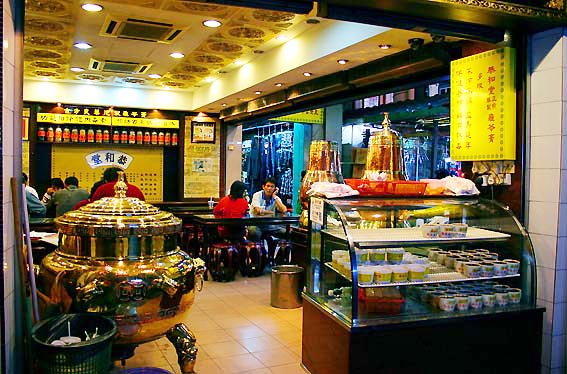
Continuing my impressions of Kuala Lumpur. It’s rained on and off nearly every day, so my chakkars have been limited to the Bukit Bintang area and Chinatown (below). But that’s a lot just there, this being the heart of the city.

chinese-tea-house-and-restaurant-at-kuala-lumpurs-china-towns.jpg

Food. There are restaurants everywhere you turn – Indonesian, Indian, Thai, Italian, Chinese. And so far, they’ve been very good.

The architecture is fascinating, a mixture of tiled Malay buildings and Chinese shop fronts, terraced housing (this is the most common residential style since land is limited in the city), glass and chromium high-rises, with every so often the domes and minarets of the city’s spectacular mosques.

The Indian restaurant below is where a group of us, some backpackers, others professionals traveling on business, meet to compare notes every night.
K, a Muslim cook from London, of mixed Berber and Libyan heritage looks like Bob Marley and identifies with Africa. He divides his time between anti-Arab and anti-European invective that sounds good-natured to me but seems to rub the Swedish student the wrong way. The Swede is quiet mostly, but throws in a question now and again. The questions become quite pointed after K arrives chattily at his conclusion — which is that the quotas against non-Malays in Malaysia make sense. The Malays (the Bhumiputra) ought to be protected in their own home.

The Malay girl, who runs a guest house on the side and deals with travelers from around the world, agrees. Fortunately, the Saudis are too dumb to take advantage of the Malays, she says. But the Chinese? Why do they need help? After all, they’re from some place else….and the Indians too. Malaysia should belong to the Malaysians.

The Swede’s head turns evenly between the two, who are unaware that their views won’t fly in Europe, at least not under current European law. K’s anger against the Arabs for effacing Berber culture is deep-seated. It’s why he insists on calling himself African. They wiped out our culture, he says. They want to pretend we don’t have thousands of years behind us. How dare they call us barbarians?

What he said reminded me almost comically of the complaints of an Arab friend in DC, who often says – just as bitterly – that the Iraq war was a war waged by a modern culture envious of the ancient history of Iraq that was bent on wiping it out and replacing it with McDonalds and Starbucks.

(Actually, I believe Ann Coulter, the right-wing’s human daisy-cutter, did say something like that about ancient Mesopotamian culture:  AC: “Now the biggest mishap liberals can seize on is that some figurines from an Iraqi museum were broken ? a relief to college students everywhere who have ever been forced to gaze upon Mesopotamian pottery.” )

If I had a daughter, says K, I would never let her marry one of those Arabs. If they spoke to me I would ignore them. I wouldn’t let them get away with their injustice. I wouldn’t let them forget it.

So, says the Swede, do you think because you were oppressed by them it would be fine for you to oppress them now? Are you waiting for that?

The Swede asks it levelly but there’s an edge to his voice. K feels it and squirms. But he decides to stand his ground, anyway. Yes, why not? If they did it first?

But don’t you see, the Swede persists, then you become like them.

K looks at me helplessly. I accept the challenge.

Well, yes….and no. Of course, you have bitterness over the injustice. The bitterness is an appropriate feeling. It’s deserved. There’s nothing wrong with the anger at all. But practically, where does it get you? If you stew in it and let it poison you then you’ve added your own self-injury – a laceration – to the original harm.

In Europe, we believe there should be no discrimination under the law, says the Swede firmly. All races should be the same. He pets his chubby Malay girl friend who’s paying no attention at all but chatting over wifi about why the US won’t let her into the country as a tourist because of her religion. Most Malays are Muslim.

But there’s plenty of discrimination in Europe, insists K excitedly. Plenty. They hate immigrants there.

Still, the law says they should be treated equally, says the Swede.

K is upset now.

So what? Why does the law matter? It’s all hypocrisy.

It was interesting to hear arguments about race and quotas on the other side of the world no longer defined in terms of European and African, or European and Hispanic, First World and Third World.

My Malay acquaintances openly call the Tamils and Bangladeshis here “stupid” and “retarded.” So does the Swede, though much more gently and without the visceral feeling. Some of the Tamil workers I’ve seen here (and my experience is extremely limited) do indeed act and sound unfocused, even disoriented. But having worked with retarded and disturbed children, slow learners (as well as with the gifted) and seen a somewhat similar deportment among children who don’t make the cut in the regular classroom but aren’t really intellectually inferior in any serious way, I wonder if the problem isn’t mainly cultural. The Tamil workers, being dark-skinned and culturally quite different from the westernized Chinese and Malays, could be retreating into a kind of passive indifference. It doesn’t look like stupidity so much as the aftermath of cultural shock and anxiety. Many workers here are the descendants of indentured labor sent to Malaysia by the British from India. They have the disoriented air of people who aren’t conscious of having their own will… who wait for something to be done to them…or for them. And yes, there may also be a genetic component to differentials in intellectual performance.

But the harsh rhetoric from the Malays, themselves brown-skinned, was unsettling. Especially since foreigners in this country have always had to pay for their own education, whereas even under the British, the Malays had it for free……and were still out performed (as libertarian economist, Thomas Sowell has noted).

This is not the First or Second or Third World. And the whites (here they are the Chinese) and the browns (the Malays) and the blacks (the Indians, the darkest- skinned) may be all Asian – but they come from different races.

Europeans and most Middle Easterners (and a large number of Indians), on the other hand, are not racially different, but different in color only. They are Caucasians, only of different colors.

Dr. Rubin does the rounds: Asian “flu” (then) US “chill” (now)

Chalmers Johnson described the result in blunt terms: “The funds easily raped Thailand, Indonesia and South Korea, then turned the shivering survivors over to the IMF, not to help the victims, but to insure that no Western bank was stuck with non-performing loans in the devastated countries.” A European Asia expert, Prof. Kristen Nordhaug, summed up the Clinton Administration policy towards East Asia in 1997. Clinton had developed a major economic strategy, using the new National Economic Council, initially headed by Robert Rubin, a Wall Street investment banker. East Asian emerging markets were targeted for an offensive. “The Administration actively supported multilateral agencies such as the IMF…to promote international financial liberalization,” Nordhaug noted. “As…the strategy of targeting East Asian markets (was) in place, the U.S. Administration was in a strong position to take advantage of the financial crisis to promote liberalization of trade, finance and institutional reforms through the IMF.”

The impact of the Asia crisis on the dollar was notable. The Bank for International Settlements General Manager, Andrew Crockett, noted that while the East Asian countries had run a combined current account deficit of $33 billion in 1996, as speculative hot money flowed in, “1998-1999, the current account swung to a surplus of $87 billion.” By 2002 it peaked $200 billion. Most of that surplus returned to the U.S. in the form of Asian central bank purchases of U.S. Treasury debt, in effect, financing Washington policies. Japan’s Finance Ministry had made a futile effort to contain the Asia crisis by proposing a $30 billion Asian Monetary Fund. Washington made clear it was not pleased. The idea was quickly dropped. Asia was to become yet another province of the dollar realm through the IMF. Treasury Secretary Rubin euphemistically termed it America’s “strong dollar policy.”

Global games: OPEC unwilling to side with Venzuela and Iran

“Venezuela – whose leftist President Hugo Chávez appears to revel in tweaking the nose of the US, which he alleges backed a failed coup against him five years ago – has been pushing for higher oil prices in tandem with Iran, as well as a move away from the US dollar.

In this, both countries failed. Saudi Arabia – which accounts for about 30 percent of OPEC production – clearly signaling its opposition to what it views as the politicization of the commodity.

After Mr. Chávez urged OPEC’s leaders to use their oil wealth to become an “active political agent” and warned that oil prices would rise above $200 a barrel if the US takes military action against his ally, Iran, Saudi King Abdullah dismissed his arguments.

“Oil … should not become a tool for conflict and emotions,” he said. “Those who want OPEC to become an organization of monopoly and exploitation ignore the truth.”

More by Dan Murphy at the Christian Science Monitor.

Bubble Kings have their own wealth abroad….

“Paulson has successfully orchestrated the rigging of the dollar in collaboration with crony banks like the BIS, ECB, BOJ and BOE (Barclays); and, surprisingly, for the moment, China. The “smart money” — no small part of which are the insiders, the henchmen providing logistical support to the Goldman empire (self-aggrandizing CEOs, etc.) — has long moved into gold (back when the Rothschilds abandoned the London gold fix), Euros and, increasingly, tangible properties lying outside of the sinking-ship America, into high growth regions like Asia and India — and now, increasingly, mineral rich Africa…….This explains the absence of the bond vigilantes. The wealthy have never held their money in the equity casino. Their lifestyles are framed in the triple-A credit markets, taking sustenance from the interest earned on the shoulders of the working man. With interest payments no longer covering the cost of inflation, the Goldman Sachs oligarchy has corralled the wealth and relocated it offshore.”
From Rick Ackerman at Goldseek.

Comment:
Anyone who thinks that the gold price has successfully broken free of manipulation this time round should watch it. When I wrote my investigative piece on Goldman Sachs last year, I too underestimated the grip they had on the system. I thought that the weakness of the subprime market and the problems with the GSEs (Fannie Mae and Freddie Mac) – problems in which Goldman was involved – as well as their own corruption would eventually prove too much. Instead, GS managed to exploit and further extend its government ties. Its alumni are now in charge, not only of the Fed Reserve, US Treasury and other key government positions (including security), but also of 3 of the half dozen biggest banks. The result? GS not only managed to escape really being hit by the subprime mess but to fatten off of it. Not because of financial wizardry. But because of insider connections that get thicker and thicker with each tick of the clock.Moral of the story? Trade gold midterm (if you must) – don’t hold it and forget it (unless you bought it at historic lows). Better yet, forget about gold and try to buy real assets of good quality that generate cash flow.

And help break through the PC fog. It’s not about whether there’s a woman or an African American in the White House. It’s not about gay marriage or gun control. All those are important issues, but right now, quite secondary.


I’m not against being courteous and calling anyone what they want to be called, but the result of falling in line with every part of PC is to keep you thinking that secondary issues are more important than they are. Whether they are for or against guns or gays or babies or birthpills, ALL the major candidates are FOR the present system. Whether it’s Barack or Hillary or Rudy or Fred, there’s still going to be bigger government, more wars, more manipulation of finance.

But don’t give up on the USA just yet. Not while there’s a bloke called Ron Paul around.