Indonesian drug laws are Indonesia’s business.

Indonesia’s drug laws are Indonesia’s business, says one American expat sensibly:

Nobody who has spent a significant amount of time in Indonesia will make the argument that Indonesia’s legal system is perfect. Corruption is a major problem, and laws ranging from traffic violations to environmental regulations are flouted with impunity. One of my fellow teachers recently confessed that he would never call the police unless he was the victim of a very serious crime because he fears getting shaken down in return for the crime being solved. However, with the exception of the province Aceh, which uses a limited form of Sharia law, Indonesia’s political and legal system is based on secular values[iv] and thus cannot be dismissed as the product of radical Islam, even if critics might have you believe otherwise. Furthermore, there is no doubt whether the aforementioned drug traffickers are guilty, rather the question is if Indonesia has the right to execute foreign drug dealers. Indonesia is well-known for its strict drug laws as its airports are full of warnings that drug trafficking offenses carry the death penalty and even customs declaration cards carry the ominous threat that drug traffickers face the death penalty. Anti-drug signs and speeches are a regular part of life at an Indonesian high school and drugs, even marijuana, are considered completely taboo. Of course, drugs exist and people abuse them, but in my own experience, the Indonesian approach is very different from the West, where many drugs are illegal, but young peoples’ drug experimentation is often tacitly accepted.

I do not believe that drug traffickers should be given the death penalty; however, my opinion is irrelevant as I am not an Indonesian citizen, and even if I were the majority of Indonesians disagree with me.[v] This article is not attempting to argue that countries should adopt the death penalty for drug trafficking, but we should avoid trying to impose our more liberal views about drugs on other countries. Trafficking large amounts of heroin is considered a very serious crime worldwide including in the countries that have abolished the death penalty. The National Institute on Drug Abuse summarizes the effects of the drug as “once a person becomes addicted to heroin, seeking and using the drug becomes their primary purpose in life.”[vi] Hopefully, I do not have to devote any more time persuading the reader that heroin is a terrible drug and that Indonesia has a right to protect itself from drug traffickers. Some pundits have argued that Indonesia should not proceed with these executions because supposedly the death penalty does not deter drug trafficking, but the World Health Organization’s (WHO) 2012 World Drug Report revealed that there is a significantly higher percentage of Australians who abuse marijuana, amphetamine-type stimulants, and opioids (heroin, morphine, etc) than Indonesians.[vii] This makes intrinsic sense as the more serious the punishment for breaking a law the less likely people will do so. Obviously, there are other factors at work here as well, as many countries with less stringent laws have less drug abuse, but Indonesia should be free to combat drug dealers how it sees fit, and even if its methods are inefficient that is Indonesia’s problem, not ours.

According to The Economist’s 2012 Index of Democracy, the only Muslim-majority countries that are functioning democracies are Senegal, Malaysia, and Indonesia.[viii] Unfortunately, this list is unlikely to grow significantly in the future as the Arab Spring has not led to the expected growth in democracy, if anything the opposite has occurred. Thus, it makes sense for the West to do everything in its power to build strong relations and support the aforementioned Muslim-majority democracies, even if they are imperfect. Trying to interfere in a country’s legal system will only have adverse effects, even if the death sentences are commuted, as we risk alienating the Indonesian people, the majority of whom support the death penalty of drug traffickers[ix] and most likely do not want foreign countries interfering in their justice system. This should only be acceptable if there is a real injustice, but facing the consequences after being caught with a large amount of heroin or other narcotics is not an injustice and it is not worth damaging bilateral relations. Bob Carr, the former Australian foreign minister, put it best when he said “to produce a nationalist backlash in Indonesia would be terrible for Australia’s future in Indonesia and I really think in South-East Asia.”[x]

We expect immigrants and visitors to respect our laws, so it seems a little perverse to assume that our citizens will not be held to the same standard when travelling abroad. Indonesia is a much more conservative place than Australia, the Netherlands, etc, so if foreigners find this abhorrent, they should avoid traveling or visiting here, especially if they intend to engage in illicit activity. The only country which should be worried about how Indonesia deals with drug traffickers is Indonesia. Trying to influence domestic policy in other countries through coercion and cajoling may provide a short-term political popularity boost in your own country, but it is not a long-term formula for success, and we must respect Indonesia’s legal system. Otherwise the West risks permanently alienating Indonesia and similar countries by trying to strong-arm them into adopting our legal rules and ethics, which is bad for Indonesia, but even worse for us.”

And Alan Royle writes:

 Australia’s Foreign Minister Julie Bishop is trying everything to get the condemned men’s sentences reduced to life imprisonment, on the rather dubious premise that capital punishment is barbaric, that all human life is precious and has value. Frankly, I doubt if the lady is all that familiar with the ‘all human life is precious’ argument. Why? Because one of her brilliantly thought through proposals to President Widodo of Indonesia is that our two nations do an ‘exchange’. The proposal is that Indonesia gives us back our two Australian drug dealers, and in return we give them three Indonesian ones captured on our soil. Then, our home-grown scumbags can serve a cosy prison sentence here, and the Indonesian scumbags can go home and get shot! Evidently, Miss Bishop’s understanding of the sanctity of life only applies to those holding an Australian passport. As I write, the death toll in Katmandu has climbed over 4,000 following the earthquake on April 25, yet the Australian media and government continue to focus their attention on the fate of the Bali 9 leaders. Where the Hell are our priorities? Virtually every Australian I know has enormous sympathy for the Nepalese people and none for two greedy drug dealers, so why does our media and government continually tell the world the opposite? There are vigils being held around the country, but they concern Nepal not Bali!”

Exactly right.  If the “sanctity of life trumps all’ argument were really held seriously, then of course, the US, UK , and Australia wouldn’t be turning away migrants who face starvation and/or war in their own countries.

But they do. Routinely.

In other words, if you are an innocent victim of catastrophe or war, don’t expect the self-proclaimed lovers of liberty to support your right to free movement to other countries.  Suddenly Jean Raspail gets trotted out. Europe’s very existence is threatened.

But, if you are a first world drug-trafficker inflicting untold misery on native teens and young people via hard drugs, then expect every bleating phony to rush out and defend the sanctity of life.

No one with half a brain can avoid knowing that they face the death penalty if they traffic in drugs in certain Asian countries. If you still, do it, because you want to make money off of ruined lives,  and if a lawfully elected government then sentences you to death, with the support of the culture and people in the country, and there is a legitimate and rational argument to be made that the law in question is just, your legal claim is non-existent.
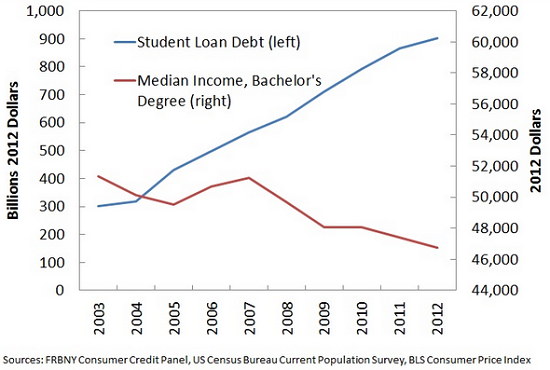


The Declining Value of Elite Credentials

Of Two Minds.com:

“Economist Michael Spence developed the job market signaling model of valuing employees based on their credentials in the 1970s. The basic idea is that signaling overcomes the inherent asymmetry of information between employer and potential employee, i.e. what skills the employer needs and what skills the employee actually has is a mystery to the other party.

Credentials (diplomas, certificates, grad point averages, test scores, etc.) send a signal that transfers information to the employer about the opportunity cost the potential employee sacrificed for the credential.

It is important to note that the credential doesn’t necessarily signal the employee’s actual skills or knowledge– it only signals the amount of human and financial capital the employee and his family invested in obtaining the credential.

Signaling boils down to something like this: if Potential Employee A graduated from a prestigious Ivy League university, and Potential Employee B graduated from a lower-ranked state university, this doesn’t signal that Candidate A is necessarily more intelligent than Candidate B; it does signal, however, that Candidate A probably worked harder to get into and graduate from the prestigious school.

The signal is: Candidate A will work harder for the employer than Candidate B, all other qualifications being equal.

The Signal Value of credentials is the entire foundation of higher education. The higher education system does not actually test or credential the body of knowledge or working skills of graduates; it simply accredits that the graduate sat through a semi-random selection of courses and managed to pass the minimal standards–or alternatively, that the graduate gamed/cheated the system to gain credit without actually doing any real learning.

The reason tens of thousands of parents are sweating blood to get their child into an Ivy League university is the signaling power of that degree is widely viewed as having the near-magical ability to guarantee lifelong highly compensated employment.

But the power of higher education credentials is eroding for systemic reasons.

1. Credentials of all sorts are in over-supply: there are more people holding credentials than there are jobs that require those credentials.

2. Higher education does not prepare graduates for the real world of work in the emerging economy, so the signaling value of a diploma has been lost.

3. The opportunity cost paid by those graduating from college is now more noise than signal.

4. The intrinsically ambiguous signal value of a credential cannot be substituted for real-world accreditation of real skills and working knowledge.

In essence, the failure of signaling to accredit actual skills and knowledge bases is being acknowledged by employers. This accreditation is precisely what diplomas fail to do. Specialty programs (nursing, medicine) accredit the skills and knowledge of the graduates, but this is not true of the vast majority of diplomas and credentials.

The job-market value of a college degree was relatively high in the 1970s when Spence developed the Signal Model because the number of workers with college diplomas was still relatively modest (around 15% of the workforce). The most basic function of the market–supply and demand–worked in favor of what was relatively scarce–a college diploma. As a result, the assumption that the applicant had worked hard to obtain the degree was more signal than noise.

Nowadays, conventional credentials such as college degrees are in over-supply: around 40% of the work force has a college diploma of some sort, and an increasing number of college graduates are taking jobs that do not require a college education.

This is reflected in the declining wages of college graduates: Even the Most Educated Workers Have Declining Wages.

While the cost of higher education has skyrocketed (tuition is up 1,100% since 1980), the educational yield of higher education has declined. The national study Academically Adrift: Limited Learning on College Campuses, found that over one third of college students “did not demonstrate any significant improvements in learning critical thinking and other skills central to success in the new economy” and concluded that “American higher education is characterized by limited or no learning for a large proportion of students.”.

From this dismal record, we can extrapolate that another third gained marginal utility from their investment of tens of thousands of dollars and four years of study.

Google is widely viewed as a bellwether of the new economy. It is noteworthy, then, that Google has found that academic success has little correlation with being productive in the workplace. Lazlo Bock, Senior Vice President of People Operations at Google, made the following comments in an interview published by the New York Times in June 2013:

One of the things we’ve seen from all our data crunching is that G.P.A.s (grade point averages) are worthless as a criteria for hiring, and test scores are worthless. Google famously used to ask everyone for a transcript and G.P.A.s and test scores, but we don’t anymore. We found that they don’t predict anything.What’s interesting is the proportion of people without any college education at Google has increased over time as well. So we have teams where you have 14 percent of the team made up of people who’ve never gone to college.

Signaling an ability to grind though four or five years of institutional coursework is no longer enough; the signaling needed to indicate an ability to create value must be much richer in information density and more persuasive than a factory model diploma.”


Men Forced Into Sex More Often Than Women

In a thoroughly documented piece, “Yellow Journalism and the Meme of Rape Culture,” a blogger  takes apart Rolling Stone magazine’s coverage of the University of Viriginia “gang-rape” story to show the incredibly shoddy standards of investigation of many elite (read, left-liberal) news outlets and the biased advocacy that passes itself off as objective reporting.

Rolling Stone has retracted the story and issued an apology but no one has been fired for what amounts to criminal libel.

The agenda behind this, as admitted by the reporter herself, was to find a rape story that was “emblematic” of the rape culture that feminists declare is threatening women on campus.

But as I’ve blogged many times,  this isn’t so.

To find a “rape culture” on American campuses,  you would need to use a broad definition of rape that included seduction with alcohol, fraud, or other means.

I tend to agree with the broadening of what we define as rape, while disbelieving that the criminal justice system is the best place to address any of it.

Both Heather McDonald and Emily Yoffe named the beast that nobody wants to confront: an alcohol-lubricated hookup culture that begins in high school (if not earlier) and turns colleges and universities into rape traps for both women and men.

U-VA President Teresa Sullivan didn’t mention alcohol – not even once – in her November 22 statement about the Rolling Stone report of a gang rape at a fraternity house and her intention to quell sexual abuse on campus.

Yet a 2004 study by the Harvard School of Public Health (Correlates of Rape while Intoxicated in a National Sample of College Women) of almost 24,000 women at 119 colleges found that 72% of campus rapes happened when the victims were so intoxicated they were unable to consent or refuse.”

In this broad sense (but not in the narrow one) there is a “rape-culture”.

Only, today it victimizes men as much, or more, than women, as is the case elsewhere in the world .

Riversong.wordpress.com

“If any unwanted or not fully consensual sexual activity is defined now as rape, then more men then women are victims of rape and most of their victimizers are women.

An article about college students published in the Journal of Sex Research Vol. 31, No. 2 (1994), noted that Muehlenhard and Cook (1988) found that 46% of women and 63% of men had acquiesced to unwanted sexual intercourse, while Muehlenhard and Long (1988) also found that more men (49%) than women (40%) had engaged in unwanted sex. Muehlenhard and Rodgers (1993) found that 34% of women reported having engaged in token resistance to sex, in which they said “no” when they really desired to have sex. US women acknowledge a 55% rate of consent to unwanted sex, which is consistent with the findings of 50% false rape allegations in university studies.

[Charlene L. Muehlenhard, PhD, the author of all those studies, is a Professor of Psychology and Women, Gender, and Sexuality Studies, Fellow in Three Divisions of the American Psychological Association (Society for the Psychological Study of Social Issues, Society for the Psychology of Women, Society for the Psychological Study of Lesbian, Gay, Bisexual, and Transgender Issues), and a Fellow in the Society for the Scientific Study of Sexuality]

According to a 2014 paper published in the American Psychological Association journal, Psychology of Men and Masculinity, 43% of high school and college-aged men say they’ve had “unwanted sexual contact”, and 95% of those say a female acquaintance was the aggressor.

Researchers found that 18% reported sexual coercion by force (including by use of weapon), 31% said they were verbally coerced into sex, 26% said they’d experienced unwanted seduction, and 7% said they were compelled after being given alcohol or drugs.

Dr. Bryana French, who teaches counseling psychology and black studies at University of Missouri and co-authored the study, says that male victims are often less willing to describe sexual coercion in detail, “but when asked if it happened, they say it happened”.

French said, “Seduction was a particularly salient and potentially unique form of coercion for teenage boys and young men when compared to their female counterparts.”

The Sexual Victimization of Men in America: New Data Challenge Old Assumptions is co-authored by Lara Stemple, Health and Human Rights Law Project, UCLA, and Ilan H. Meyer, Williams Institute, UCLA School of Law.

The authors assessed 12-month prevalence of sexual victimization from five federal surveys conducted, independently, by the Bureau of Justice Statistics, the Centers for Disease Control and Prevention, and the Federal Bureau of Investigation from 2010 through 2012. The review of these surveys provides an unprecedented wealth of new data about male victimization, challenging long-held stereotypes about the sex of victims.

In one of the studies included in the analysis, the CDC found that an estimated 1.3 million women experienced nonconsensual sex, or rape, in the previous year.

Notably, nearly the same number of men also reported nonconsensual sex. In comparison to the number of women who were raped, nearly 1.3 million men were “made to penetrate” someone else. The CDC data reveal that both women and men experienced nonconsensual sex in alarming and equal numbers.

The study also included the 2012 National Crime Victimization Survey, which found that 38% of all reported rape and sexual assault incidents were committed against males, an increase over past years that challenges the common belief that males are rarely victims of this crime.

“These findings are striking, yet misconceptions about male victimization persist. We identified reasons for this, which include the over-reliance on traditional gender stereotypes, outdated and inconsistent definitions used by some federal agencies, and methodological sampling biases.”

The 2011 CDC analysis referred to in the 2014 report found that 6.7% of men (7.6 million) reported that they were made to penetrate someone else, and that 82.6% of male victims of “made to penetrate” events and 80% of male victims of sexual coercion reported female perpetrators, meaning they were raped by a woman, according to the current and broadly accepted definition of rape as any unwanted sexual encounter.

The CDC report’s statistics for the preceding 12 months showed that a higher percentage of men were “made to penetrate” (1.7%) than women were raped (1.6%), such that if you properly include “made to penetrate” in the definition of rape, men were raped by women at least as often as women were raped by men.”

Not knockout “games,” but organized gangs

I found one site, which seems to have the same sense I have, that this black-on-white crime is not the work of random “flash-mobs,” or random thugs, or  “knock-out games.”

This looks like organized, pre-planned violence.

The incidents below occurred in 2011, in the run-up to the 2012 election, which I blogged previously, deliberately employed race-incitement as a strategy.

Chicago Illinois

In Chicago attacks by black mobs are becoming routine. So much so that the police is now mobilizing detectives and additional officers  to form gang  units in a  desperate effort to try to get a handle of this.

So far they are failing.

June 9th 2011,”police here are girding for another weekend of ‘flash mob’ attacks after arresting 29 people in connection with a recent rash of assaults and robberies in and around the city’s tony shopping and dining district. Twelve crimes involving large groups of young men were reported last weekend in addition to others earlier this spring. The incidents are some of the first major problems confronting newly appointed Chicago Police Superintendent Garry McCarthy”.

The attacks are typical of what this man, Krzysztof Wilkowski,  experience after shopping on Michigan Avenue.  He was sitting on his scooter a couple of blocks away checking his phone for a restaurant when he got whacked in the face with a baseball.   After he was dazed by the blow , “a few of the attackers dragged him off his scooter and pulled him onto Chicago Avenue where they punched him, hit him with his helmet and tried to grab his phone”.

Another victim was  “Jesse Andersen, the 35-year-old brother of Smashing Pumpkins front-man Billy Corgan” who was accosted and attacked by a black mob while waiting for the train.

Don’t think that these attacks occur in some devastated ghetto.  On the contrary.  The black mobs are praying  on victims in Chicago’s affluent North Side, including the very popular tourist attraction,  The Magnificent Mile.

A few days ago another balck mob invaded and took over a Walgreens store right on the “Magnificent Mile”.

Read full article here

Peoria Illinois ” kill all the white people”

A mob of African-American male youths terrorized White residents of Peoria, Illinois as they shouted “kill all the White people” while rioting in the downtown area late Saturday night.

Eyewitness Paul Wilkinson, president of the Altamont Park Neighborhood Association, wrote the following account in the Peoria Chroncile:
Tonight, around 11 p.m., a group of at least 60-70 African American youth marched down one of the side streets (W. Thrush) to the 4 lane main drag (Sheridan). They were yelling threats to white residents. Things such as “we need to kill all the white people around here”.  They were physically intimidating anyone calling for help from the police.
This is the fifth large mob action in about a month while smaller groups of 10-12 are out threatening children and adults a few evenings a week or later into the night.
Source

No. Virginia.

Three people were beaten by mobs in Northern Virginia in two separate incidents that occurred within five minutes of each other on Saturday night, authorities said.

To think that this is random stretches the furthest bounds of credulity and requires a suspension of disbelief bordering on comatose.  The spark of these attacks is planned and  some of them were actually organized on social media sites. Do you remember which president got elected using social media sites?

Flagolatry Then and Now

Third-World Traveler has an excerpt from “Hoax,” by Nicholas Von Hoffman

(Nation Books, 2004).

p33
Flag Waving

Flagolatry , or the excessive or demented reverence for the national symbol, has its innocent roots in the first lines of the National Anthem. Then things began to get out of hand. Respect for the flag commenced to become flagolatry, part of the degraded and antic patriotism which distorts what, in saner hands, are decent and praiseworthy feelings for one’s country. That country was hardly born before people started running Old Glory up the flag pole with a vengeance.

p34
Some flag waving is good, a lot of flag waving is tolerable, incessant flag waving is crazy and dangerous and easily manipulated by the war party to get people bubbling at the mouth in fear and rage.

p36
… when flagalotry takes over the landscape, as it has in the last generation, it says something about people who dwell in that country. Not only does every unpaid-for, overly-mortgaged house in the United States boast its own copy of Old Glory, but so does every SUV, every truck, every truck stop, the side of every barn.

p38
I suppose that the purpose of flag display is inspirational, but taken together with allegiance-pledging and such, its effect is stifling, confining, and intimidating. It was used for the same purpose in the months leading up to America’s entry into World War I. An electric sign was strung across New York City’s 5th Avenue in 1916 flashing the orders for “Absolute and Unqualified Loyalty to Our Country.” In a society of lapel pin flags and standing to attention and red, white, and bluing, the uninterruptedly repeated message is don’t talk, listen up, and get ready to rumble.

The insanity of public debate in America

Consider the following,:

1. A woman has the absolute right to kill her baby until the moment it exits her uterus. She can also dismember it and torture it by burning it with saline fluid, plucking off its limbs, crushing its bones, or sucking its brains out.

These actions are guarded ferociously as her “right to privacy” by the entire intellectual establishment that silently blacks out or distorts descriptions of these killings. Some 50 million babies have been killed in the past few decades but this holocaust is left to private conscience only. Women or their doctors are not punished for it at all. In fact, they’re applauded and public funding is used to pay for it, even while that part of the public that doesn’t go along with abortion is demonized.

2. An eighty-year-old man makes a few untoward remarks to a girlfriend in the privacy of their bedroom. The tapes are recorded. and published. He is denounced as a disgusting racist with no right to his opinions and he is deprived of his property rights.

Leading “libertarian” activists  say nothing or defend the media’s position. They tell people they ought not to say anything in private they can’t say in public.  This is a thought-control much greater than that under Sharia law, which all these activists would denounce, correctly. None of them sees the contradiction.

No one thinks of simply ignoring and not linking the Sterling material. Instead, they all follow the media’s cue automatically, as though pulled by invisible strings. Then they call themselves “fiercely independent” and talk about “freedom,:” “free speech,” “free choice,” “self-ownership” and other flattering mythologies with a straight face.

Meanwhile, so-called “evil statists” are the only ones arguing that the the recordings are on their face illegal and should not be distributed in the public realm.

The parameters of debate in the much-vaunted “free press” are set by media barons who profit from cheap gossip and extortion (which lowers the cost of running a paper, since the public does the reporting for free or for small sums), pornographers, and paid operatives of the government posing as private actors.

No one considers this a gross conflict of interest. The media barons are presumed not to have political agendas and presumed not to manipulate in collusion.

Nor is this manipulation termed what it is – an extension of the state into the private sphere. It is all deemed “free market” unproblematically.

3. The same people attack anyone who criticizes a paid porn performer for her consciously public acts. They argue that she has a right to privacy even though she sold her porn pictures to a public company voluntarily.

I actually agree with that argument, but those who deny a Donald Sterling his privacy can surely have no justification for giving a Belle Knox hers.

With equal confusion, recording the private sexual behavior of Tyler Clementi (the gay Rutgers freshman who committed suicide)  is a vicious assault on his privacy and dignity (it is), but recording the speech of a Donald Sterling is a righteous act of public policing (it is not).

4. The same people who attack Donald Sterling’s private speech and hold it to an arbitrarily decided public standard also denounce theocracy (with its logically entailed blasphemy laws) as an insupportable and “medieval” intrusion into free speech and thought. And they declare themselves the embodiment of “reason” against the “irrationality” of the religious.

5. The same critics of Sterling who believe it is legitimate for him to lose his livelihood over private speech within his bedroom have a fit over the most minor constraint placed on their right to use speech in public to degrade, inflame, incite, defraud, mislead, or titillate. They even object to any constraint placed on their right to disseminate for commercial profit the vilest images, even where they would be accessible by minors.

They defend their right to view violent child pornography, even though that right supplies the demand that drives a global market of child abuse and murder and though the act of viewing itself has been deemed criminal.

But while the act of viewing child-porn is criminal, the act of dismembering a child is deemed “private” and protected.

The left also defends without any nuance or moderation the right to publish “art”  that inflames the public, even where major violence could result  as in the Danish cartoons of Mohammed, which, as it turns out, were a deliberate provocation from a neo-con flack.

Study suggests whites don’t see non-whites as “people”?

From April Kemick at the University of Toronto (Scarborough) website:

“The human brain fires differently when dealing with people outside of one’s own race, according to new research out of the University of Toronto Scarborough.

This research, conducted by social neuroscientists at U of T Scarborough, explored the sensitivity of the “mirror-neuron-system” to race and ethnicity. The researchers had study participants view a series of videos while hooked up to electroencephalogram (EEG) machines. The participants – all white – watched simple videos in which men of different races picked up a glass and took a sip of water. They watched white, black, South Asian and East Asian men perform the task.

Typically, when people observe others perform a simple task, their motor cortex region fires similarly to when they are performing the task themselves. However, the UofT research team, led by PhD student Jennifer Gutsell and Assistant Professor Dr. Michael Inzlicht, found that participants’ motor cortex was significantly less likely to fire when they watched the visible minority men perform the simple task. In some cases when participants watched the non-white men performing the task, their brains actually registered as little activity as when they watched a blank screen.

“Previous research shows people are less likely to feel connected to people outside their own ethnic groups, and we wanted to know why,” says Gutsell. “What we found is that there is a basic difference in the way peoples’ brains react to those from other ethnic backgrounds. Observing someone of a different race produced significantly less motor-cortex activity than observing a person of one’s own race. In other words, people were less likely to mentally simulate the actions of other-race than same-race people”

The trend was even more pronounced for participants who scored high on a test measuring subtle racism, says Gutsell.”

Comment:

Actually, what the researchers found was not that “people’s brains” react differently when they watch people of other races than their own.

What they found was that white people’ brains reacted differently when they watched non-whites, as opposed to other whites. A bit of a difference.

Now, if the researchers had also done tests with brown people as the study group and then blacks and other groups, then it would be valid for them to generalize from their research to conclusions about people as a whole.

But they can’t generalize about “people” from one subset of people without being guilty of the very thing they’re supposed to be studying, racism.

Of course, the perceptions of the whites in the study might not have had so much to do with color as such, although it manifested that way, but as with the status evoked by white skin. Since white or light-skin tends to signify higher status in contemporary society, it follows that when white people – in this study – showed less awareness of or empathy toward dark-skinned people, they might have been doing that not so much because of the different skin-colors of the people they were observing, but because of what those colors signify today, which is lower status.

This inference is strengthened by a similar study of race and perception conducted by Sophie Trawalter et al. in 2012.

Quoting from the abstract of the Trawalter study:

Archival data from the National Football League injury reports reveal that, relative to injured White players, injured Black players are deemed more likely to play in a subsequent game, possibly because people assume they feel less pain. Experiments 1–4 show that White and Black Americans–including registered nurses and nursing students–assume that Black people feel less pain than do White people. Finally, Experiments 5 and 6 provide evidence that this bias is rooted in perceptions of status, not race per se.

The authors suggest that the findings of their study do not necessarily mean that whites are being racist in not caring when non-white people feel pain. The findings could also mean that white people show less empathy because, for one reason or other, they think black people can tolerate greater pain.

Of course, none of these conclusions means much until studies of black or brown perceptions of white people are also done.

One might guess that in those studies it will be found that browns and blacks are actually more sensitive to the pains of whites than those of their own.  One might guess that, because in recent studies it’s been shown that both whites and blacks rated white faces as more intelligent, honest, and attractive than they did black/dark-skinned faces….

I’ll pull up the link in a minute… (incomplete)

India And The War On Terra (Mater)

An excerpt from a Counterpunch piece I wrote in 2006, warning about the effects of Manmohan Singh signing India up for the US-led global  War On Terror, which actually fronts for the Rothschild “War On Terra”.

“In India, thousands if not millions of lives will likely be affected and India’s self-sufficiency in food destroyed, all for a few more H1B visas and some outsourcing businesses. And the sordid distinction of entry into the Big Boys Club of the WTO mafia.

Strike Two: Tariffs on industry were reduced and the coveted services sector was opened up like a brothel in Kanthipura. Public health, education, telecom, banks, water, all pimped by the state. And by failing to bring up TRIPS (The Agreement on Trade Related Aspects of Intellectual Property Rights) for review and amendment, India – junior Big Boy – ensured that prices of patented drugs will continue to soar, affecting the common people in poor countries. The length of patents, the patenting of life forms, health and food security – all this might have been reviewed with ease. Not one was.

Strike Three: On the other side, the senior Big Boys got away with unctuous promises to ease out export subsidies by 2013 knowing full well that export subsidies are only a drop (2%) in the total subsidies to agriculture. Even the vaunted “Aid for Trade” is smothered in conditional loans contingent on further breaking open the markets of poorer countries. And what gains were made in market access in the developed world went largely to agri-exporters like Argentina and Brazil, not to poor countries.

And not to the lost leader of the third world.

None of this need have been. India might have stood with the Caribbean, South American, and African countries and galvanized the G 110. Cuba and Venezuela clearly drew the line on service liberalization and India might have joined them. But the current Congress administration, which took the place of the BJP with a mandate to resolve India’s growing agrarian crisis, has proved itself if anything less concerned with the country’s welfare. One could well ask if a nationalist BJP government would have had the ideological stomach to betray the heartland of India.

The Indian government’s cowardice at Hong Kong matches it’s cowardice over the Iraq war, which it could have opposed more vocally, and the vote against Iran, which it need not have joined. But the Cambridge-educated economist Manmohan Singh seems to have decided to put opportunism before principle. For our elites, perhaps it’ OK just so long long as it’s Cambridge-bred, not Varanasi-bred. (4)

The betrayal of Hong Kong is the background against which events in Bangalore must be viewed. Having reneged on its public duties, the government of India is bound to release a flood of propaganda intended as a smoke-screen and a distraction from its own craven performance.

It’s also likely to tighten its grip in the face of mass protests or resistance as the implications of Hong Kong become more and more widely known.

At Hong Kong itself, union leaders, farmers, and workers protesting peacefully were attacked with water-cannons, pepper-spray, and tear-gas. 900 were arrested and 70 were hospitalized.(5)

Want to know what to expect in the coming year? Here’s the graffiti already on the wall in Indonesia, which currently occupies the presidency of the Human Rights Commission (though it has yet to ratify key international human rights treaties) and in November, 2005 became a full-fledged compadre of the US in the War on Terra.

On September 18, 2005, in Tanah Awuk village in central Lombok, around a thousand peasants gathered peacefully to protest development policies denying local people the ability to feed themselves, on which they blamed a severe problem of child malnutrition. Indonesia has abundant fertile land and all available land is cultivated for agriculture. The real problem is that policies favor elite profits over the hunger of peasants.

At about 9 in the morning, Indonesian police forces attacked the crowd with plastic and rubber (as well as some metal) bullets, tear gas, and truncheons. 33 were injured, 27 from gunshots, and the rest from assault. At least one child and two women were shot.
National TV footage showed unarmed women being dragged violently across rough terrain and police roughing up a man bleeding copiously from the head.(5)

That’s how you play the game when you join the US Terror team. Salaam, Bangalore.”

Black-On-White Racist Violence Increasing

From AIM.org, a report about black on white mob violence that looks instigated:

“What makes this even more startling is that it is just one of many examples of racial mob violence occurring around the country, without any comment from national figures such as President Obama or Attorney General Eric Holder. But if whites were attacking blacks in this manner, you can bet it would have already have become a national story worthy of comment from national political figures.

Consider these incidents:

  • At the Wisconsin State fair, groups of black teens numbering anywhere from 25 to 100 “were targeting anyone who was white or appeared to look white,” and beating them, according to the local police chief. At least 18 people were injured, and 30 have been arrested.
  • In Denver, couples leaving restaurants were being attacked by a group of black men with baseball bats.
  • A young white man named Carter Strange had his skull fractured by a mob in South Carolina. He was attacked at random while jogging.
  • A young white man named Dawid Strucinski was beaten into a coma by a mob in Bayonne, NJ.
  • Anna Taylor, Emily Guendelsberger, and Thomas Fitzgerald were beaten to the ground and stomped in separate Philadelphia flash mobs.
  • Every weekend in July,” according to local news, “police have battled large, flash-mob beatings and vandalism” in Greensboro, NC.
  • In a mostly-white suburb of Cleveland, witnesses reported large groups of young blacks walking through the streets, “shouting profanities and racial epithets,” and one man was viciously beaten while leaving a restaurant with his wife and friends.
  • A young white lady named Shaina Perry was taunted and beaten by a black mob in Milwaukee who remarked “Oh, white girl bleeds a lot.”

The similarities among these attacks point to a trend: First of all, these are not run-of-the-mill crimes. They typically involve group attacks against defenseless, random victims who have no means to resist and did nothing to provoke their attackers. These flash mobs often stomp their victims even after they are down, as most of the news reports describe.

Then there are the racial similarities: The attackers are invariably black. Philadelphia’s mayor conceded as much when he condemned flash mobs, addressing the rioters with the charge, “You damaged your own race.” The victims are usually not black. Several qualifications are in order: It is clear that only a small number of black teens take part in these attacks. Blacks are more likely to be victims of violent crime than any other group due to black-on-black crime. Also, interracial crime is a fraction of all crime, and hate crime is an even smaller fraction of that. Nonetheless, these flash mobs are a social problem that needs to be addressed. If the races were reversed, we would be witnessing an outpouring of guilt of biblical proportions. Instead, the victims are white and we get an outpouring of ignominious silence. So far, precious few leaders in academia, politics, the legal system, or the media have spoken out directly against this troubling trend.

Far from being isolated incidents, violent flash mobs are part of an emerging social problem that turns the traditional story of American racism on its head. If opinion makers reported accurately about these flash mobs, most Americans would probably alter their views about racism and conclude that these flash mobs are the worst form of racial violence in our nation today. Not all of the flash mobs meet the strict criteria of a hate crime. However, they do represent a growing wave of racial violence.

The national media should acknowledge what a serious and potentially widespread social problem they are, but instead the press has concealed the racial aspect of this problem.”

Comment:

I should add that black people are by far the biggest victims of violent crime (black-on-black). So this isn’t meant to suggest, as white nationalists do, that black-on-white crime is generally motivated by racial animosity. The evidence suggests it’s not usually so. [Correction: I should add, until recent years].

But, given that there was a program to stir racial tensions floating around in the summer of 2011 among some political and activist groups, and given that this administration has shown itself ready to frame the debate in that way, this new violence should be examined a bit more closely. There is a good chance it might be orchestrated, at some level.

Blogging Skirmishes, Donkeys, and Chomsky’s Taxes..

Some weird things have been happening to my blog….minor, but worth recounting.

First. A week or two ago, my blog was suspended because of a huge amount of spam that got sent my way.  That happened just after my first posts questioning the Gupta trial verdict. Not to worry, I told myself, can happen to any blog. Of course, in five years, it’s never before happened to my blog….

Second.  A video that I had posted on my blog was deleted….I didn’t delete it. Then that video shows up posted on a friend’s blog. The exact same thing happened last year, with another video that I didn’t delete either, which someone deleted from my blog.

OK. Petty harassment.

Third.  I opened my admin panel and found someone else added as a user. I didn’t add the person’s email.  So I deleted it. Next day, another user was added. I deleted it again.

Fourth,  I make a habit of searching my name to check blog comments or follow ups.  When I click the tab BLOGS on the side of the search, the top link these days  is to Veterans Today, where an error notice pops up saying an article apparently written by me has been taken down.  I’ve not written anything for VT since February 2011 and only wrote a few pieces for them, anyway. I asked them whether there was anything with my name on it on their site these days, they said no. So this is a google cache that someone is sending to the top of blog comments, for some reason.

Fifth. My blog posts show up in searches of Rajat Gupta, usually in the first two pages, sometimes quite high up.  In the last few days when I clicked on them, I found they were all set to private. I haven’t set any of those posts to private.

It’s possible that when updating the entire blog might have gone to private a few times, but why would individual posts change to private without my doing anything?

The posts that changed to private were all controversial ones:

One about Chomsky being for taxes for other people, but not for himself.

One about gold holdings by different countries, showing that India and China have much less than the developed countries and suggesting neo-colonial motives in manipulation of gold and currencies.

One about Goldman knowing all about Galleon and Gupta being a patsy ( a recent one)

Since I blogged, they’ve all been changed back. But I took screen shots,  so it’s not imagination or paranoia.

And a few other things.

I noticed at least one mainstream paper in India responding almost point for point to concerns about the trial I’d raised in my blog.

And then there was the Tahrir Square video on Gurcharan Das’s blog, which, as I said, was on the home page when I blogged it, and then the next day was hidden.

The internet, friends, is not an unalloyed force for good.

No more than TV was.  It is not instant liberation, as naive people like to say it is.

Heartwarming to say things like that. Not terribly true.

Something is good only in proportion to the motives with which it used.

The many well-intended people who use the internet do  make it a force for good.

Unfortunately, the net is also teeming with intelligence operatives, criminals, sting-operations, fakes, frauds,  and  police-state busybodies, who do not ever let really spontaneous interchange take place. They must have a thumb on the scales and rig the deal. They must manage the outcome so it goes in their favor….

Or supports their agenda.

Part of which is to lull people into a false sense of power and security on the net, so they put all their information out there. This is do-it-yourself surveillance. 24/7 and updated by the second.

Radical transparency is the carrot.  The internet kill-switch is the stick.

Either way, the donkey moves forward.

And when one donkey moves forward, so do all the others.

The net appeals to the herd in us.

Internet herds are no less herds because they are electronic. Think about the electronic trading that stampedes the market this way and that.

The internet may liberate us.

Equally, it may enslave us.

Right now it’s 50-50.

These days  I’d say  all bets are off.