Alex Jones cites a supposed quote from Jacques Attali.
A number of social and print media outlets are running with the same quote.
Poynter says the text that social media cites is fraudulent or a wild misinterpretation. Now I accept that social media might be running disinformation on this, but I am pretty much 100 percent sure that Poynter is.
The text is from a book that is now unavailable and out of print so we have to take the word of third parties who claim to have copies of it.
As for Attali, as he is a plagiarist and liar, I am not really interested in anything he has to say.
I found this, via Poynter, from Attali’s blog in l’Expres in 2009.
History teaches us that humanity only evolves significantly when it is really afraid: it then first sets up defense mechanisms; sometimes intolerable (scapegoats and totalitarianisms); sometimes futile (distraction); sometimes effective (therapeutics, discarding if necessary all previous moral principles). Then, once the crisis is over, it transforms these mechanisms to make them compatible with individual freedom, and to inscribe them in a democratic health policy.
The pandemic that is beginning could trigger one of these structuring fears.
If it is not more serious than the two previous fears linked to a risk of pandemic (the mad cow crisis of 2001 in Great Britain and the bird flu crisis of 2003 in China), it will first have significant economic consequences (fall in air transport, fall in tourism and the price of oil); it will cost about 2 million dollars per contaminated person and will make the stock markets fall by about 15%; its impact will be very brief (China’s growth rate fell only in the second quarter of 2003, only to explode in the third quarter); it will also have organizational consequences (in 2003, very rigorous police measures were taken throughout Asia; the World Health Organization set up global alert procedures; and some countries, particularly France and Japan, stockpiled considerable quantities of drugs and masks).
If it is a little more serious, which is possible, since it is transmissible by humans, it will have truly planetary consequences: economic ( models suggest that it could lead to a loss of 3 trillion dollars, that is to say a drop of 5% of the world’s GDP) and political ( because of the risks of contagion, the countries of the North will have an interest in the countries of the South not being sick and they will have to ensure that the poorest have access to the medicines that are currently stocked only for the richest); a major pandemic will then bring out, better than any humanitarian or ecological discourse, the awareness of the need for altruism, which is, at the very least, self-serving.
And, even if, as we must obviously hope, this crisis is not very serious, we must not forget, as with the economic crisis, to draw lessons from it, so that before the next, inevitable one, prevention and control mechanisms and logistical processes for the equitable distribution of medicines and vaccines are put in place. To do this, we will have to set up a world police force, a world stockpile and therefore a world tax system. We will then come, much more quickly than would have been possible on economic grounds alone, to set up the foundations of a true world government. It was through the hospital that the establishment of a real state began in France in the 17th century.
In the meantime, we could at least hope for the implementation of a real European policy on the subject. But here again, as on so many other subjects, Brussels is silent.
j@attali.com
Translated with www.DeepL.com/Translator (free version)
I also ran into this explanation from dailyhunt.in:
Attali, a former adviser to late French president François Mitterrand, has written numerous books. However, none of them were called “The Future of Life”.
“Future Life”, published in 1981 in French as “L’Avenir du Futur” and later translated into English, was written by Michel Salomon and features an interview with Attali in which he answers the question “Is it possible and desirable to live 120 years?”
The book’s publisher, Seghers, sent AFP a copy of the passage in which Attali is quoted.
Excerpt featuring Attali’s interview in the original French version of “Future Life”At one point in the interview, Attali says: “...as soon as a person gets to be older than sixty or sixty-five, and his productivity and profitability begin to slip, he costs society dearly.” And later: “Actually, from the viewpoint of the cost to society, it is much preferable that the human machine abruptly stop functioning than that it deteriorate very gradually.”
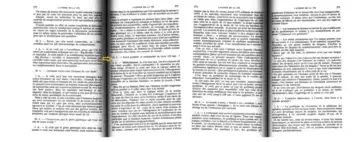
Which is considerably more sinister than the article that Poynter pulled up, which obscures Attali’s real position.